


What maintenance does pallet live racking require?
Pallet live racking maintenance requires routine visual checks, racking inspections and prompt repair or replacement of damaged components. Keep loading and replenishment areas clear, checking rollers, guides and frames after impacts or changes to stock and handling.
Pallet live racking maintenance is a planned process covering housekeeping, moving parts, load control, records and remedial work. The aim is to keep each lane operating as intended and prevent small defects becoming larger problems.
Set a maintenance plan around actual use
Maintenance requirements depend on traffic levels, forklift movements, stock characteristics and the surrounding warehouse conditions. Dust, packaging waste, moisture and frequent pallet movement can all affect equipment condition.
Set out who carries out routine housekeeping, who records defects and who authorises equipment to return to service. Use the supplier’s instructions and the original system information when planning maintenance.
Keep running lanes and surrounding areas clean
Loose shrink wrap, cardboard, broken pallet pieces and other debris can interfere with pallet movement. Remove waste from beneath and around the structure as part of normal warehouse housekeeping.
Spillages also need attention. A clean working area makes unusual movement easier to identify and reduces avoidable interference with pallet live racking.
Check the equipment that controls pallet movement
Depending on the system, pallet live racking may include lane stops, separators, speed-control components and other parts that manage pallet travel. Check that these remain securely positioned and function as intended.
Do not bypass, remove or alter a control component to solve a temporary operating issue. Record the problem and obtain suitable technical advice before making changes.
Control loads and pallet condition
Maintenance also depends on using the system within its intended operating conditions. Keep load information available and ensure operators follow the stated capacity, pallet dimensions and loading arrangement.
- Reject pallets with broken boards, unstable loads or protruding goods.
- Keep loads centred and properly supported before placing them into a lane.
- Do not store loose materials where they can fall into the running equipment.
- Do not drill, weld or alter components without an appropriate design review.
Changes to stock profiles or handling equipment can affect how the system operates. Review the arrangement before introducing a substantially different pallet or handling method.
Record findings and close actions
A maintenance record should identify the location, issue, risk, action taken and person responsible. Include the date and confirmation that the action is complete.
Use photographs or marked-up drawings where they clarify the affected lane or component. Keep records with the warehouse’s wider equipment information, so recurring issues can be identified.
If a defect could affect safe operation, isolate the relevant area until a suitable decision has been made. Do not rely on a note in a maintenance log as a substitute for controlling the immediate risk.
Use suitable support for repairs and changes
Repairs should match the original design and the loads the system must carry. Improvised straightening, drilling or welding can change component behaviour and create further risks.
We can review existing storage arrangements through a site meeting or survey, then provide written proposals and working drawings where required. This gives you a defined basis for remedial work, alterations or related storage changes.
Where a project needs several stages, we can also provide project management from proposal and tender work through installation and final commissioning. The scope should state which work is included and how affected areas will be controlled.
Maintenance supports, but does not replace, compliance checks
Cleaning, operational controls and repair records support safer warehouse operation. They do not by themselves demonstrate that the complete installation remains suitable.
Arrange formal racking inspections at the interval required for the site and its operating conditions. Keep inspection findings separate from everyday housekeeping records, then track any recommended action to completion.
Spartan Direct has worked on storage systems since 1982, including design and installation for companies of different sizes across the UK. Our consultation and survey process helps link maintenance findings with the practical needs of the warehouse.
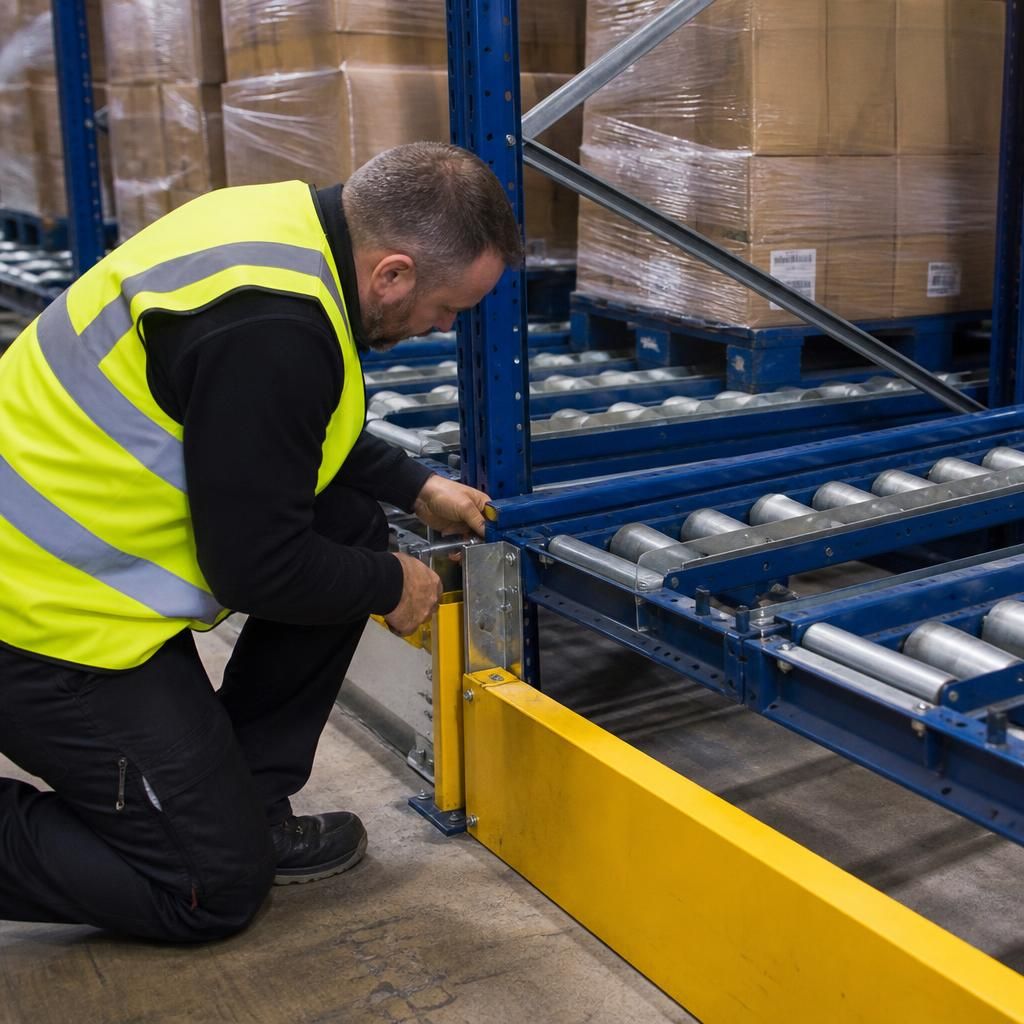
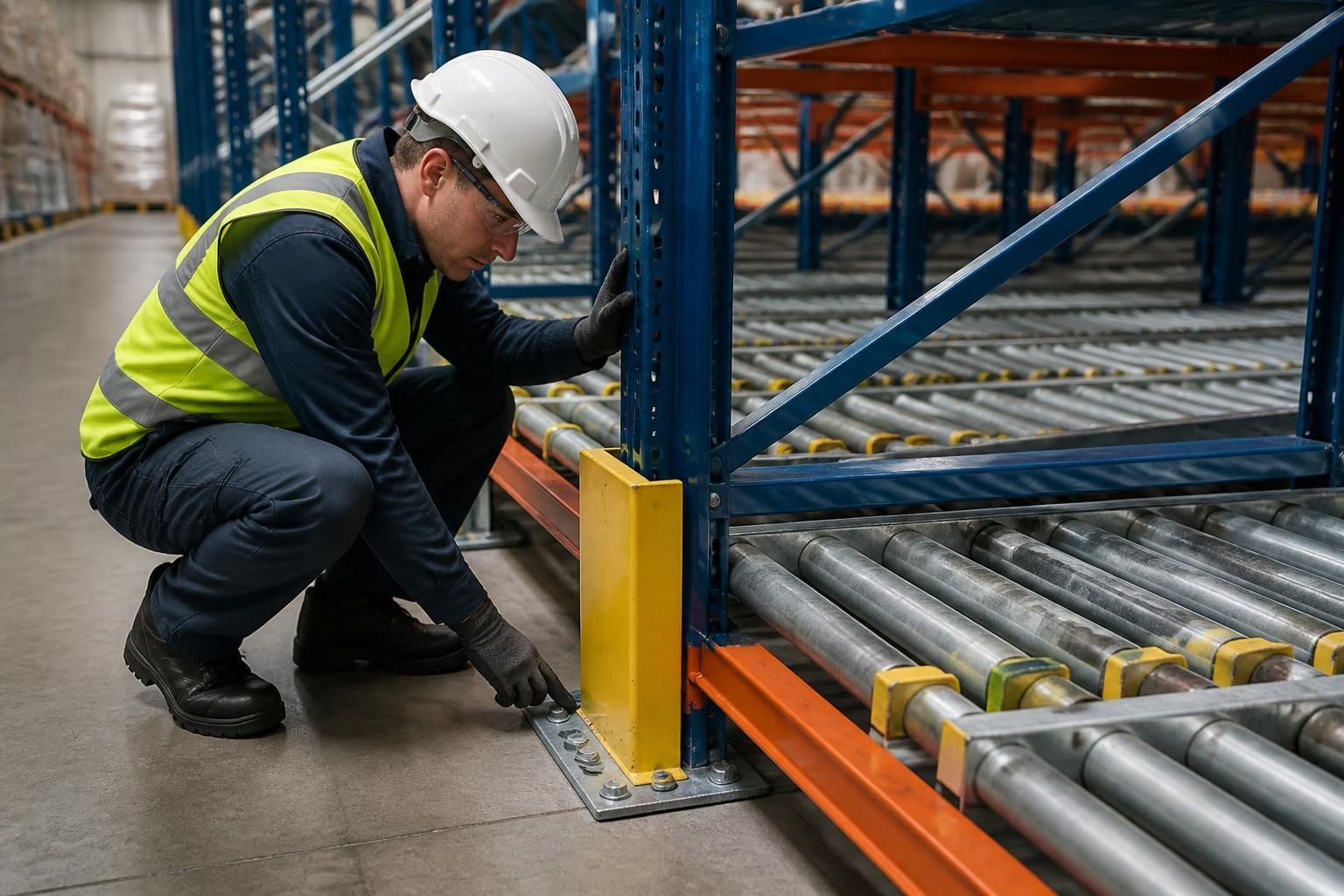
Look beyond the rollers when checking pallet live racking. Inspect upright guards, end barriers, anchors and floor areas for movement or impact damage.
These parts protect the structure during daily handling. Record any damage and keep affected positions out of use until suitable remedial work is agreed.



