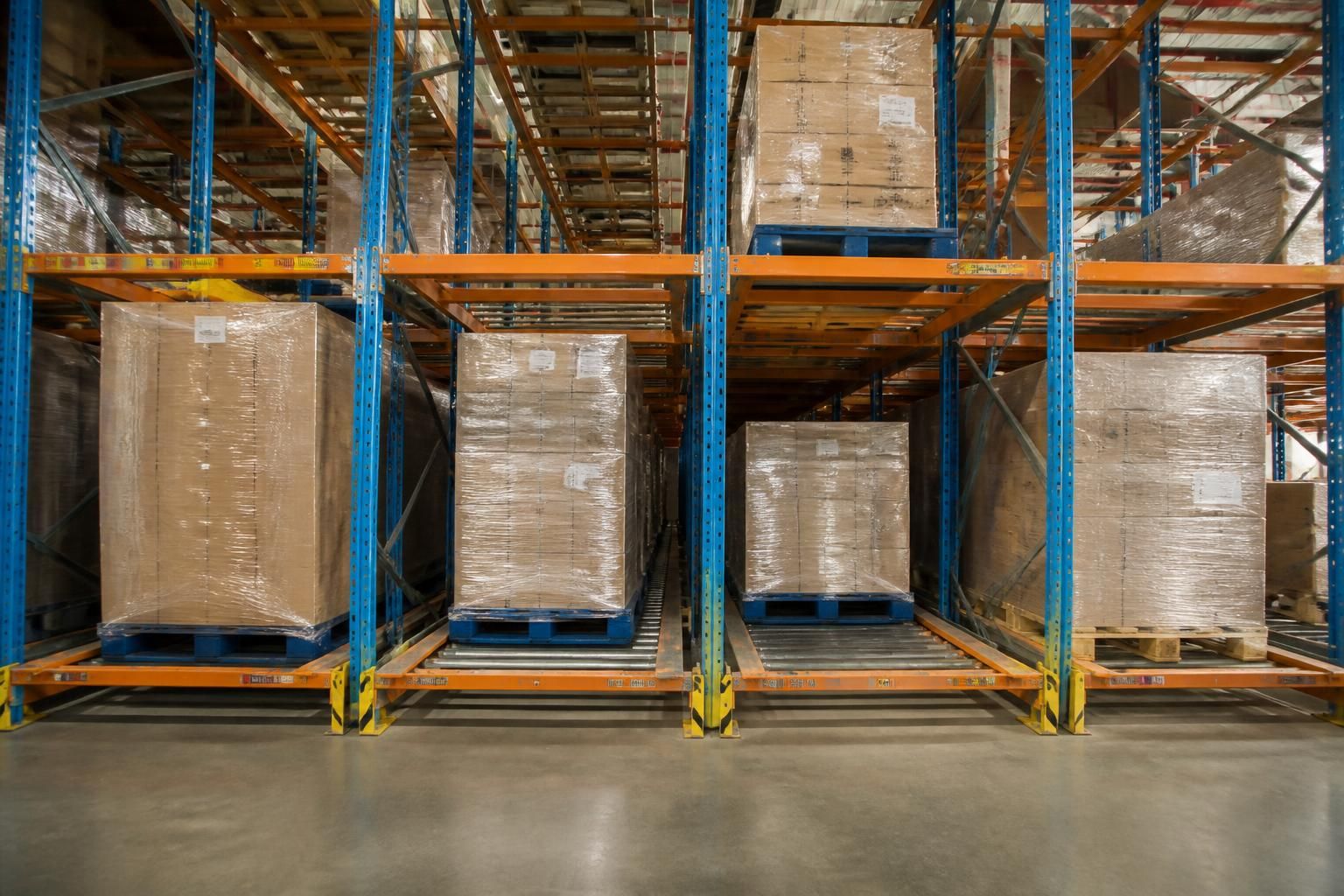
Can pallet live racking adapt when product dimensions change?
Pallet live racking can adapt to changing product dimensions when we review pallet sizes, loads and workflow before specifying the layout. A site survey, written proposal and working drawings help identify suitable adjustments.
Changing dimensions do not automatically rule out pallet live racking. The system can remain suitable when the altered pallet sizes, loads and handling method fit the available clearances.
The important question is how the changes affect each storage lane. A pallet that is wider, taller or heavier can alter access, movement and the usable capacity of the installation. The same channel arrangement may not suit every new pallet profile.
- Pallet footprint: Changes to length or width can affect clearances, overhang and safe pallet positioning.
- Pallet height: Taller loads may require different level positions and sufficient clearance beneath the structure.
- Load characteristics: A heavier or unevenly distributed load requires a fresh check against the stated design limits.
- Pallet condition: Different bases, packaging or load stability can affect how pallets move through the lanes.
- Stock variation: Mixing significantly different pallet sizes within one lane may reduce usable space or make handling less suitable.
Small changes may allow the existing arrangement to continue with revised lane allocation or component positions. Larger changes may require reconfiguration, additional equipment or a different pallet racking arrangement.
Do not place taller or heavier pallets into a lane simply because they physically fit. Clearances, load information and the way forklifts replenish and retrieve stock all need consideration before the change.
Tell us which pallet dimensions are changing, including the expected range rather than one average size. Include pallet weights, load distribution, packaging details and any planned changes to stock movement.
We can then assess whether the current pallet live racking remains appropriate for the revised stock profile. Where it does, the written proposal and working drawings can show the required arrangement.
Where the changes exceed the existing layout’s practical limits, we can explain the implications of modifying the installation or using another storage arrangement. That comparison helps you protect access and capacity as product dimensions develop.
Future changes also matter. If new product lines are likely, include them in the review rather than specifying storage around today’s smallest or most common pallet.
Clear lane identification helps you manage changing stock after pallet live racking is adjusted. Working drawings can record the approved pallet profiles for each lane, giving forklift operators a practical reference during replenishment and retrieval.
Review those profiles when packaging, pallet bases or product ranges change. This keeps day-to-day storage aligned with the arrangement agreed for the revised dimensions.