Does pallet live racking provide greater storage capacity than conventional racking?
Pallet live racking can provide greater storage capacity than conventional racking by using pallet lanes and reducing access space.
It does not always hold more pallets: the result depends on stock rotation, pallet dimensions, load requirements and warehouse layout.
Not necessarily. Pallet live racking can create more usable pallet positions in some warehouses, but conventional racking may provide better access to individual pallets.
The meaningful comparison is not simply the number of frames or lanes. You should assess pallet positions, floor area, access requirements and how stock moves through the warehouse.
How pallet live racking can increase capacity
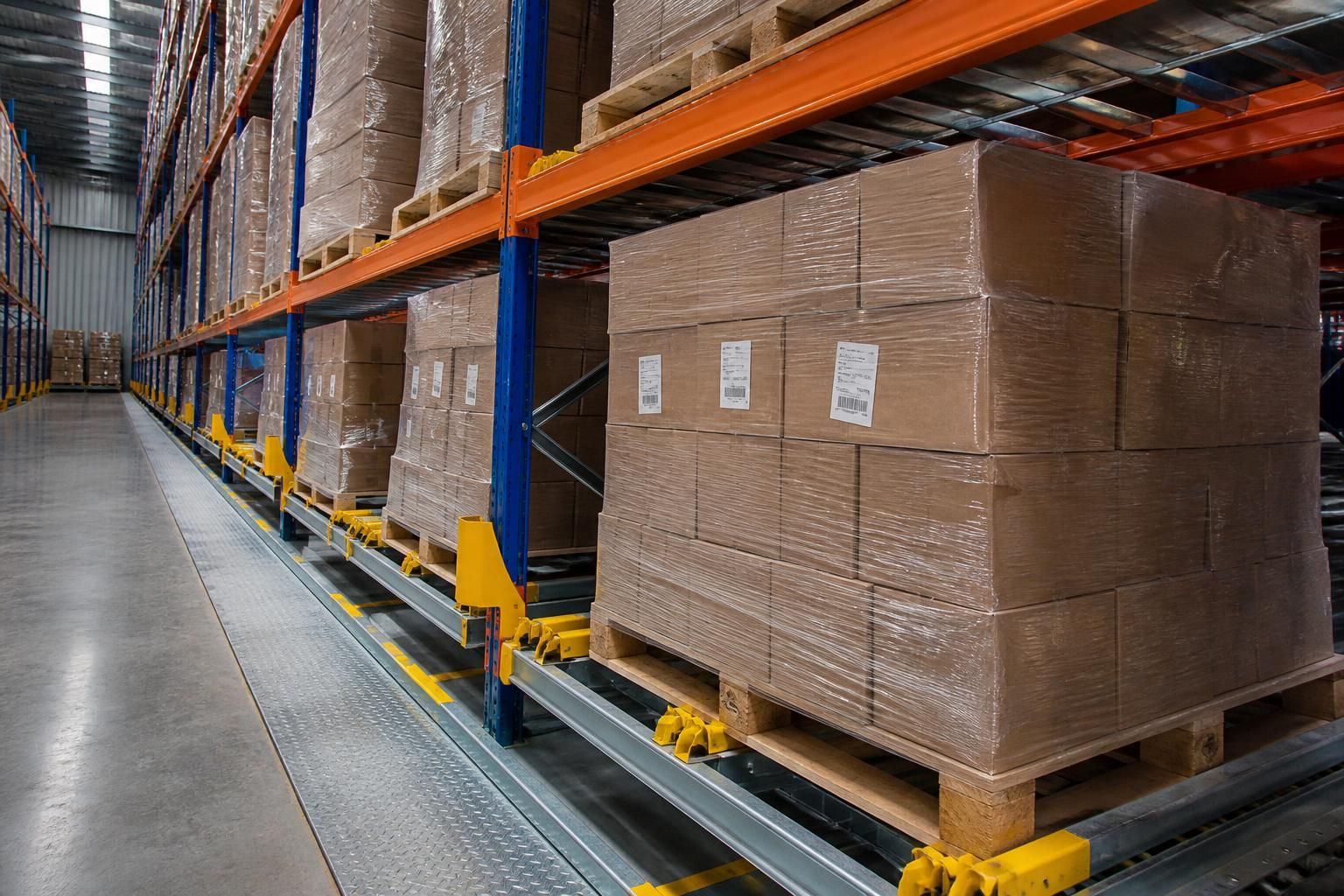
Pallet live racking stores pallets in lanes rather than placing every pallet beside an aisle. This can reduce the floor area allocated to access routes.
That space can instead support additional pallet lanes or deeper storage. The result may be more storage positions within the same building footprint.
Live lanes can also separate reserve stock from picking activity. This helps you use storage space according to each product’s role within the operation.
Conventional pallet racking normally gives direct access to each stored pallet. That arrangement can require more aisle space, particularly where several stock keeping units need separate locations.
However, direct access can reduce unnecessary handling. It may also make conventional racking more suitable where you hold many different products in smaller quantities.
Capacity depends on how you measure it
A system may hold more pallets but offer less flexibility. A live lane usually works best when several pallets share a product type or movement pattern.
If each pallet contains a different product, deeper lanes may leave some positions unavailable. Conventional racking could then provide more usable locations, despite using more access space.
You should compare:
- total pallet positions within the available footprint;
- the number of product lines requiring separate locations;
- how much stock sits in reserve and how much supports daily picking;
- the space needed for loading, unloading and safe movement;
- the space needed around the racking for other warehouse activities; and
- how easily the arrangement can accommodate changes in stock profiles.
This separates theoretical capacity from practical capacity. Practical capacity reflects the positions you can use without obstructing stock access or disrupting the workflow.
When conventional racking may remain the better use of space
Conventional racking can suit operations with many product lines, irregular demand or frequent access to individual pallets. Its layout supports location-by-location access across the stored range.
That flexibility can matter more than maximum pallet density. Filling every available position does not help if staff cannot reach stock safely or locate it clearly.
Live racking can suit operations with fewer product lines and greater quantities per line. It can also support a planned flow of pallets through storage, replenishment and despatch.
The right choice therefore depends on the balance between density and selectivity. Density concerns how many pallets fit into the available area. Selectivity concerns how directly you can reach each pallet.
How we establish the likely capacity
We begin with a no-obligation consultation and can carry out a site meeting and survey. This identifies the available dimensions and the way you use the space.
We then review stock information, pallet locations and operating requirements. Written proposals and working drawings can show how pallet live racking compares with conventional racking in the same building.
The comparison should consider the complete layout, not just the racking footprint. It may include access areas, working zones, safety clearances and the relationship between storage and other activities.
For projects requiring several stages, project management may continue from proposal and tender work through installation and final commissioning. This gives you a clearer basis for choosing capacity, access and layout together.
In summary, pallet live racking can provide greater storage density, but it does not automatically provide greater usable capacity. A measured comparison shows whether the extra lanes outweigh the access flexibility of conventional pallet racking.
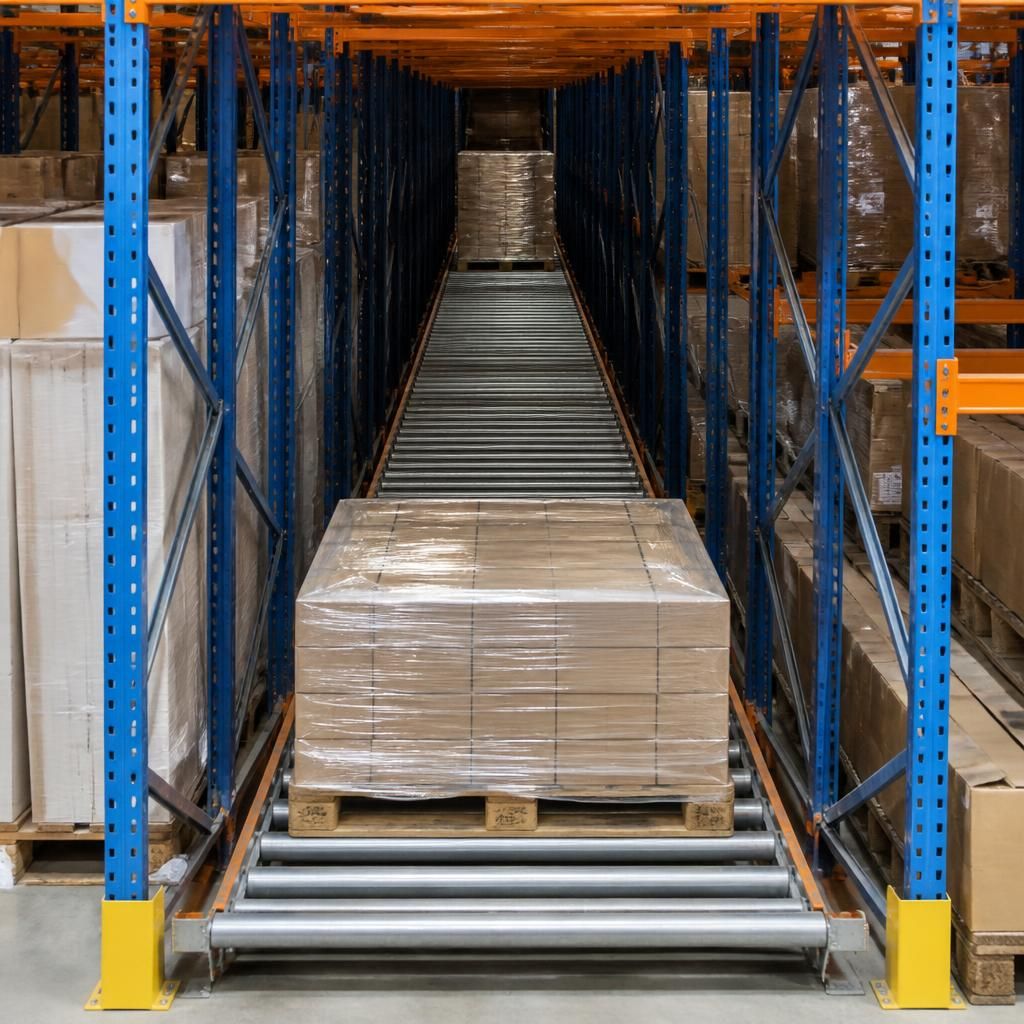
The rollers in pallet live racking support pallets along each lane. As the front pallet is removed, the next pallet moves towards the access face.
This arrangement keeps reserve stock arranged behind the active position. It can make deeper storage practical while maintaining a clear point for loading and retrieval.