How does pallet live racking affect forklift access and replenishment?
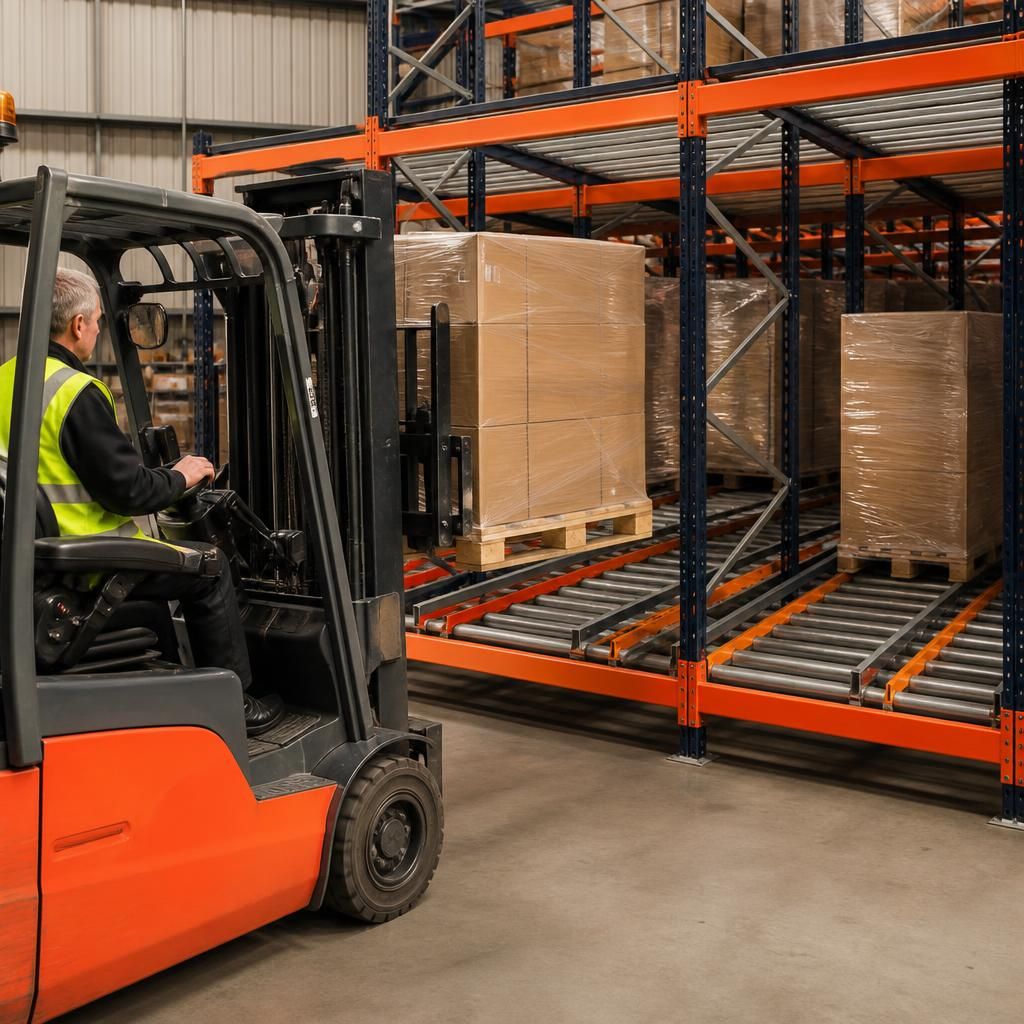
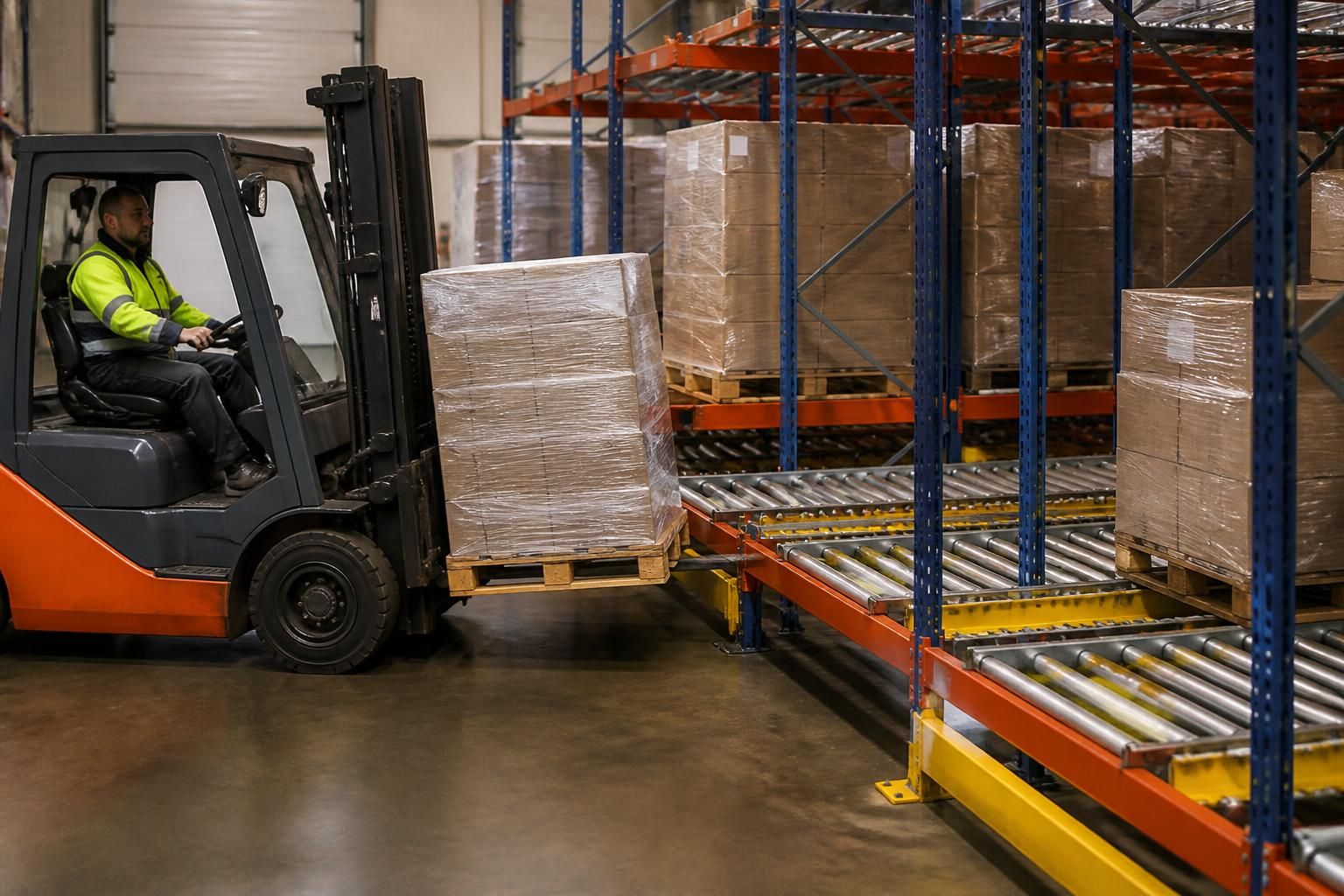
Pallet live racking uses roller lanes to move pallets towards the picking face, keeping forklift access focused on loading and replenishment aisles.
This separation can support orderly stock rotation and replenishment, provided the lane layout, pallet loads and forklift movements suit the warehouse workflow.
Pallet live racking can improve forklift access and replenishment when traffic routes, lane positions and handling equipment work together. It gives operators a defined loading and picking sequence, but the layout must suit the site, stock and requirements.
Forklift access is influenced by more than the racking footprint. The design needs to account for aisle width, turning space, pallet dimensions, load weights, lift heights and the position of loading areas. It must also consider how trucks approach the lanes without obstructing picking or other warehouse activities.
- Loading access: Forklifts need a clear route to the replenishment side of each lane.
- Picking access: Operators need sufficient room to remove pallets safely and transfer them to the next handling stage.
- Staging space: Temporary pallet positions should not block aisles, emergency routes or active loading points.
- Traffic control: Line marking and barrier protection can help separate vehicle movements from pedestrian areas where required.
Replenishment becomes easier to plan when each lane has a clear stock role. You can allocate lanes by product, batch, demand pattern or pallet type, then set a defined replenishment routine.
Forklift operators may spend less time searching for open storage positions when lane allocation is clear. They can also work to a consistent loading sequence, reducing unnecessary movement around the warehouse.
However, pallet live racking is not automatically suitable for every forklift operation. A narrow approach, unsuitable pallet construction or inconsistent load sizes can restrict access. A lane carrying different pallet depths may also create handling difficulties.
Replenishment can become a constraint if several lanes need loading at the same time. The design should therefore consider delivery patterns, picking cycles, available forklifts and the space needed to queue pallets safely.
We assess these points during consultation and site surveys. Our proposals and working drawings can show lane positions, access routes and the relationship between storage, picking and replenishment areas.
Where a project requires coordination beyond the storage layout, we can provide project management through proposal and tender stages, installation and final commissioning where required. This helps keep forklift access aligned with the wider warehouse arrangement.
The right arrangement depends on the actual pallet loads, equipment and workflow. A survey gives you a sounder basis for comparing pallet live racking with other pallet racking layouts before installation begins.
One practical benefit of pallet live racking is keeping forklift travel outside the storage lane. Operators load from the replenishment side, while pallets move towards the picking face. This leaves the storage face clearer for picking and reduces the need for forklifts to enter storage lanes.
The arrangement works best when pallet construction and lane equipment support steady movement. We review these details during consultation and site surveys, then show the proposed access arrangement in working drawings.