


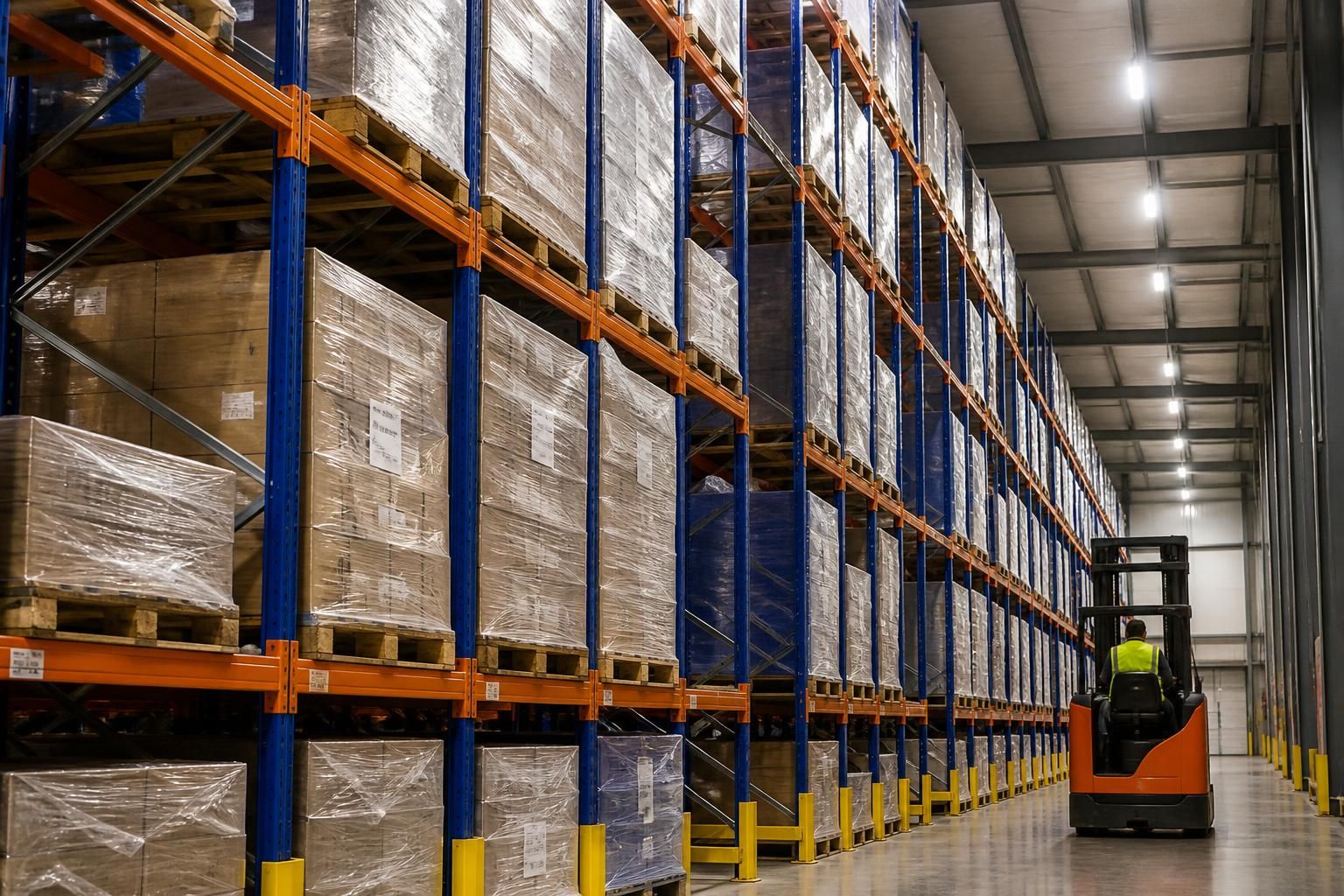
When does high-density industrial racking justify reduced direct access?
High-density industrial racking can justify reduced direct access when floor capacity matters more than immediate access to every pallet, and stock movement is predictable. It is less suitable where rapid picking, frequent stock rotation or unrestricted pallet access governs your workflow.
High-density pallet racking can justify reduced direct access when stock arrives in repeatable groups and storage locations remain stable. The decision depends on stock profiles, handling methods, replenishment rules and the working space around the racking.
High-density storage uses more of the available floor area by reducing the number of access aisles. That can support greater reserve capacity within an existing building. However, each reduction in aisle access changes how operators locate, load and retrieve pallets.
Reduced access often suits reserve stock rather than items picked individually throughout the day. It can work well where several pallets share a product type, batch or destination. The arrangement becomes harder to manage when every pallet requires separate, immediate retrieval.
Assess the stock before selecting the racking layout
- Count the number of pallet types requiring separate locations.
- Review pallet dimensions, weights and load stability.
- Identify stock kept in batches, lots or production runs.
- Record replenishment patterns and expected dispatch sequences.
- Separate reserve storage from pallets needed at picking faces.
Stock uniformity matters because dense lanes work best when pallets fit the same operating pattern. Mixed pallet sizes can reduce usable capacity and complicate safe placement. Load information also supports the working drawings and racking specification.
Compare capacity with handling consequences
A dense layout may create more pallet positions, but capacity alone does not establish suitability. You also need to consider travel distances, equipment movements and the number of handling steps for each pallet.
Direct access provides clearer visibility and simpler retrieval. Reduced access may require operators to move other pallets before reaching the required stock. That additional handling can affect labour planning, stock control and dispatch sequencing.
Ask these practical questions before committing to a dense arrangement:
- Can operators identify the required pallet location without unnecessary searching?
- Will stock rotation rules remain clear within each lane?
- Does the handling equipment suit the aisle width and storage depth?
- Can replenishment take place without obstructing normal retrieval?
- What happens when an urgent pallet sits behind other stored pallets?
Last-in, first-out storage may suit some reserve applications, but it does not suit every product or stock policy. Where older stock must leave first, the layout and operating method must support that rule.
Consider the type of dense pallet racking
Drive-in racking can store pallets in lanes with fewer access aisles. It may suit grouped stock with limited product variation. Push-back arrangements can provide several pallet positions at different depths while retaining access from the loading face.
Pallet-flow arrangements use a dedicated loading and retrieval direction. They may support controlled stock movement where the operating process requires clearer rotation. Each arrangement places different demands on pallets, equipment, loading discipline and stock control.
These categories should not be selected from a capacity diagram alone. The right comparison considers how operators load each lane, retrieve stock and respond to exceptions. A layout that works for reserve storage may hinder production supply or order picking.
Allow for safety and building constraints
Dense racking must leave suitable routes for handling equipment, people and emergency access. The building floor, clear height, columns, doors and service routes can affect the usable layout.
Protection may also be needed where equipment operates close to frames, corners or traffic routes. Workplace segregation, line marking and barrier protection can support clearer separation between storage activity and other work areas.
These considerations should form part of the design rather than an afterthought. They help you judge the usable capacity, not just the number of theoretical pallet positions.
Use a measured comparison rather than a simple capacity claim
Compare at least two layouts using the same stock data and handling assumptions. One option may provide more positions. Another may offer simpler retrieval, clearer rotation and fewer handling constraints.
Include the value of occupied floor space, handling time, equipment requirements and potential changes in stock. A dense arrangement may lose its advantage if the operating process requires frequent access across many lanes.
We can review these factors through a no-obligation consultation. This may include a site meeting and survey, followed by a written proposal and working drawings. Where required, project management can continue from proposal and tender stage through installation and final commissioning.
For a warehouse or industrial site, high-density pallet racking is most defensible when the stock profile supports lane storage and the handling process accepts limited access. If daily operations depend on individual pallet selection, retain more direct access and assess capacity through the whole workflow.
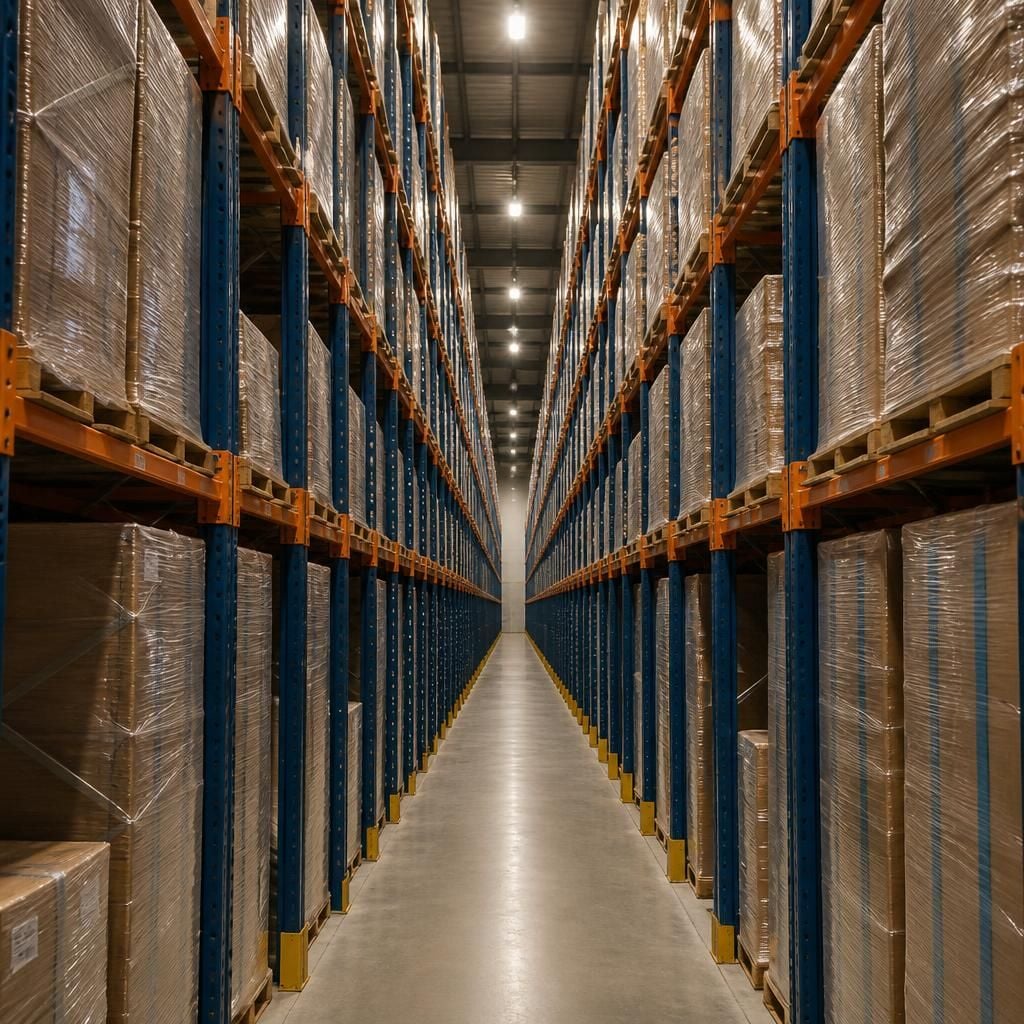
A mixed pallet racking layout can preserve direct access for frequently handled stock while assigning suitable reserve groups to high-density lanes.
This prevents reduced access from governing the whole warehouse. If only part of the stock supports dense storage, limit that arrangement to the appropriate area and keep exception items elsewhere.



