


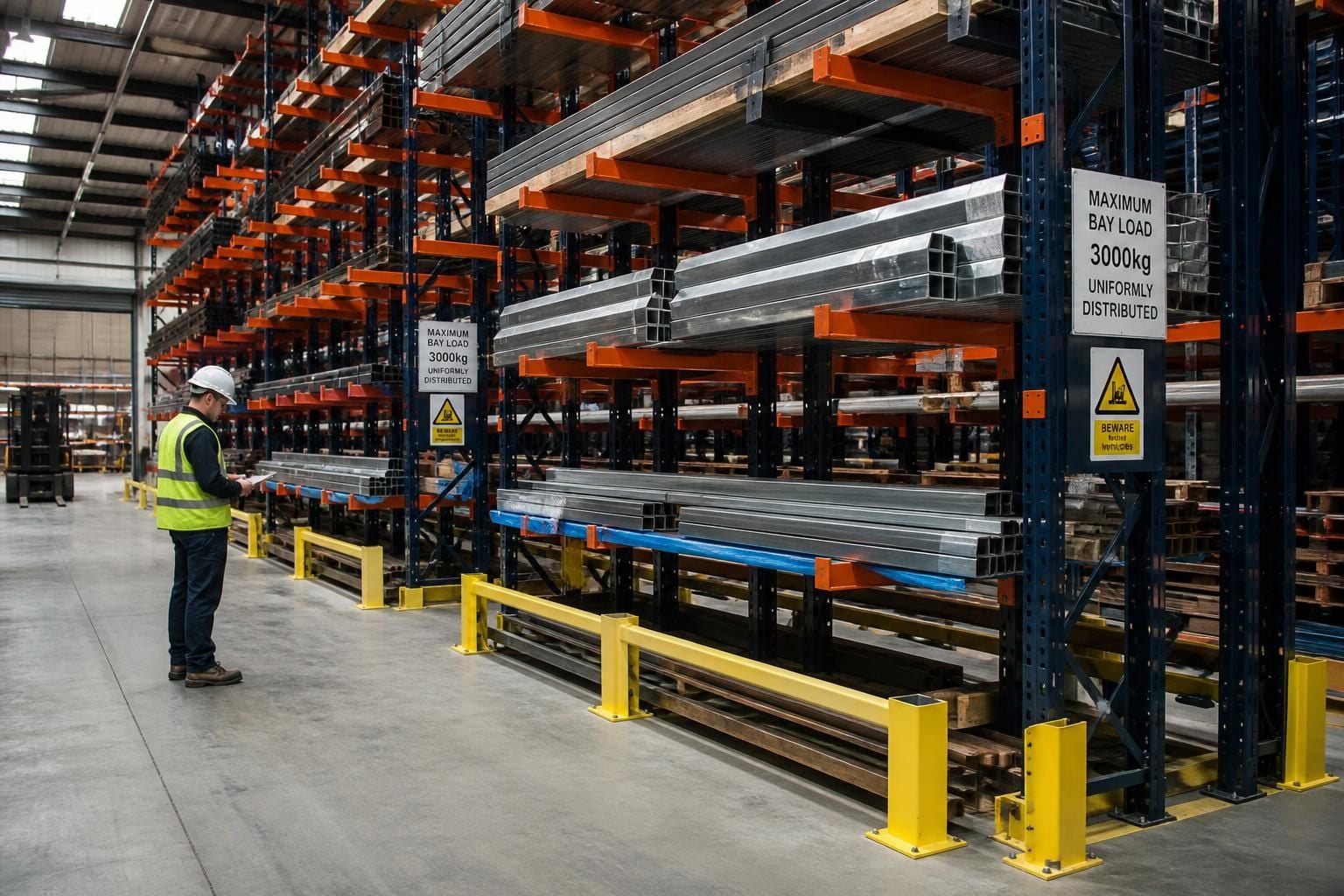
What compliance checks should accompany cantilever racking installation?
Cantilever racking installation should include checks on loads, dimensions, floor conditions, access, protection and the completed system. We can support this with a site survey, working drawings and racking inspection, helping you address safety and compliance before use.
Cantilever racking installation should include documented design checks, controlled assembly, handover records and planned inspections. These checks connect the proposed system with the way you store, handle and manage long stock.
Before installation, confirm the design information. The proposal and working drawings should identify the intended arrangement, operating method and relevant restrictions. Check that the information reflects the stock you will store and the equipment used around the racking.
Record any assumptions that affect safe use. These may include the type of handling equipment, storage positions, operating rules and changes planned for the area. If those assumptions change, review the design before adapting the system.
Check the installation method and responsibilities. The installation plan should explain the work sequence, access arrangements and controls for the installation area. It should also identify who checks the work at each stage and who authorises the system for use.
Installation records should confirm that the work follows the approved drawings and relevant instructions. Record any alteration, omission or site issue rather than relying on an informal agreement. Unresolved points should remain closed until a responsible person reviews them.
Complete a handover check before stock enters the racking. The handover should confirm that the installed arrangement matches the agreed information and that outstanding issues have been addressed. It should also provide the information needed for safe operation and future inspections.
- Keep the final drawings and installation records together.
- Identify permitted storage arrangements and operating restrictions.
- Make load information available to the people using the system.
- Record any changes made during installation.
- Set out how damage, movement or other concerns should be reported.
Do not treat a signed handover as a substitute for daily care. Operators should report damage or unusual movement promptly, and managers should prevent continued use where a defect could affect safety.
Plan inspections after installation. A visual check by users can identify obvious problems during normal work. A more formal racking inspection examines the system condition and records findings for action. The inspection should consider damage, altered components and any change in use since installation.
Inspection findings need clear ownership. Record the location, concern, action and completion status. A recurring issue may indicate that the storage method, traffic controls or operating instructions need review.
We provide racking inspections and aftercare alongside storage work. Our consultation can include a site meeting and survey, followed by written proposals and working drawings. Where required, project management can continue through installation and final commissioning.
For projects involving several workplace areas, keep the compliance records coordinated. This helps connect the racking installation with related segregation, line marking, barrier protection or other layout changes.
Finally, review the system whenever stock, handling equipment or operating arrangements change. Cantilever racking remains suitable only when its use continues to match the information on which the design and installation were based.
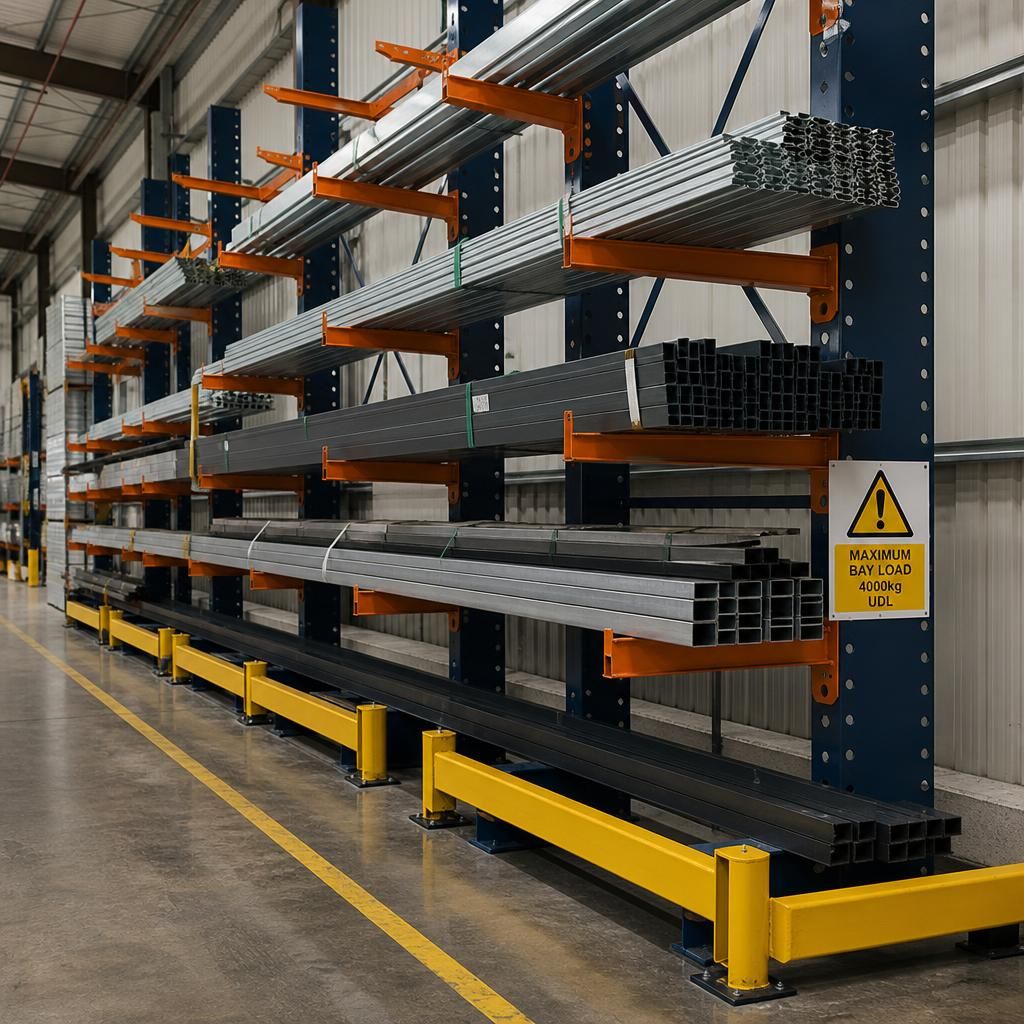
A post-installation check should examine each cantilever bay, not just the overall layout. Compare the installed components with the approved drawings.
- Check upright columns, arms, bracing, baseplates and floor fixings.
- Look for distortion, missing locking pins, loose fixings or impact damage.
- Confirm that load notices remain visible and match the approved arrangement.
- Record the bay location and isolate any concern that could affect safe use.
This creates a clear link between the installation records and the condition of the cantilever racking in daily operation.



