What maintenance does cantilever racking require after installation?
After installation, cantilever racking needs planned inspections, checks for damage and safe loading, plus prompt action when defects are found. We provide racking inspections and aftercare, helping you identify when repair or replacement should be considered.
Cantilever racking maintenance involves routine visual checks, recorded inspections, safe loading reviews and controlled repairs. The exact frequency should reflect use, impact risk, stock, site conditions and any changes to the installation.
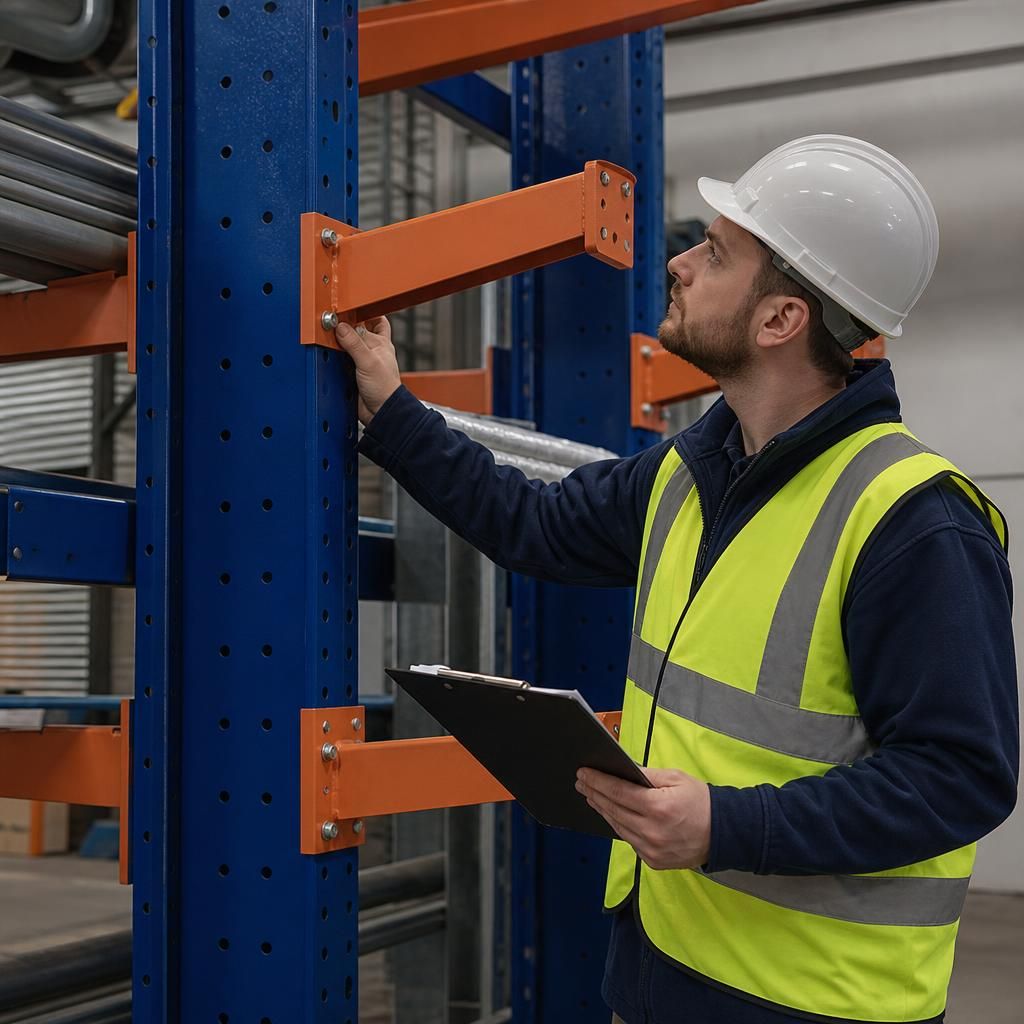
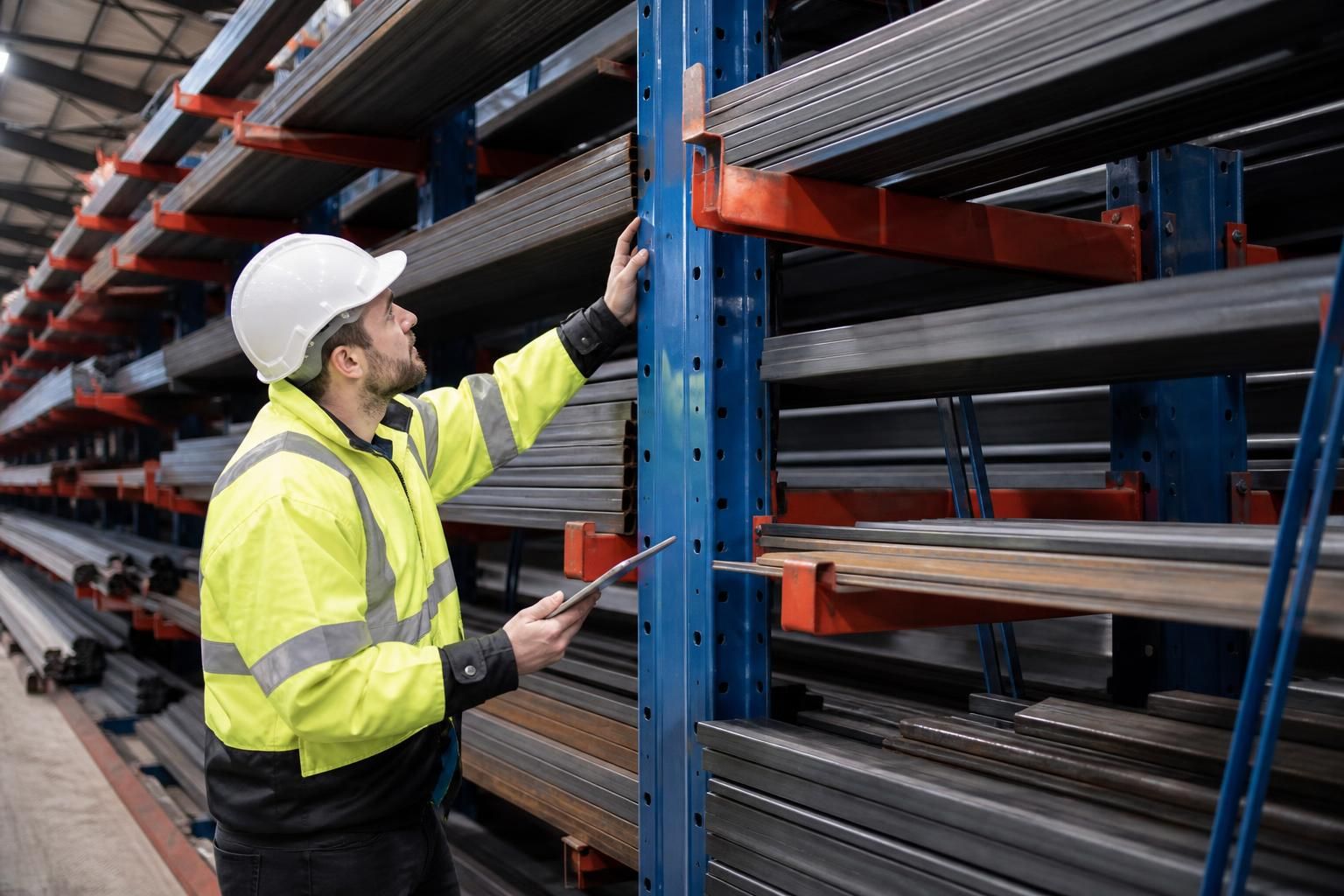
Check the structure during routine warehouse checks
- Look for bent, twisted or cracked columns, arms, bases and bracing.
- Check for impact marks from vehicles, handling equipment or falling stock.
- Look for corrosion, damaged welds, loose fixings and missing components.
- Check that arms, end stops and protective items remain correctly positioned.
- Confirm that load notices remain present, clear and relevant to the installation.
Small defects can affect how loads are supported. Do not straighten, weld, drill or alter components without an appropriate technical assessment.
Review loading and operating practices
Maintenance also includes checking how the system is being used. Stock should remain within the stated load limits and sit securely on the intended support points. Loads that are longer, heavier or differently distributed than those considered during design may require review.
Keep access routes clear around the rack. Check that handling equipment can approach without repeatedly striking columns or arms. Review the arrangement after changes to stock dimensions, handling methods, bay layout or building use.
Inspect after an impact or significant change
Remove an affected bay from use when an impact, distortion or other serious defect is suspected. Prevent further loading until the damage has been assessed and recorded. This avoids concealing the condition beneath new stock.
A review is also appropriate after relocation, alterations, changes in load requirements or work that could affect the floor and fixings. These events can change the way forces move through the installation.
Keep inspection records
Records should identify the date, areas checked, findings, actions and person responsible for follow-up. Photographs can provide useful evidence of damage and completed repairs. Record any isolated bays so warehouse staff do not reload them accidentally.
Use the records to track recurring impacts and review working practices. Repeated damage may indicate an access, segregation or protection issue rather than a single maintenance fault.
Repair or replace damaged components
Repairs should follow an assessment of the affected components and the installation’s intended loading. Some damage may require replacement rather than adjustment. Keep defective parts out of service until the required action is complete.
Our racking inspections and aftercare can support this process. Where required, we can discuss findings and prepare proposals or working drawings for remedial work. The appropriate action depends on the recorded condition and site requirements.
Planned maintenance is not a substitute for safe operation. Staff should report impacts, unusual movement, visible damage and loading concerns as soon as they are noticed. Clear reporting supports better decisions about inspection, repair and continued use.
Keep the installation information with the maintenance records. Working drawings, load notices and recorded alterations give future inspections a clear reference point.
Review this information before changing bay positions, arm levels or stock requirements. If the proposed use no longer matches the original arrangement, obtain a technical review before making changes.