When is cantilever racking preferable to pallet racking for long or awkward stock?
Cantilever racking is preferable for long, awkward or non-palletised stock that needs accessible storage without front posts obstructing loading. Pallet racking generally suits standardised pallet loads stored on conventional pallets.
Cantilever racking is preferable when the load cannot sit securely on a standard pallet footprint, or when its length makes conventional pallet positions impractical. The decision depends on the stock profile, handling method, access needs and available layout.
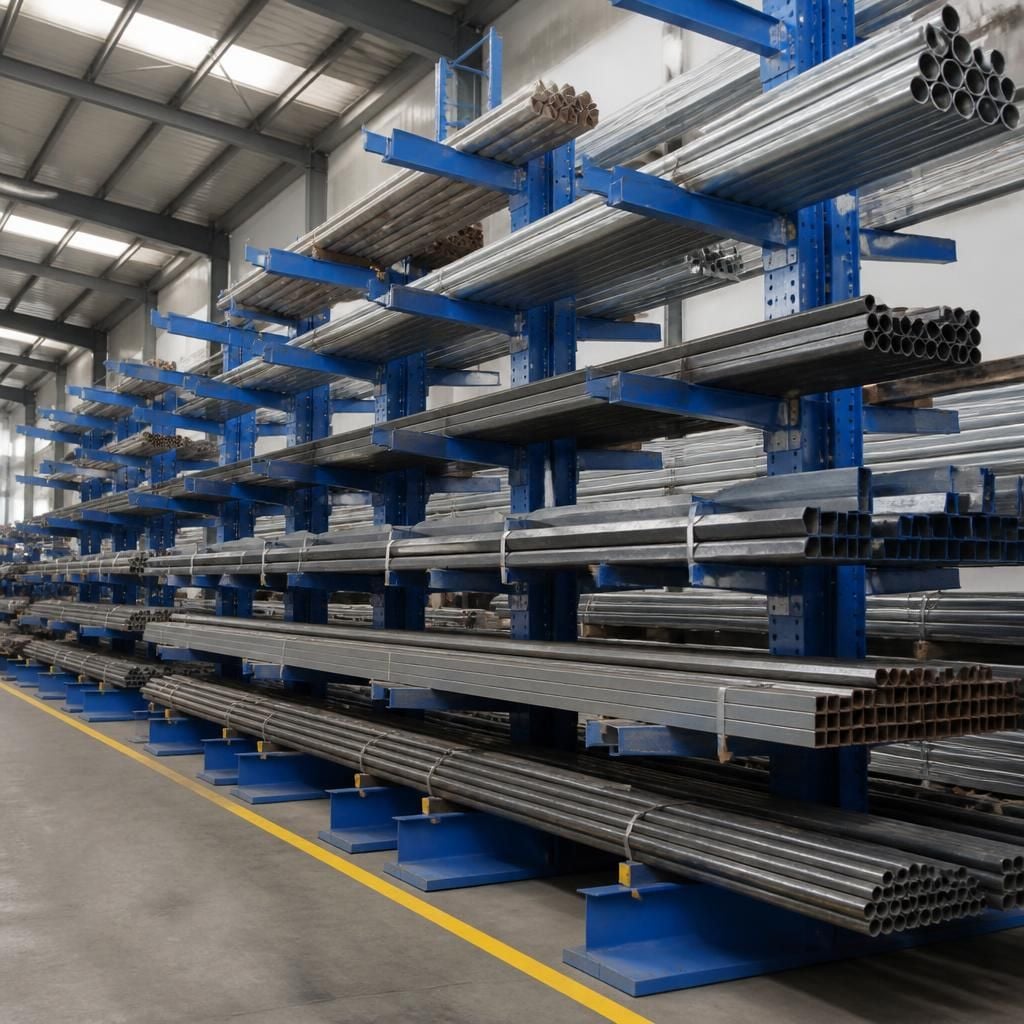
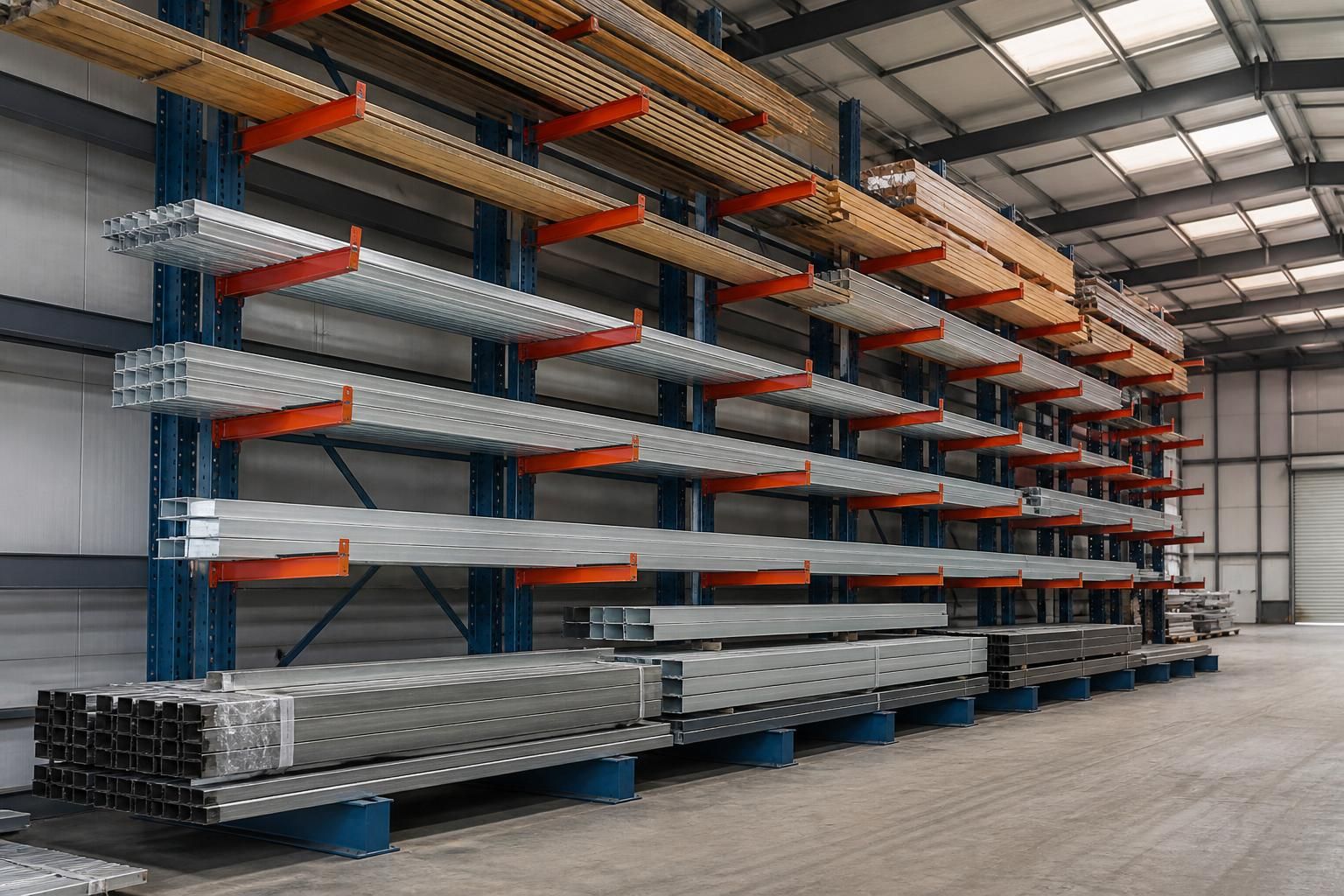
Long goods need support along their length rather than support beneath a defined pallet base. Cantilever racking uses upright columns and projecting arms to create open storage levels. This arrangement can accommodate stock that extends beyond conventional pallet dimensions.
- Stock length: Boards, tubes, profiles and other extended items can sit across several support points.
- Shape: Uneven, bundled or awkwardly shaped loads may not sit securely on a standard pallet.
- Loading method: The system must suit the equipment and method used to place and remove stock.
- Access: Separate levels can make different stock types easier to identify and reach.
- Layout: Upright positions, aisle requirements and available height all affect the practical arrangement.
Cantilever racking can also help separate stock by length, type or handling frequency. Clear separation reduces the need to move other goods before reaching the required item. The layout still needs to reflect how often each product is accessed.
Pallet racking is usually more appropriate for standardised pallet loads. It provides defined pallet positions and suits goods that arrive, remain and leave on compatible pallets. If most stock has a consistent footprint, pallet racking may offer the more direct arrangement.
The choice becomes less straightforward when a warehouse stores both palletised goods and long materials. A combined layout may place pallet racking in one area and cantilever racking elsewhere. This can keep each storage type matched to its handling requirements, rather than forcing every product into one format.
Stock weight and dimensions matter as much as length. The proposed arrangement must account for the load carried at each level, how loads are grouped and how they will be placed. Clearances around the rack also need consideration, including access routes and surrounding work areas.
Available space does not decide the rack type on its own. The usable height, floor layout, access points and movement of people or equipment all influence the design. A system that fits on paper may still hinder picking, loading or production activity if these movements are overlooked.
We can review these factors through a no-obligation consultation, which may include a site meeting and survey. We then prepare a written proposal and working drawings for the intended arrangement. This gives you a clearer basis for comparing cantilever racking with pallet racking before installation.
Where a project needs it, project management can continue from proposal and tender stages through installation and final commissioning. The purpose is to coordinate the agreed storage arrangement with the work taking place around it.
The most suitable option is therefore the one that matches the stock and its movement through the premises. Cantilever racking earns preference when length, shape and access create problems for standard pallet positions. Pallet racking remains the better fit where loads are consistently palletised and handled in a conventional format.
Cantilever racking is particularly suitable when long stock must be inspected and selected by individual lengths, rather than moved as complete pallet loads. Open levels help you identify stored materials before handling them, while pallet racking remains suited to consistent pallet movements.