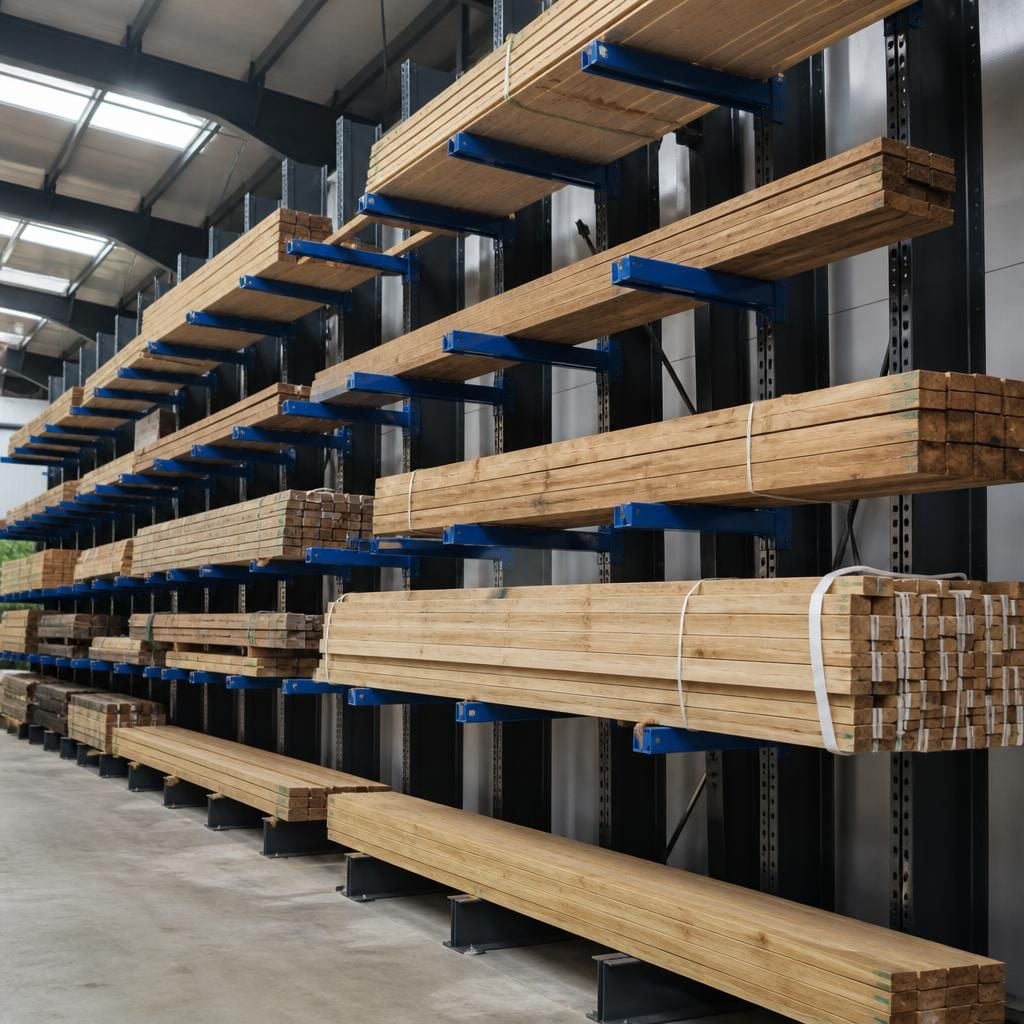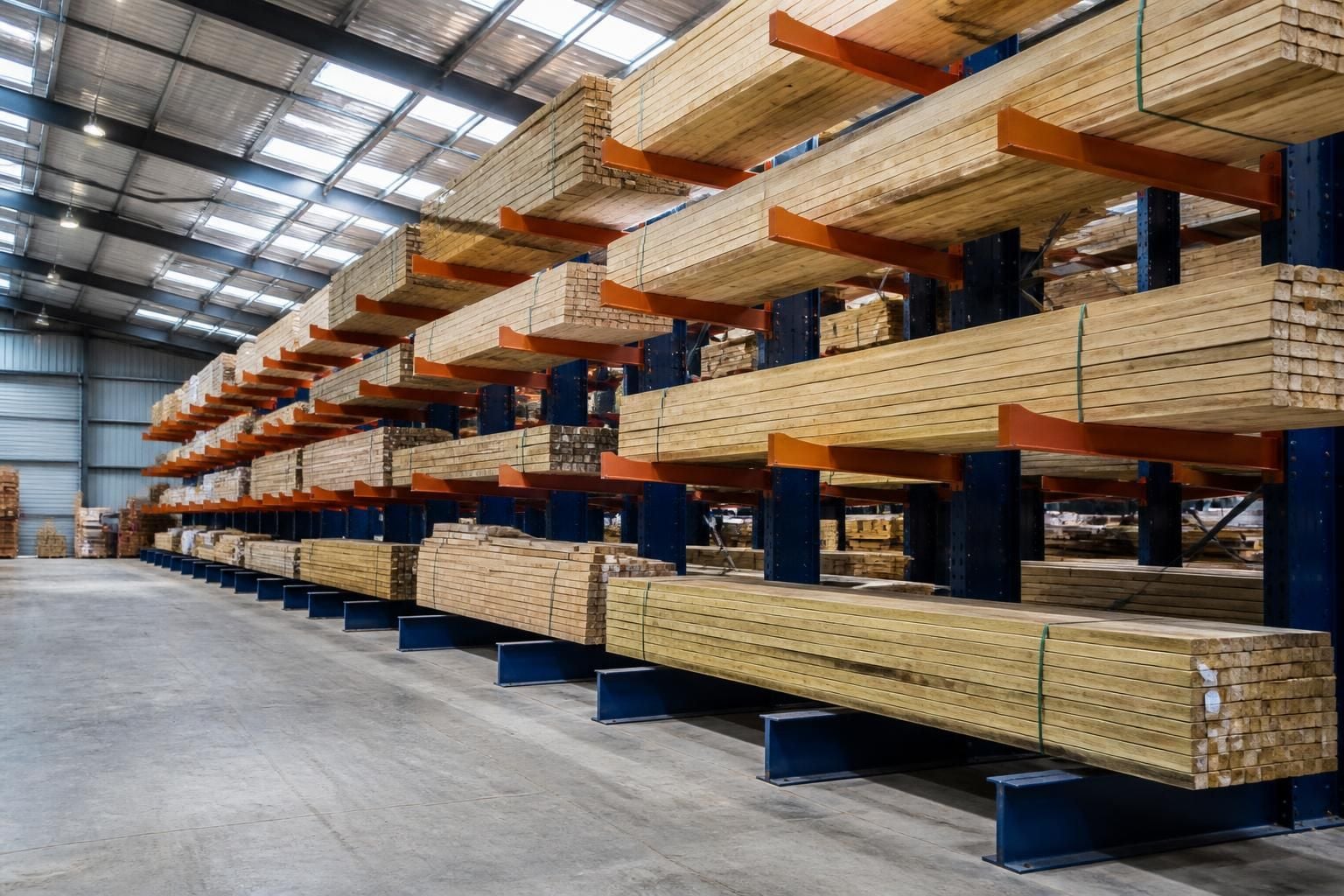
What load capacity should cantilever racking provide?
Cantilever racking should provide capacity matched to each stock load, length, storage level and handling method. We assess your stock and site requirements through a survey, then issue working drawings showing the proposed capacity and arrangement.
The required cantilever racking capacity should exceed the heaviest planned load in its actual storage position. The design must also account for how loads are distributed across arms, uprights and bays.
A single capacity figure can be misleading when comparing systems. Ask what each rating represents before making a decision. It may refer to an individual arm, one upright, a complete bay, or a particular loading arrangement.
- Arm capacity: the permitted load on one arm, often based on an evenly distributed load.
- Upright capacity: the combined load carried through the upright and its connections.
- Bay capacity: the total permitted load across the complete frame and its storage levels.
- Base capacity: the load supported by the base, including stock stored directly at floor level.
These ratings cannot be considered separately. Loading several arms on one side may place a different demand on the frame than balanced loading on both sides. Long, dense or irregular stock can also create concentrated loads rather than an even spread.
Stock length and shape affect the required capacity as well. A bundle that overhangs an arm may create leverage on the frame. A narrow contact area can concentrate weight in one part of the arm. The load centre also matters, because weight positioned away from the upright creates greater leverage.
For this reason, avoid choosing a system from the stock weight alone. The assessment should consider:
- the heaviest individual item or bundle;
- the number of items stored on each arm;
- the planned spacing between storage levels;
- the position of each load on the arm;
- the total load within each bay;
- how stock is placed, removed and handled;
- any variation between current and anticipated stock.
Do not confuse maximum capacity with a recommended everyday loading arrangement. The stated rating applies only to the configuration and loading conditions used for the design. Changing arm positions, adding levels or storing heavier items can alter the permissible load.
The supporting floor and anchoring arrangement also form part of the capacity decision. A heavy racking system transfers forces through its uprights and base. We therefore consider the available floor information, the proposed layout and the site conditions during consultation and survey.
Clearances and handling space matter too. A capacity increase does not necessarily make a layout suitable if access becomes restricted. The arrangement must allow stock to be handled without forcing loads into unsafe positions or increasing the risk of contact with the frame.
We can review stock information, site constraints and handling arrangements before preparing a written proposal. Working drawings can then show the proposed bay arrangement, storage levels and loading information for the agreed design.
Since 1982, we have designed and installed storage systems for companies of different sizes across the UK. That experience supports a practical assessment rather than a capacity choice based on a catalogue figure alone.
Once installed, the racking should remain within its stated loading limits. If stock types, weights, arm positions or the layout change, review the arrangement before using it. Load notices and operating information should match the installed system.
Ask for capacity information in terms that match the way you work. A useful proposal should make clear the rating for each relevant component, the assumed loading pattern and the total arrangement covered by the design.
Capacity should reflect how stock is handled in practice, not only its weight when first delivered. Bundles may be opened, reduced or placed unevenly, changing the load carried by individual arms.
Tell us how stock is presented during picking and replenishment. We can account for those loading conditions in the proposed arrangement, so the stated capacity relates to the work carried out in the storage area.