


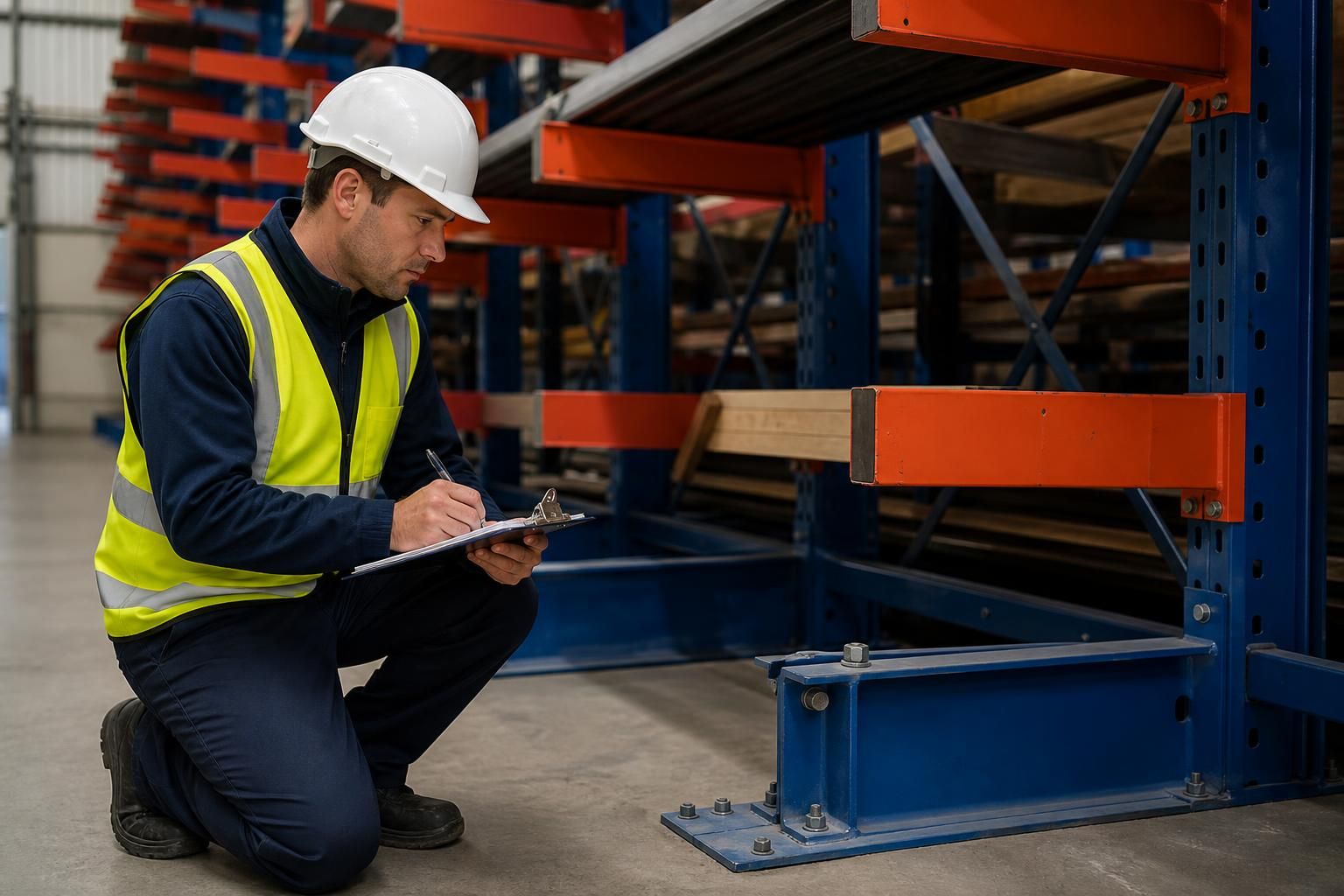
What inspections does cantilever racking require during warehouse use?
Cantilever racking should receive routine visual checks during warehouse use, with formal inspections scheduled according to risk, operating conditions and manufacturer guidance. We provide racking inspections to identify damage, instability and other issues requiring attention.
Cantilever racking inspections should examine structural condition, stability, anchorage, load information and the surrounding warehouse environment. Checks should also confirm that loading practices have not introduced new risks.
Routine checks during warehouse use
Operators should look for visible problems before use and report damage immediately. The check should consider:
- Uprights, bases, bracing and arms showing impact damage, bending or distortion.
- Loose, missing or displaced components, including arm restraints and fixings.
- Damaged, loose or corroded floor anchors.
- Uneven loading, overhanging stock or loads placed outside the intended arm positions.
- Missing, damaged or unclear load notices.
- Obstructions, floor damage or vehicle movements that could affect stability.
Forklift contact deserves particular attention. A small impact can affect an upright, arm connection, base or anchor without making the problem immediately obvious.
Formal inspections
A formal inspection should be arranged at intervals based on operating conditions, risk and the racking manufacturer’s instructions. Busy warehouses, frequent vehicle movements, outdoor exposure and changing loads may require closer attention.
The inspection should be completed by someone with suitable knowledge of storage equipment and its risks. It should be more detailed than an operator’s visual check and should cover the complete installation, not only damaged areas.
The inspector may assess:
- Upright alignment, arm levels, bracing and connections.
- Base condition, floor condition and the security of anchors.
- Signs of impact, corrosion, cracking, bending or deformation.
- Clearances around stored long loads and access routes.
- Load notices, operating arrangements and changes to the original layout.
- Protection from vehicles, pedestrians and adjacent work activities.
Inspection findings should be recorded with the location, observed condition and required action. Photographs can make individual bays easier to identify, particularly across a large warehouse.
What happens after damage is found?
Report damage promptly and prevent further use of the affected area where stability or safe loading may be uncertain. Isolate the bay or unload it only under a controlled arrangement.
Do not straighten, weld, drill or replace a structural component without an appropriate assessment. Unplanned alterations can affect load capacity and the behaviour of connected parts.
Actions may include monitoring, repair, replacement, unloading or removal from service. The decision should reflect the damage, the loaded condition and the risks around the installation.
After remedial work, the affected section should be checked before returning it to warehouse use. Update inspection records and communicate any changed loading or operating requirements.
When should an additional inspection take place?
Arrange an additional assessment after a vehicle impact, significant layout change, unusual loading event, severe weather exposure or another incident affecting stability.
Changes to stock dimensions or weights can also justify a review. The existing arrangement may no longer reflect the loads, clearances or handling methods now used.
Spartan Direct provides racking inspections as part of its storage work. We can review the installation, discuss observed issues and identify matters requiring attention.
A no-obligation consultation may include a site meeting and survey, followed by written proposals and working drawings where further work needs planning. This gives you a documented basis for considering repairs, changes or additional storage capacity.
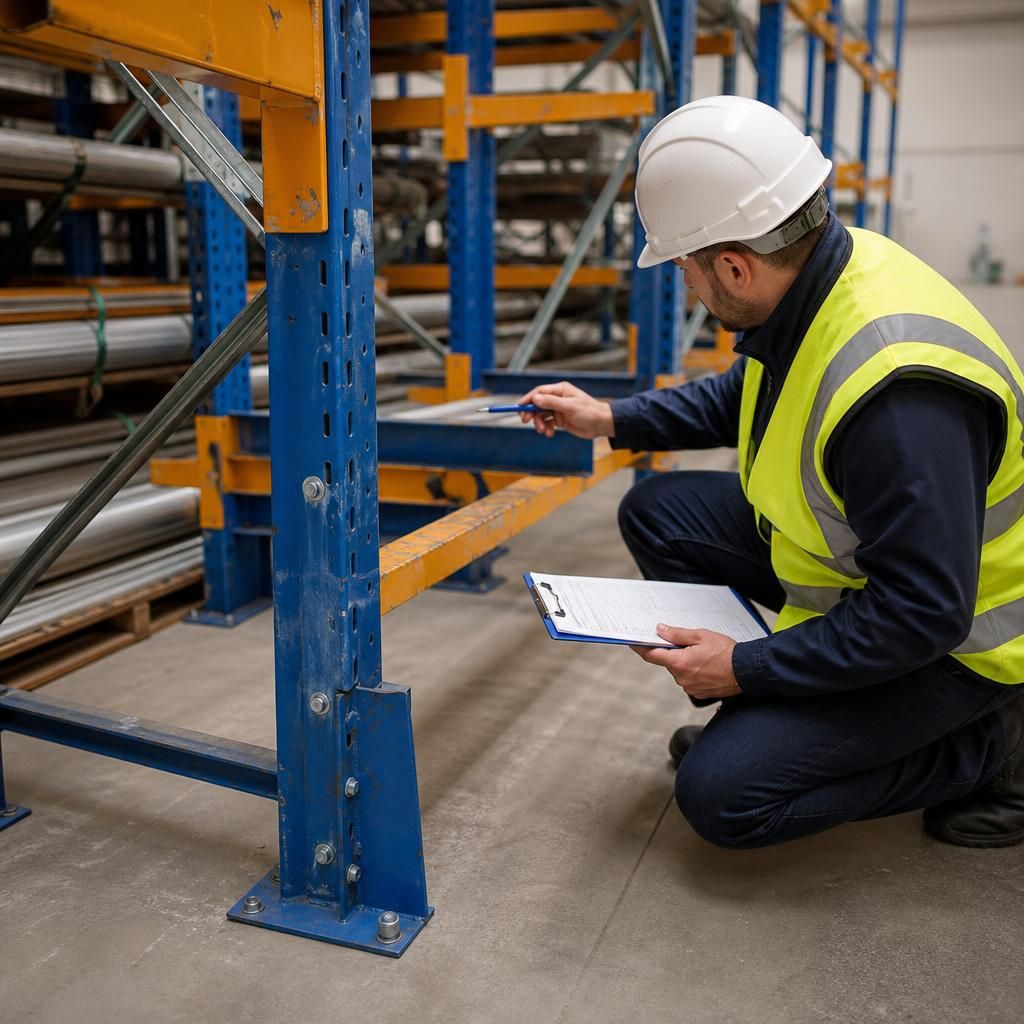
Inspection records can reveal recurring damage patterns across the warehouse. Comparing findings over time may show where vehicle routes, loading methods or protection need review.
This broader view helps you address repeated risks, rather than treating each damaged component as an isolated event.



