


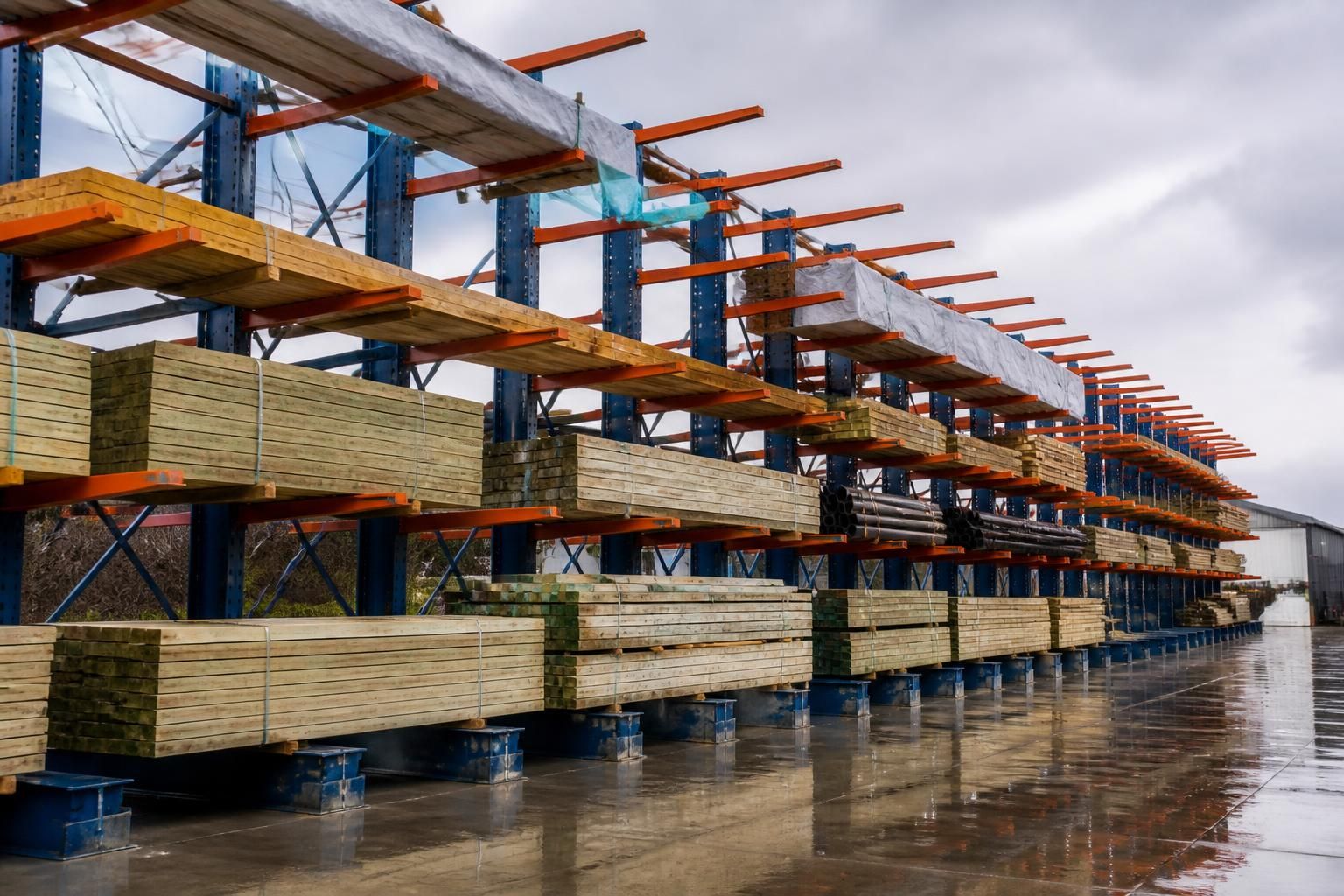
Can cantilever racking be used outdoors safely?
Yes, cantilever racking can be used outdoors safely when its design accounts for weather, ground conditions, load stability and safe access. Protection against corrosion, secure anchoring and suitable inspections are essential for continued safe use.
Outdoor cantilever racking is suitable only when the rack, stored materials and operating conditions have been assessed together. An indoor system should not simply be moved outside without reviewing its specification and surroundings.
Start with the stock. Record the length, weight, shape and bundle arrangement of each material. Pipes, timber, sheet products and uneven loads place different demands on the arms and uprights.
- Keep each load within the stated arm and upright capacities.
- Distribute materials across the available arms rather than concentrating weight at one point.
- Place heavier stock at lower levels where the handling plan allows.
- Prevent loose, rolling or projecting materials from entering vehicle and pedestrian routes.
- Review the rack if stock dimensions, weights or handling equipment change.
Stored materials can also alter how an outdoor rack behaves. Long, light or sheet materials may catch wind, particularly when stored near the top. Bundles need suitable restraints where movement could occur.
Weather protection involves more than choosing a corrosion-resistant finish. The specification should reflect the site’s exposure, drainage and maintenance conditions. Check uprights, arms, baseplates, fixings and connection points for coating damage, rust or trapped moisture.
Water should drain away from the rack bases. Standing water can affect fixings, coatings and the supporting surface. Keep the area around the rack clear enough for checks, cleaning and safe handling.
The supporting slab must suit the rack loads and the site conditions. A survey should consider level, bearing capacity, surface damage, drainage and the effects of nearby vehicle movements. Repairs or preparation may be needed before installation.
Vehicle impact presents a separate outdoor risk. Position the rack away from turning areas where possible, and use suitable protection when vehicles operate nearby. Mark routes clearly and separate pedestrians from handling equipment.
Safe use depends on a clear loading and unloading method. Operators need to know the permitted load arrangement, access route and action to take when materials shift or damage occurs. Do not continue using a damaged rack until it has been assessed.
Outdoor systems need planned checks as well as routine housekeeping. Look for bent members, displaced arms, damaged fixings, corrosion, changes in level and contact from vehicles. Record findings and remove unsafe areas from use.
Our consultation can include a site meeting and survey, followed by written proposals and working drawings. These documents help assess stock, operating space and site conditions before installation.
Where required, we can coordinate project management from proposal and tender stages through installation and final commissioning. The result should be an outdoor storage arrangement that suits the materials, site and working method.
Cantilever racking can be used outdoors safely when operators can clearly identify its permitted loading arrangement.
Display load information where stock is handled, and keep inspection findings and damage reports recorded. If the rack’s use changes, review the revised stock, equipment and site conditions before loading resumes.



