


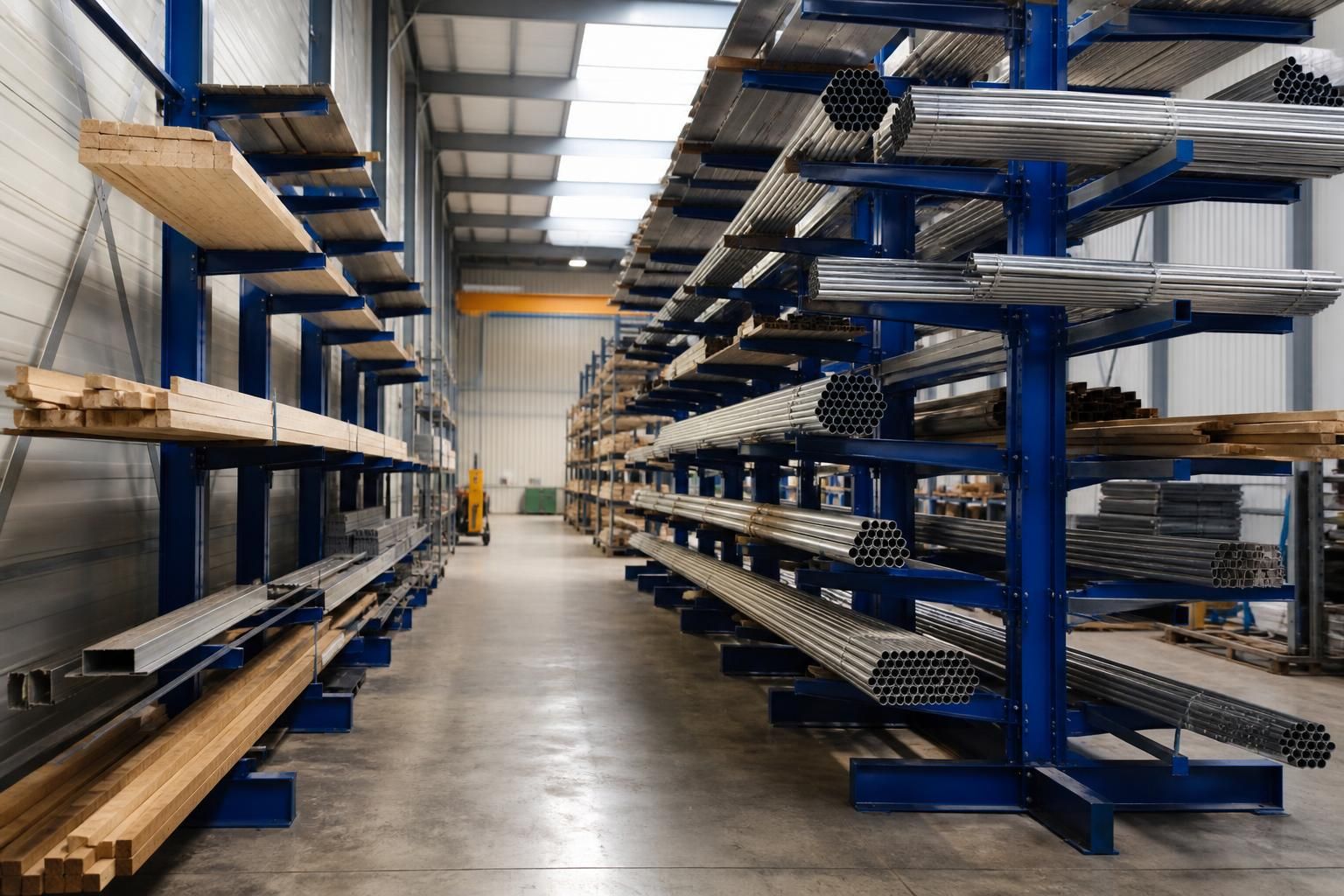
Should you choose single-sided or double-sided cantilever racking?
Choose single-sided cantilever racking against a wall or perimeter; choose double-sided racking for access from both sides. Your stock, available floor layout and handling workflow determine the suitable arrangement.
Choose single-sided cantilever racking when storage sits along a wall or boundary. Choose double-sided racking when stock needs access from both faces. The better arrangement depends on building shape, handling routes, stock movement and the working space around each bay.
Both arrangements store long, awkward or non-palletised materials on horizontal arms. The main difference is the direction of access. Single-sided frames present arms on one face. Double-sided frames support arms on opposite faces from a shared central structure.
Single-sided cantilever racking suits perimeter storage
Single-sided racking works well where a wall, column line or boundary already defines the storage edge. It keeps stock on one side of the frame, leaving the handling route on the other.
- It places long stock against the perimeter rather than in the centre of the warehouse.
- It can keep a central floor route clear for vehicles, picking or production movement.
- It suits sites where materials are loaded and collected from one direction.
- It can help separate stored materials from other warehouse or manufacturing activities.
Check the wall and surrounding area before selecting this arrangement. The wall may limit access, interfere with loading, or restrict the length of material that can be handled safely.
Single-sided racking also needs suitable clearance in front of the arms. Measure this route around columns, doors, machinery and pedestrian areas. The available clearance must suit the equipment and materials used on site.
Double-sided cantilever racking suits central storage rows
Double-sided racking is suited to a central position where materials need loading or picking from both faces. It creates two accessible storage sides within one row.
- It allows different stock groups to face different work areas.
- It can support two-way access where the layout has routes on both sides.
- It suits warehouses or production areas with repeated loading and retrieval movements.
- It can help organise long materials into defined rows rather than loose floor storage.
However, both faces need safe and practical access. A double-sided row should not block a route or leave insufficient room for handling equipment. The aisle arrangement must reflect the vehicle, lifting method and material length.
It is also important to consider how stock moves through the building. If one side receives materials and the other serves production, double-sided access may support that separation. If every item arrives and leaves from one route, single-sided storage may be more suitable.
Compare the options against your site requirements
Start with the material, then review the layout. Record the longest and heaviest items, how often they move, and how they are lifted. Include the number of stock categories and whether some materials need dedicated locations.
- Building layout: identify walls, columns, doors, machinery, loading points and emergency routes.
- Access direction: establish whether operators need one-face or two-face loading and retrieval.
- Handling equipment: allow for the vehicle or lifting method used at each storage face.
- Stock control: consider whether separate faces would make picking, replenishment or production supply clearer.
- Future changes: allow the layout to support likely changes in stock, workflow or available floor space.
Do not select a frame solely because it appears to use less floor area. A compact arrangement can create difficult access if aisles, turning areas or working clearances are overlooked.
How we help you decide
We can review the site, storage requirements and handling workflow before recommending an arrangement. A no-obligation consultation may include a site meeting and survey.
We then prepare a written proposal and working drawings showing the proposed layout. These documents help you assess access, stock positioning and the relationship between racking rows and other site activities.
Where required, we can coordinate project management from proposal and tender stage through installation and final commissioning. This is useful when cantilever racking forms part of a wider warehouse or manufacturing layout.
The decision is not simply single-sided versus double-sided. It is about placing each storage face where materials can be handled safely and efficiently. A site survey gives you a clearer basis for choosing the arrangement that fits your stock and workflow.
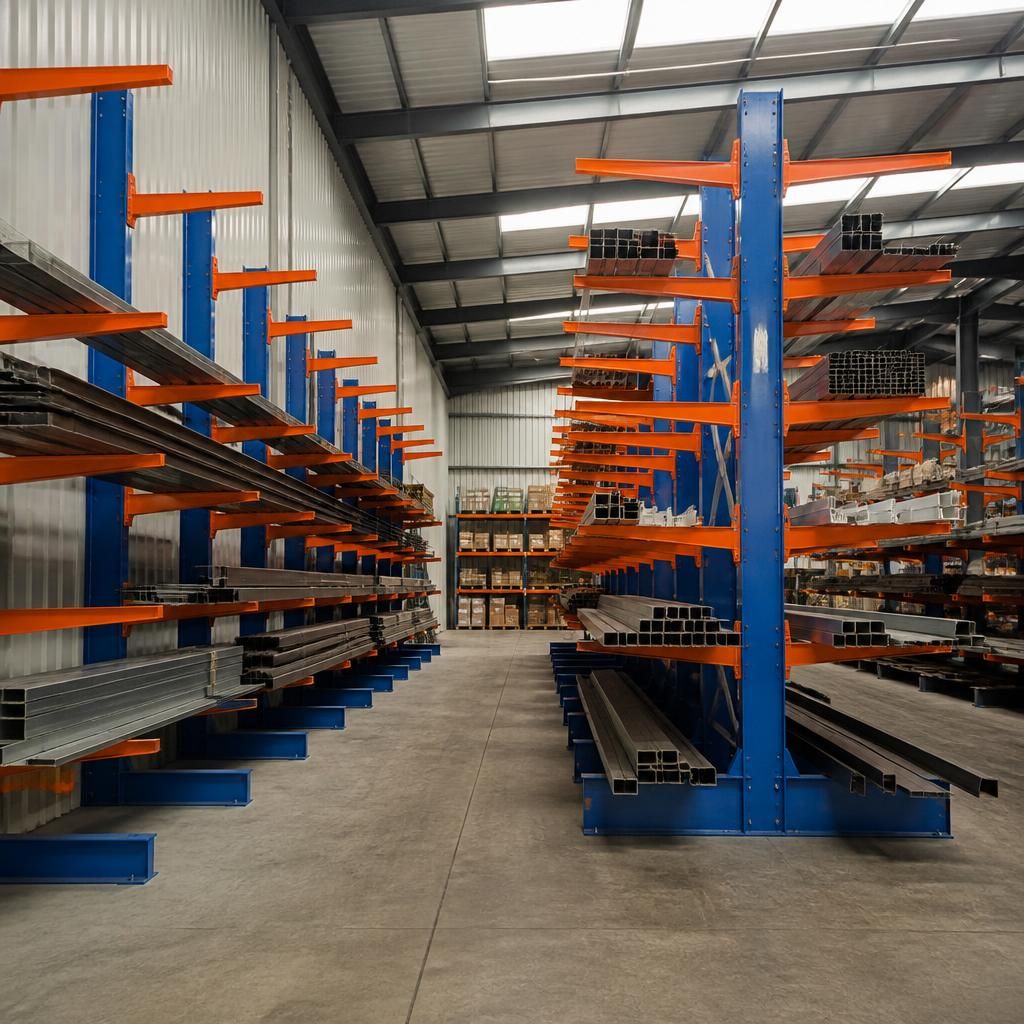
Test the handling sequence, not only the racking footprint. Trace how a load arrives, is placed, collected and moved onward.
If both faces remain usable during these movements, double-sided cantilever racking may support a central storage row. If one face is regularly blocked by walls, equipment or activity, single-sided racking may provide the more practical arrangement.



