Pallet racking is a warehouse storage system designed to store palletised goods efficiently and safely by making use of vertical space. Commonly used in warehouses, distribution centres and industrial facilities across the UK, pallet racking systems allow businesses to increase storage capacity without expanding their floor footprint.
Unlike floor stacking, pallet racking uses steel frames and adjustable beams to create structured storage locations that can be accessed by forklift trucks. Understanding the types of pallet racking available is essential when planning a warehouse layout, as different systems are designed to suit specific load types, aisle widths and stock rotation requirements.
At Spartan Direct, we supply a wide range of industrial pallet racking solutions tailored to different warehouse environments. From standard systems to high-density and specialist options, our team helps businesses choose racking that improves efficiency, safety and long-term scalability.
Ready to Explore Your Options?
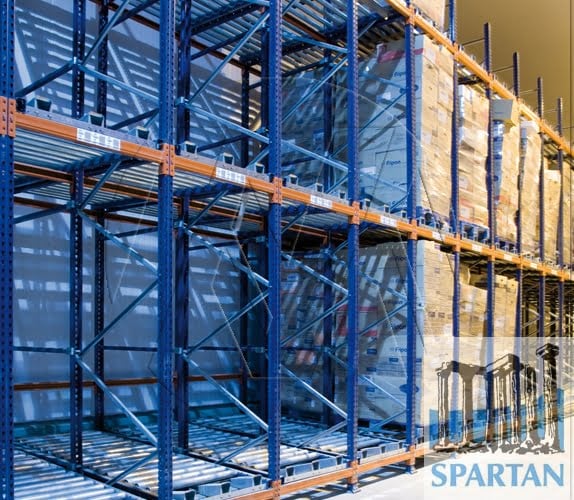
Depending on your storage requirements, Spartan Direct offers a range of pallet racking systems including double deep pallet racking, wide aisle pallet racking, drive-in pallet racking, narrow aisle pallet racking, push back pallet racking, mobile pallet racking, pallet live racking, and heavy duty pallet racking.
Contact Spartan Direct today for a free consultation and no-obligation quote.
Enquire Now
10 Common Questions About Pallet Racking and How it Works
What is Pallet Racking?
Pallet racking is a warehouse storage system designed to store palletised goods safely and efficiently using vertical space.
A typical system uses steel upright frames and horizontal beams to create storage levels, allowing pallets to be stored off the floor and accessed using forklifts. Well planned pallet racking systems improve capacity, organisation and workflow in warehouses and distribution centres.
What are pallet racks used for in warehouses?
Pallet racks are used to store bulk goods that are delivered, handled or dispatched on pallets.
They are ideal for warehouses that need fast access, improved stock control and safer storage compared to floor stacking. Pallet racking is commonly used for raw materials, finished goods, seasonal stock and high-volume products.
How does a pallet racking system work?
A pallet racking system works by supporting pallets on adjustable load beams fixed between upright frames.
Forklift trucks place pallets onto the beams and remove them when needed. Beam levels can be adjusted to suit different pallet heights, making industrial pallet racking a flexible option for changing stock profiles.
What industries use pallet racking systems?
Pallet racking is used across most UK industries that store or move palletised goods, including logistics, manufacturing, retail distribution, eCommerce, automotive, construction supplies and food and drink.
Any business managing high-volume stock can benefit from properly designed warehouse racking systems.
What is the difference between pallet racking and shelving?
The main difference is how goods are handled and the weight supported. Pallet racking is designed for forklift access and heavier palletised loads, while shelving is designed for hand-picked items, cartons, or smaller stock.
Many warehouses use both, combining pallet racking for bulk storage with shelving for picking operations and packing areas.
How much weight can pallet racking hold?
Weight capacity depends on the design of the uprights, beams, and the way loads are distributed. Many systems support several tonnes per bay, but capacity varies by specification and configuration.
Loads should always stay within the safe working limits shown on the racking load notice, and heavier stock may require heavy-duty pallet racking.
Is pallet racking suitable for all warehouses?
Most warehouses can use pallet racking, but suitability depends on ceiling height, available floor space, pallet sizes, forklift type and stock rotation needs. Some operations require high-density systems to maximise capacity, while others need direct access to every pallet.
Choosing the right system often involves comparing different types of pallet racking and planning the layout around your workflow.
What materials are pallet racks made from?
Pallet racking is usually made from high-strength steel, designed to handle heavy loads and long-term warehouse use. Steel provides structural strength while allowing adjustable beam levels.
Depending on the environment, finishes may vary, particularly for cold stores, corrosive settings or outdoor storage.
How long does pallet racking last?
A correctly specified and installed pallet racking system can last for decades. Lifespan depends on the quality of the steel, loading practices, forklift impact risk, and inspection routines. Regular checks and repairs help maintain safety and prevent small issues from becoming costly problems.
Why is pallet racking essential for warehouse efficiency?
Pallet racking improves efficiency by increasing storage capacity, keeping goods organised, speeding up forklift movements and improving stock visibility. It also supports safer working practices by reducing floor clutter and improving access routes.
A well-designed system can reduce wasted space and make daily warehouse operations more predictable and scalable.