


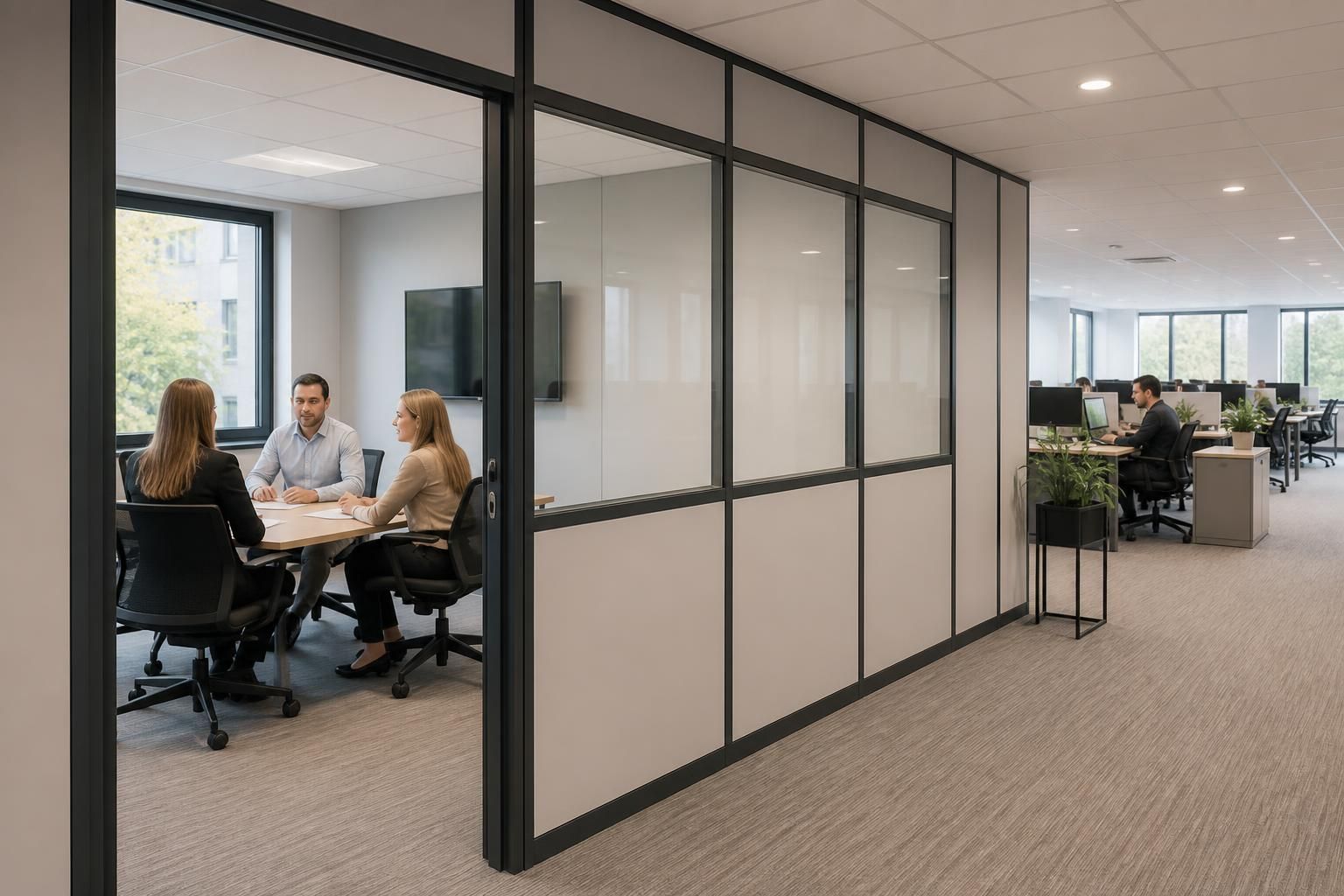
When should you choose demountable office partition walls?
Choose demountable office partition walls when your office layout may change, or you need defined rooms without permanent construction. They provide adaptable separation for offices, meeting rooms and work areas.
Choose demountable office partition walls when the way you occupy, manage or divide an office may change during its use. They suit businesses planning team changes, project rooms, phased expansion or future alterations without committing every area to one fixed arrangement.
They are especially suitable when:
- Headcount may increase or decrease, changing the number of work areas required.
- Teams need separate rooms for meetings, focused work or confidential discussions.
- You expect departments, functions or room uses to change over time.
- Work needs to continue in part of the premises while other areas are altered.
- You want to review future reinstatement or alteration requirements before choosing a system.
The main decision is not simply how the partitions look. Consider how long each room arrangement is likely to remain, how easily the layout may need changing, and what the office must support each day. A demountable system can make future alterations more manageable, but the selected construction must still suit the room’s use and required performance.
Check the space before choosing a system. Existing columns, windows, doors, ceilings and floor levels can affect the arrangement. So can lighting, ventilation, power, data cabling, fire detection and sprinkler services. A site survey identifies these interfaces before drawings are prepared. It also helps confirm circulation routes, access to rooms and the position of doors.
Demountable office partition walls should not be treated as storage structures. If you need wall-mounted equipment, screens or shelving, confirm the fixing requirements at the design stage. The proposed system and its supporting details must suit the items you intend to install.
Consider privacy, sound and fire requirements early. Offices used for confidential conversations may need different separation from open work areas. Meeting rooms, interview rooms and management offices can also have different requirements. Fire strategy, escape routes, door positions and service penetrations should be reviewed before installation. These details can affect the appropriate partition construction and room layout.
Office fit-outs often include several connected decisions. Partitioning may need to work with desks, storage, reception areas, meeting rooms and staff circulation. Planning these elements together helps prevent doors opening into busy routes or rooms losing useful floor area. It also gives you a clearer basis for comparing proposals.
A fixed construction may be more suitable where the arrangement is intended to remain unchanged, the building strategy requires a permanent structure, or the proposed use demands details outside the chosen partition system. The decision should follow the building’s requirements, the room functions and the likely future of the premises.
Our process can begin with a no-obligation consultation, followed by a site meeting or survey where appropriate. We then prepare a written proposal and working drawings for the agreed arrangement. Where required, we can coordinate project management from proposal and tender stages through installation and final commissioning.
Spartan Direct Limited was formed in 1982 and works with businesses assessing how to use office, commercial and industrial space. For offices across the West Midlands, a survey-led proposal gives you information about fit, access, room functions and future alterations before you select demountable office partition walls.
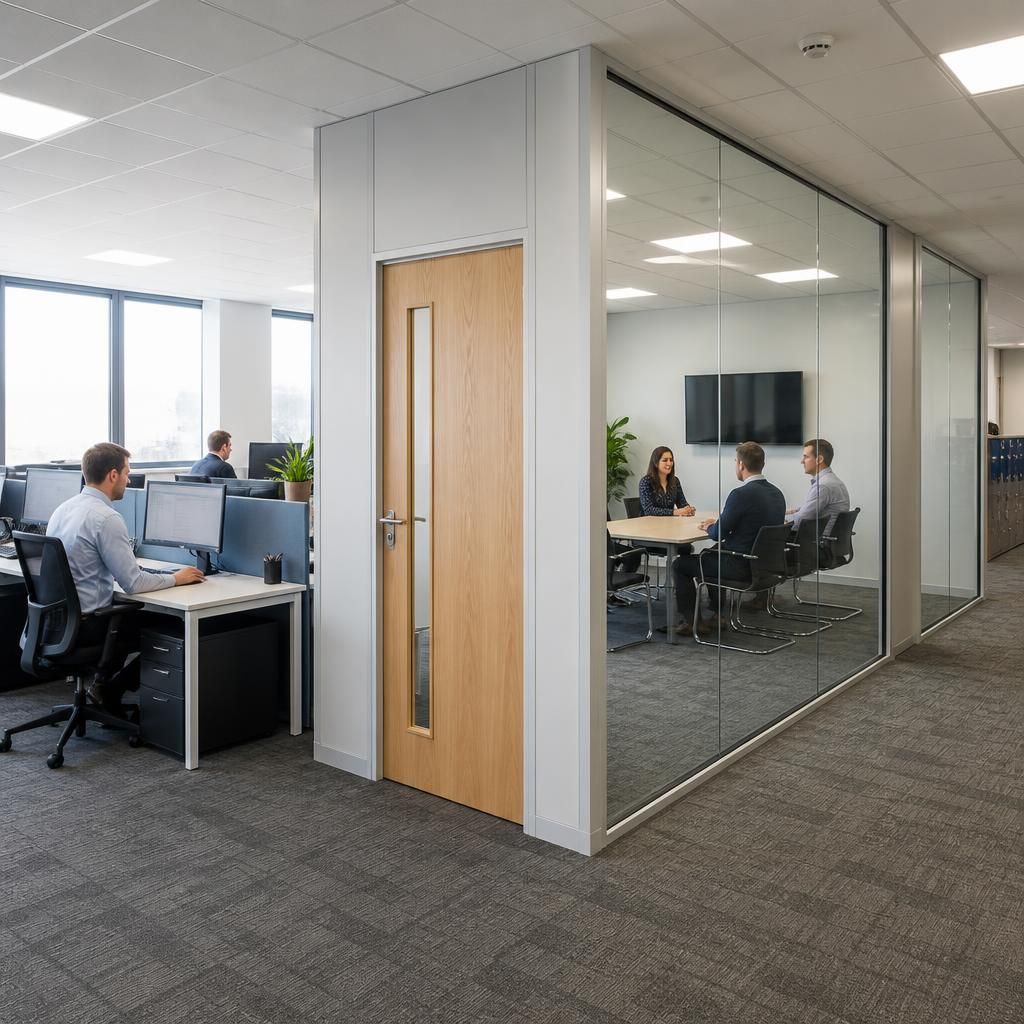
Demountable office partition walls suit offices where you need usable rooms before the longer-term accommodation plan is settled. They let you define working areas while keeping future internal changes under consideration.
Before choosing, compare the proposed layout with likely room uses, access routes and building services. This helps you decide whether a demountable arrangement supports the office now without closing off later options.



