


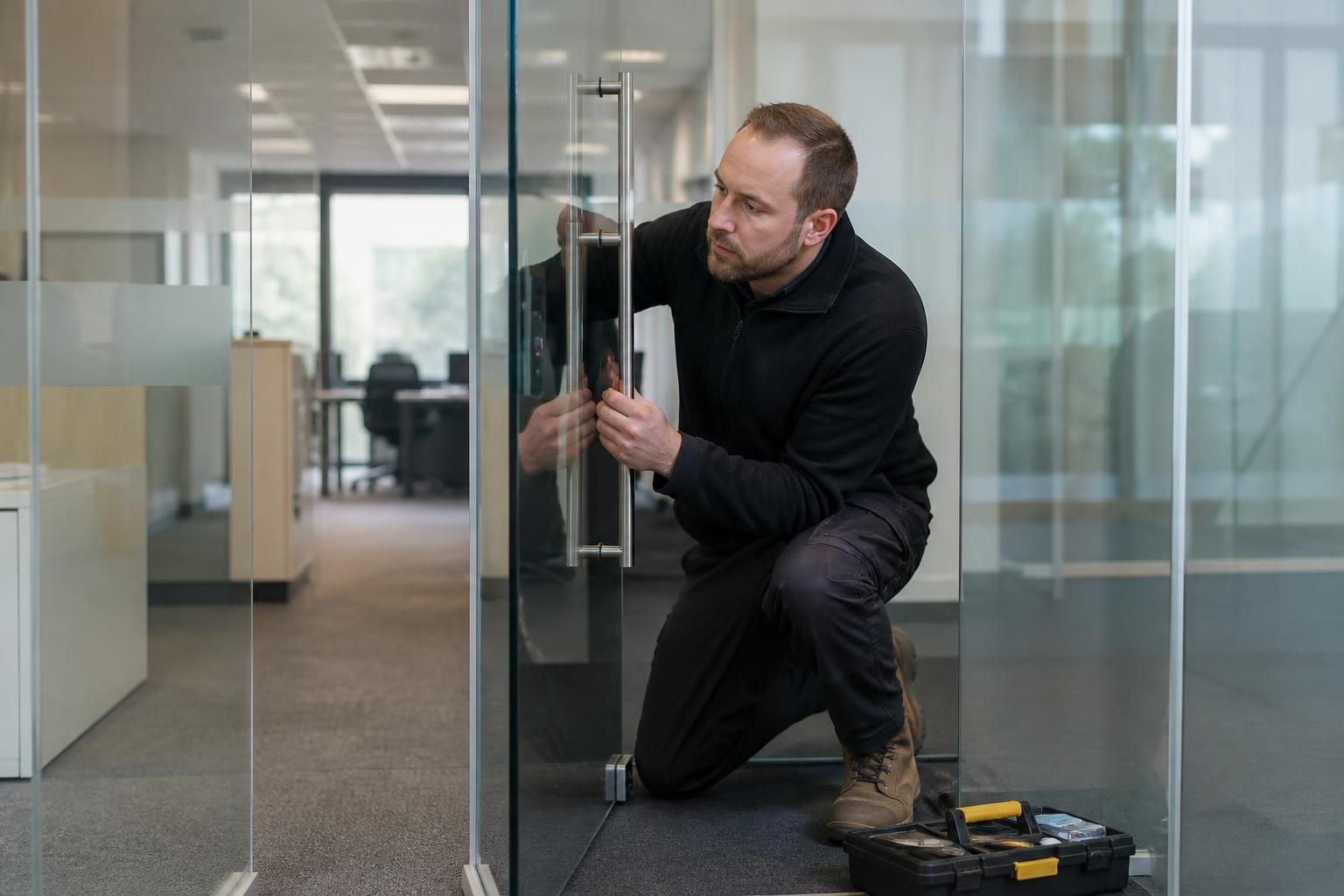
What maintenance should glass office partitions receive after installation?
Glass office partitions need regular cleaning, plus checks of doors, hinges, seals, handles and fixings for wear or damage.
Address faults promptly and include partitions within workplace safety reviews to maintain clear visibility, safe access and effective separation.
The most effective maintenance plan combines suitable cleaning, planned condition reviews, careful use and documented follow-up. This protects appearance, visibility and the partition’s role within the office layout.
Set a maintenance routine around use
Maintenance frequency should reflect foot traffic, cleaning activity, occupancy and the partition system installed. Areas beside busy routes may need more frequent attention than enclosed meeting rooms.
Record the date, area reviewed, issue identified and action taken. This gives facilities teams a clear history when recurring problems appear or office layouts change.
Clean glass without damaging adjacent finishes
- Use cleaning materials suitable for glass and the surrounding frame or partition finish.
- Remove marks using soft, non-abrasive materials.
- Prevent excess liquid from collecting around joints, channels or floor connections.
- Remove tape, adhesive and notices carefully, rather than scraping the glass with unsuitable tools.
- Check that cleaning does not leave smears that reduce visibility through the partition.
Cleaning products should follow the partition manufacturer’s guidance where that information is available. If the system includes special finishes, films or treated glass, confirm compatibility before applying a new product.
Look for changes in the glass and surrounding structure
A maintenance review should note chips, cracks, impact marks, movement or changes in alignment. Small defects can become more significant if the cause remains unresolved.
Do not attempt to drill, cut, remove or reposition partition components as a casual repair. These actions can affect the layout, safety and intended performance of the installation.
Restrict access to a damaged area where necessary, then obtain an assessment before normal use continues. The appropriate action depends on the defect, the partition design and the surrounding workplace conditions.
Review changes to the office layout
Desks, storage, equipment and room functions can change after installation. Check that later alterations do not obstruct access, create impact risks or place pressure against the partition.
When a layout change affects partitioning, use the original drawings where available. They can help identify the installed arrangement and support a clear discussion about proposed work.
Our office fit-outs and partitioning service can include site meetings, surveys, written proposals and working drawings. Project management may also cover installation and final commissioning where required.
Use the correct response for repairs
Minor marks may only require cleaning. Damage, movement or a change that affects use requires a more considered response. Keep a record of the issue and avoid masking it with decoration or temporary materials.
Ask for the partition to be assessed when the cause is unclear, when damage follows an impact, or when the installation no longer suits the working arrangement. A survey can establish what needs attention before repair or alteration begins.
Spartan Direct Limited’s terms provide for repair or replacement of materials with material defects notified in accordance with those terms. The supplier may instead refund the relevant price, at its sole discretion.
Include maintenance in workplace planning
Assign responsibility for routine cleaning, recorded reviews and reporting defects. Make the maintenance information available to facilities staff and anyone arranging office changes.
For a partitioning system that forms part of a wider office fit-out, coordinate maintenance with other planned works. This reduces the risk of one contractor damaging another installation or obscuring an issue during refurbishment.
A consultation and site survey can clarify the condition of existing partitioning and the work required. Written proposals and working drawings then provide a practical basis for deciding between repair, adjustment and replacement.
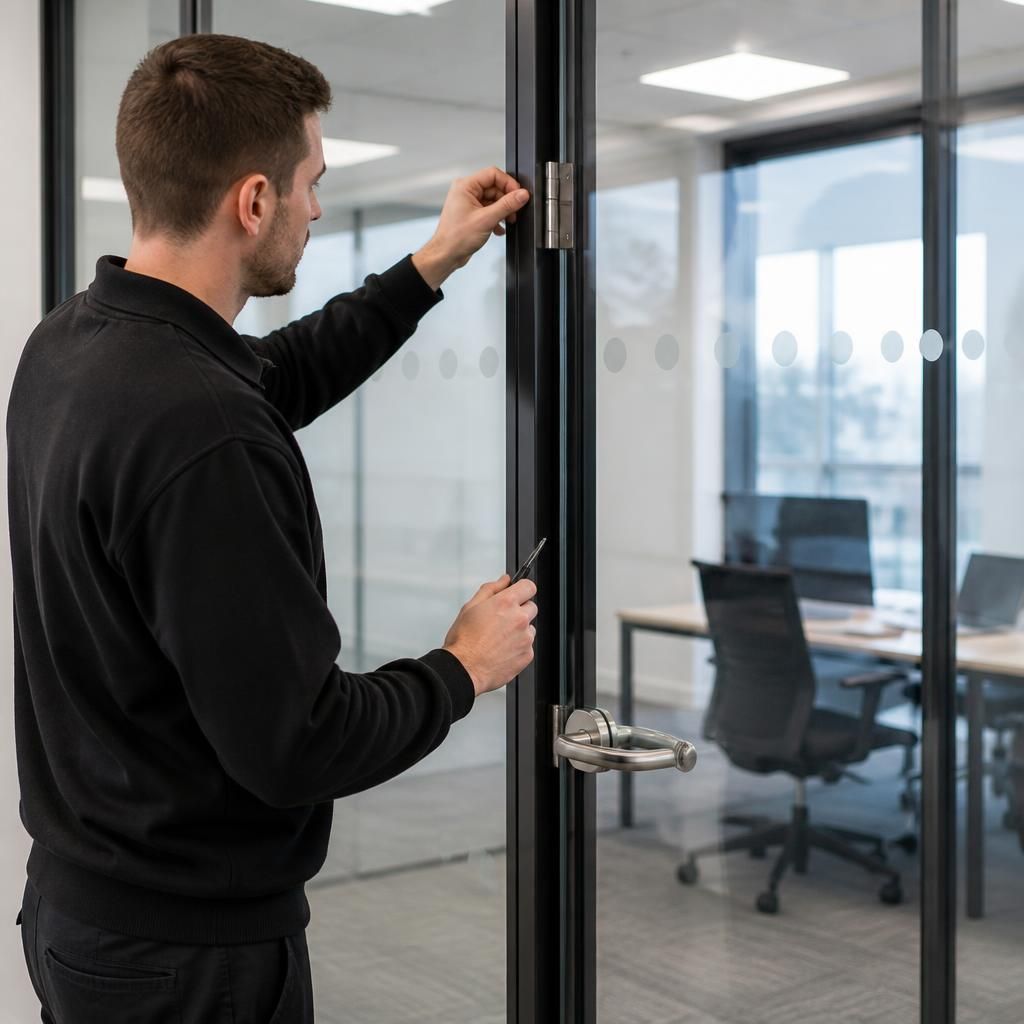
Use recurring faults as a maintenance signal. If the same door, panel or connection needs attention repeatedly, record the pattern and arrange a proper assessment. Replacing individual parts without identifying the cause may leave the underlying issue unresolved.
Keep details of the partition system, previous work and any replacement components with the building’s maintenance records. This gives facilities teams clearer information when future repairs, refurbishment or layout changes are considered.



