


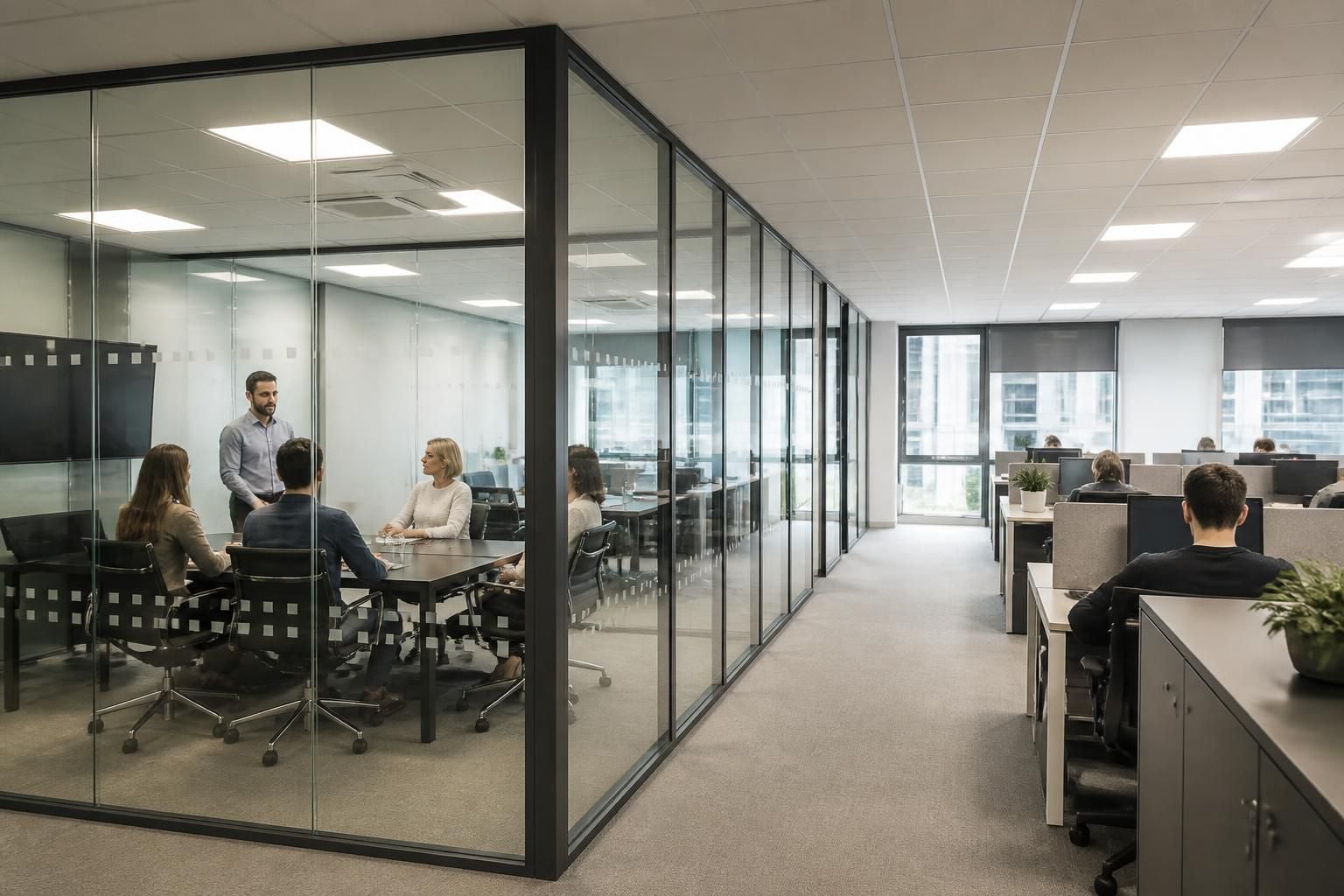
Should you choose acoustic or standard glass office partitions?
Choose acoustic glass office partitions when speech privacy matters; choose standard glass office partitions when visual openness and natural light matter more.
The better choice depends on the room’s acoustic duty, the activities inside it and how much visual separation you need. Acoustic glass suits rooms where speech control is important; standard glass suits simpler division between work areas.
What acoustic glass changes
Acoustic glass office partitions are specified to reduce sound passing between adjoining rooms. They can support meeting rooms, interview spaces, offices handling sensitive discussions and areas beside busy work zones.
They do not make a room completely silent. Sound can still travel through doors, ceilings, floors, ventilation routes and adjoining construction. The partition therefore needs suitable frames, seals, doors and junction details.
Room use matters as much as the glass specification. A meeting room beside concentrated desk work may need more sound control than a manager’s office beside a quiet corridor. A survey helps identify these relationships before drawings are prepared.
When standard glass can be the sensible choice
Standard glass office partitions provide a clear physical division without creating a fully enclosed-looking layout. They can suit offices where occupants need visual connection, daylight movement and straightforward room separation.
They may be appropriate for reception areas, general offices, internal observation points and rooms without confidential conversations. They should not be selected solely because a partition looks attractive if nearby activity creates a privacy problem.
Consider the conversations, equipment and movement around each room. Phones, machinery, printers and frequent foot traffic can increase the need for acoustic control. Quiet rooms with limited confidential discussion may need less specialised construction.
Compare the practical factors
- Privacy: Choose an acoustic specification where people discuss confidential, commercial or personal information.
- Room purpose: Meeting rooms, interview rooms and focused workspaces often deserve closer acoustic consideration.
- Visual connection: Standard glass can maintain sightlines where teams need awareness across adjoining areas.
- Doors: Door type, seals and closing arrangements can affect the result, so assess them with the partition.
- Building layout: Ceilings, floors, columns and service routes can create sound paths around the glass.
- Future changes: Consider whether the layout may change before committing to a specification.
Do not compare glass panels in isolation. A partition with acoustic glass may perform poorly if sound bypasses it through an open ceiling void or an unsuitable door.
Standard glass may also be the wrong choice for a room described as private. Clear sightlines do not prevent speech from carrying, and visual separation does not equal acoustic separation.
How we help you decide
Our office fit-outs and partitioning work can begin with a no-obligation consultation. This may include a site meeting and survey to review room uses, access, existing construction and the proposed layout.
We can then prepare a written proposal and working drawings showing the intended partition arrangement. Where required, project management can continue from proposal and tender stage through installation and final commissioning.
For West Midlands workplaces, discuss the room functions and privacy requirements before choosing the glass type. The right specification should support the way each space is used, not simply divide it.
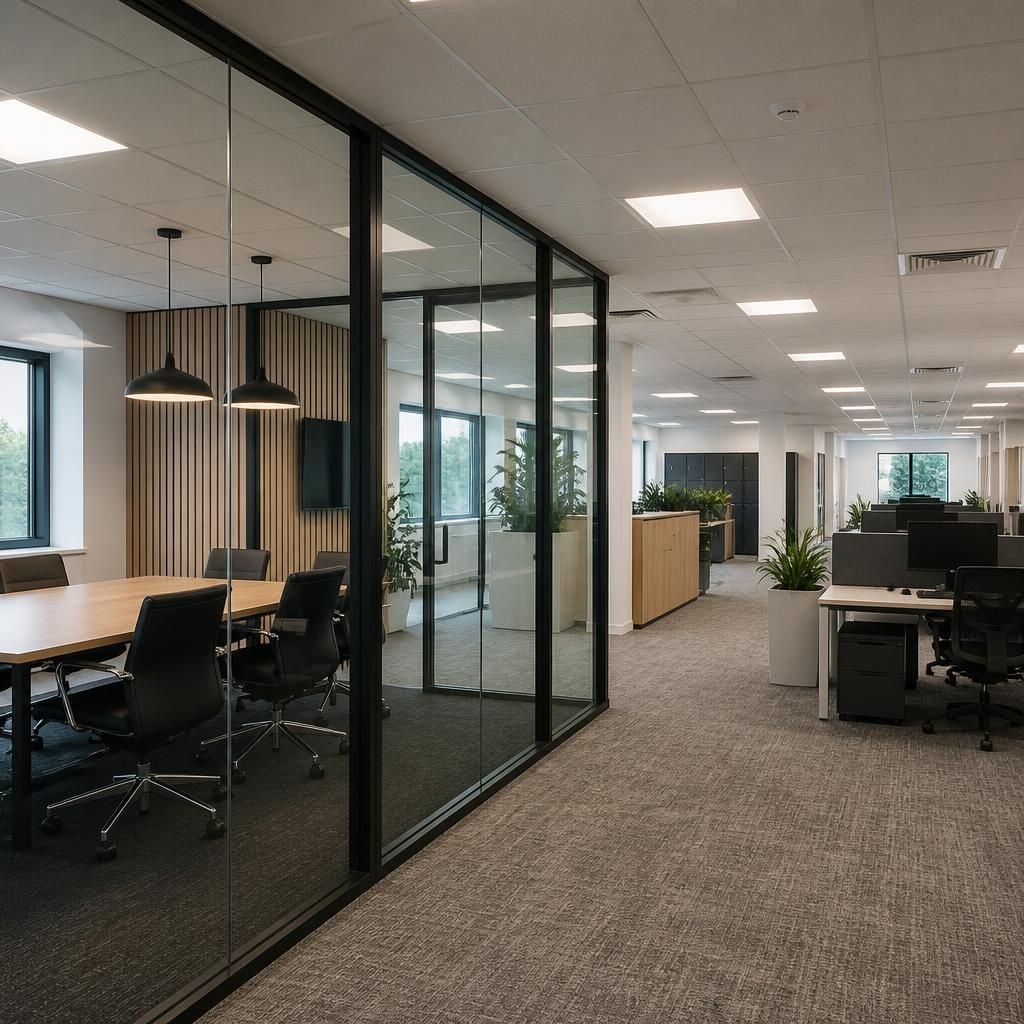
Acoustic privacy and visual privacy are different. Acoustic glass can reduce speech transfer while still allowing views through the partition. If people must not hear a discussion, assess acoustic performance. If they must not see the room, assess visual separation separately.
This distinction prevents a clear glass meeting room from being described as fully private. It also helps you retain an open feel where sightlines matter, while identifying rooms that need stronger control of conversations.



