What maintenance should freestanding office dividers receive?
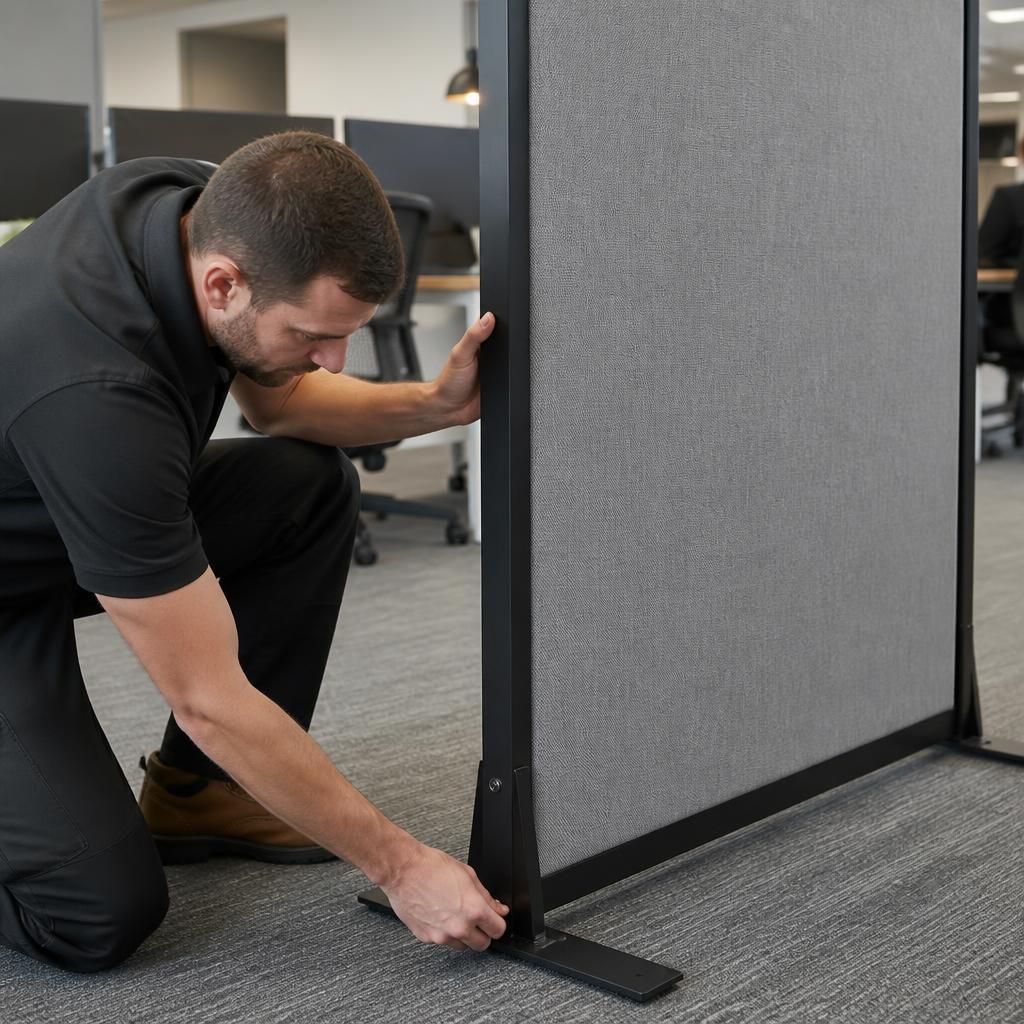
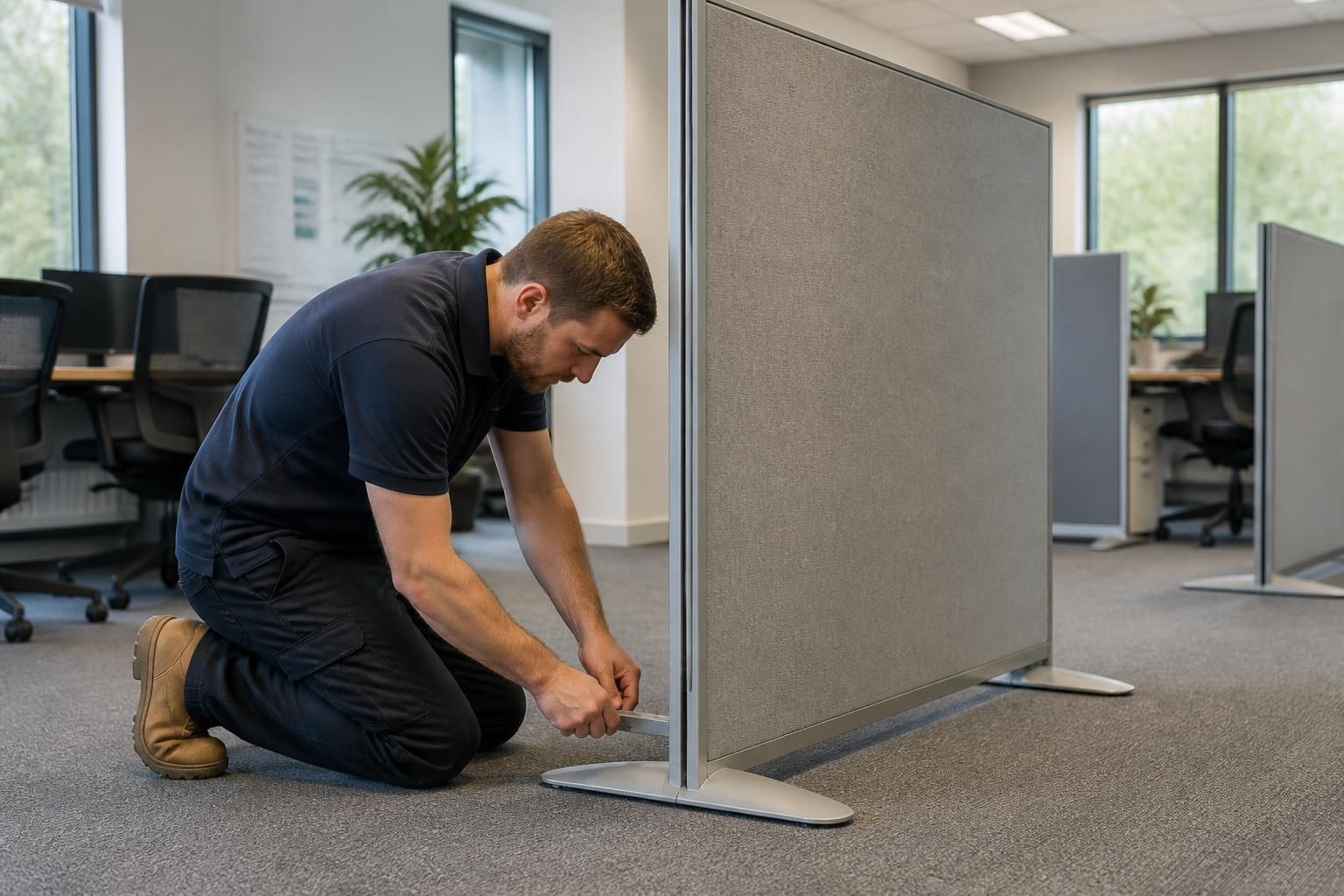
Freestanding office dividers should receive regular checks for stability, damage, loose fittings and cleanliness, with defects addressed before continued use. Recheck them after relocation or layout changes, particularly where panels, connectors or bases may have been disturbed.
Freestanding office dividers should receive planned care, suitable cleaning, periodic review of attached components and documented remedial work. The maintenance approach should match the divider’s materials, accessories, location and daily use.
Set a maintenance routine
Assign responsibility for routine care and record the checks completed. Higher-traffic areas may need more frequent attention than quieter offices. Include divider maintenance within the wider workplace review rather than treating it as a one-off task.
- Follow the care instructions supplied for each panel, frame, finish or accessory.
- Use cleaning products suitable for the surface.
- Remove adhesive residue, labels and marks using methods that will not damage the finish.
- Keep moisture away from joints, trims and floor-level components.
- Record recurring faults, repairs and any changes to the layout.
Avoid abrasive pads, harsh chemicals and excessive water unless the product instructions specifically allow them. Improvised repairs can mark surfaces or affect how components fit together.
Inspect finishes and components
Look beyond general cleanliness during a planned review. Check for chipped edges, staining, surface lifting, damaged trims, cracked glazing or other changes to the materials. Review any attached whiteboards, shelving, screens or accessories separately.
Do not add equipment or storage to a divider without confirming that the specification permits it. Added weight or impact can change the demands placed on panels, supports and connections.
Take care during movement
Use a planned method when moving a divider. Do not drag it across the floor or force it around desks, doorways or service points. Protect nearby furniture and finishes during the work.
After movement, confirm that the divider remains compatible with the revised layout. Check that it does not obstruct doors, walkways, lighting, ventilation or access to workplace equipment. A changed position can also affect privacy, noise control and the intended separation between areas.
Maintain accessories and connections
Where a divider includes power or data provision, keep cables protected from crushing, sharp edges and trip hazards. Do not modify concealed connections or remove covers without suitable technical support.
Review cable routes after furniture changes. A tidy original installation can become unsafe when desks, monitors or other equipment move.
Keep maintenance records
For each review, note the date, location, issue identified, action taken and person responsible. Keep relevant drawings, product information and installation records with the maintenance log.
These records help you identify repeated damage and decide whether repair, relocation or replacement is appropriate. They also give contractors clear information before further office fit-outs or partitioning work.
When to request a review
Seek a site assessment when damage affects the divider’s components, when the layout changes significantly or when you plan to add fittings. A no-obligation consultation may include a site meeting and survey, followed by written proposals and working drawings.
Spartan Direct can coordinate related partitioning or office fit-outs where the work extends beyond routine care. Project management may cover proposal and tender stages through installation and final commissioning where required. This approach gives you a documented basis for deciding how the existing dividers should be maintained or altered.
Set a condition baseline after installation or relocation. Record the panel arrangement, accessory positions, finishes and nearby access routes.
Photographs can show later changes that written notes miss. Compare each review with this baseline before deciding whether damage resulted from normal use, movement or an added fitting.
Keep the baseline with product information and installation records. It gives anyone assessing the divider a clear reference without disturbing sound components unnecessarily.