Are freestanding office dividers suitable for acoustic privacy?
Yes. Freestanding office dividers can reduce direct sound paths and distractions, but they provide acoustic privacy rather than full soundproofing.
Effectiveness depends on divider height, acoustic construction, placement and the room’s existing surfaces, so assess the space and privacy requirements before choosing.
Freestanding office dividers suit local speech privacy between nearby workpoints, but they do not create a sealed acoustic boundary. Their value depends on the privacy task, divider construction and the way the office is arranged.
Start with the privacy requirement. A divider may be suitable when you need to reduce conversations carrying between desks, limit distractions or give individual workpoints greater separation. Confidential meetings, sensitive telephone calls and management discussions need closer assessment. Sound can still travel around the divider through open areas, doorways and gaps.
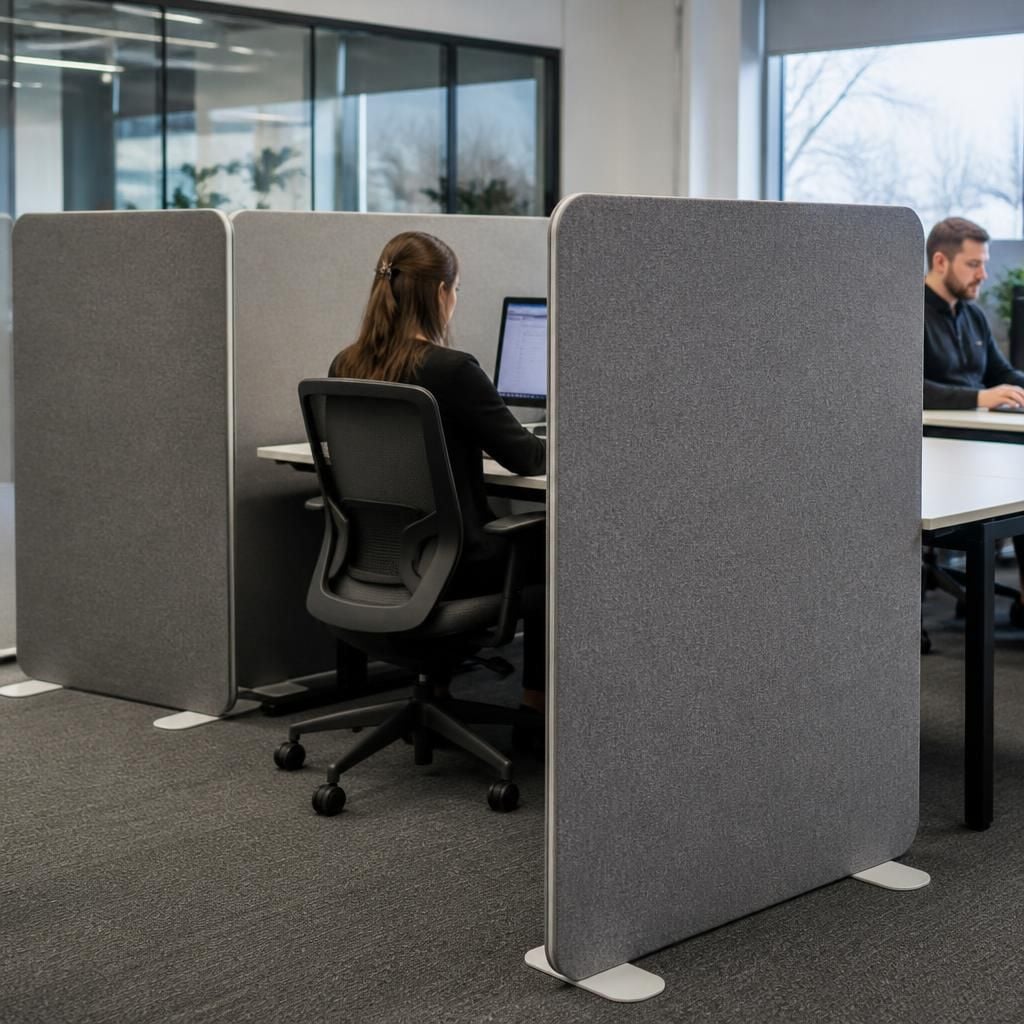
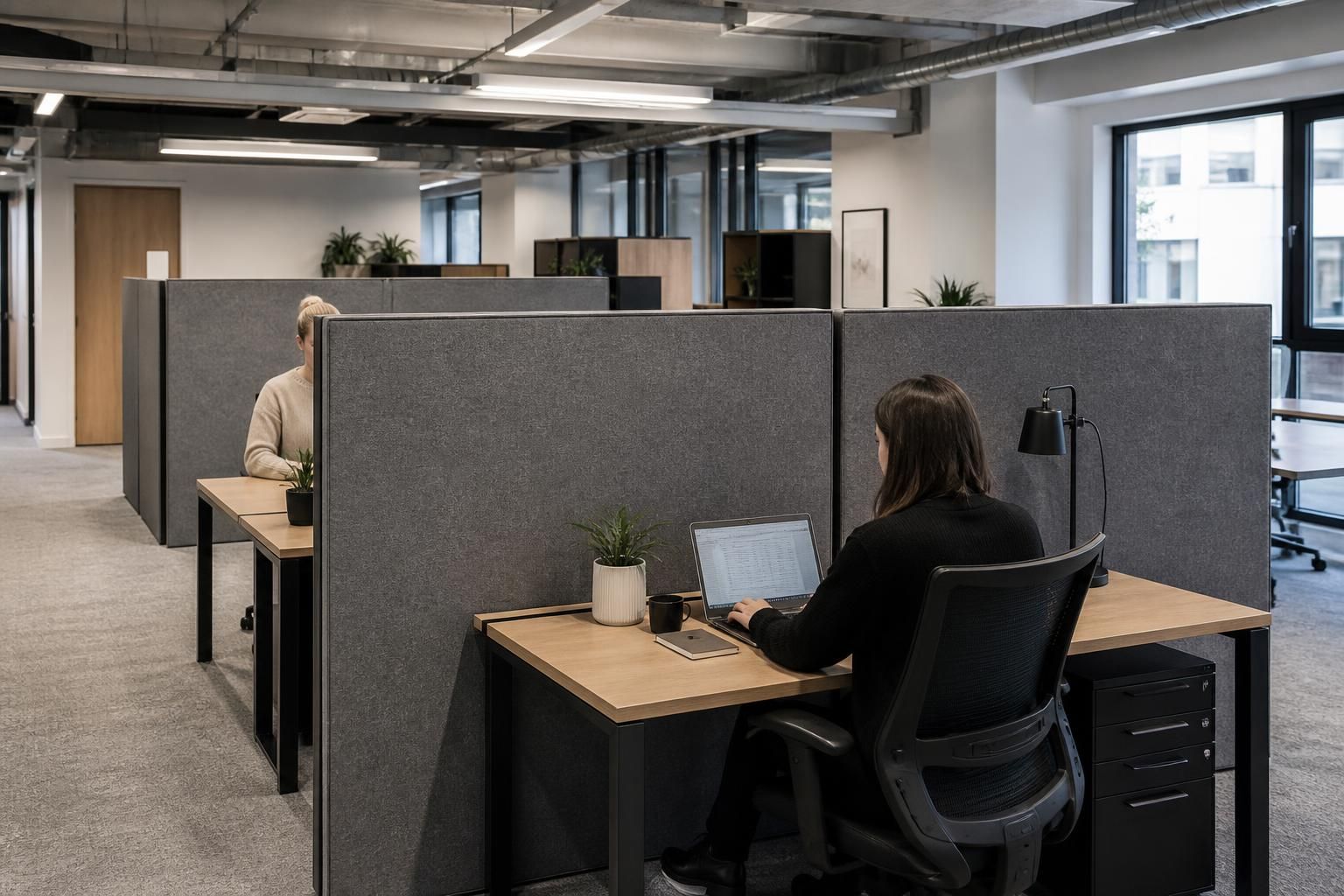
Consider acoustic construction, not appearance alone. A visually solid panel can interrupt a direct sound path. It may not absorb much sound if its surface reflects noise back into the room. A divider with an acoustic surface may help reduce reflected speech, depending on its specification and position.
Ask for clear product information before approving an order. Relevant details include panel height, thickness, construction, surface finish and any available acoustic test information. Avoid treating a decorative screen as an acoustic product without evidence supporting its intended use.
Placement affects the result. Positioning a divider between the speaker and listener can reduce the most direct route for sound. A divider placed beside the speaker may provide visual separation while leaving the main sound path open. Desk orientation, panel alignment and the distance between workpoints all influence the outcome.
Look for routes around the divider. Open ends, large gaps between panels and space above the panel can allow speech to travel beyond the intended separation. Adjacent desks, glazed areas and hard surfaces can also reflect sound into nearby work areas.
The wider room still matters. Hard flooring, exposed ceilings, glazing and bare walls can make conversations more noticeable. Existing furniture, storage and soft finishes affect how sound moves through the office. A divider cannot correct every acoustic issue if printers, kitchens, entrances or busy circulation routes remain beside quiet workpoints.
Map noise sources before choosing positions. Separate focused work from regular conversations where the layout allows. Keep discussion areas away from desks requiring concentration. Maintain clear routes through the office, since an acoustic improvement should not create an access problem.
Freestanding dividers work well when flexibility matters. They can support changing desk arrangements without committing the whole room to fixed construction. They may suit local separation around workstations, reception points or small collaborative areas. Their suitability reduces when you need consistent speech privacy across an entire room.
For enclosed meeting spaces or highly sensitive discussions, compare freestanding dividers with office partitioning and other office fit-outs. The right choice depends on the required privacy level, the existing room and how often the layout may change.
Assess the space before choosing the specification. We can discuss the intended use, review the layout and consider existing furniture, circulation and room surfaces. A no-obligation consultation may include a site meeting and survey, followed by written proposals and working drawings.
That process gives you a clearer basis for comparing divider positions and specifications. It also helps identify where a freestanding arrangement supports privacy and where the room may need a different form of separation.
Compare acoustic claims carefully before selecting a divider. Ask what was tested, including the panel dimensions, construction, surface finish and test arrangement.
A result from one configuration may not represent the product used between your desks. Check that the evidence relates to the proposed specification, then assess it alongside the room layout and privacy requirement.