


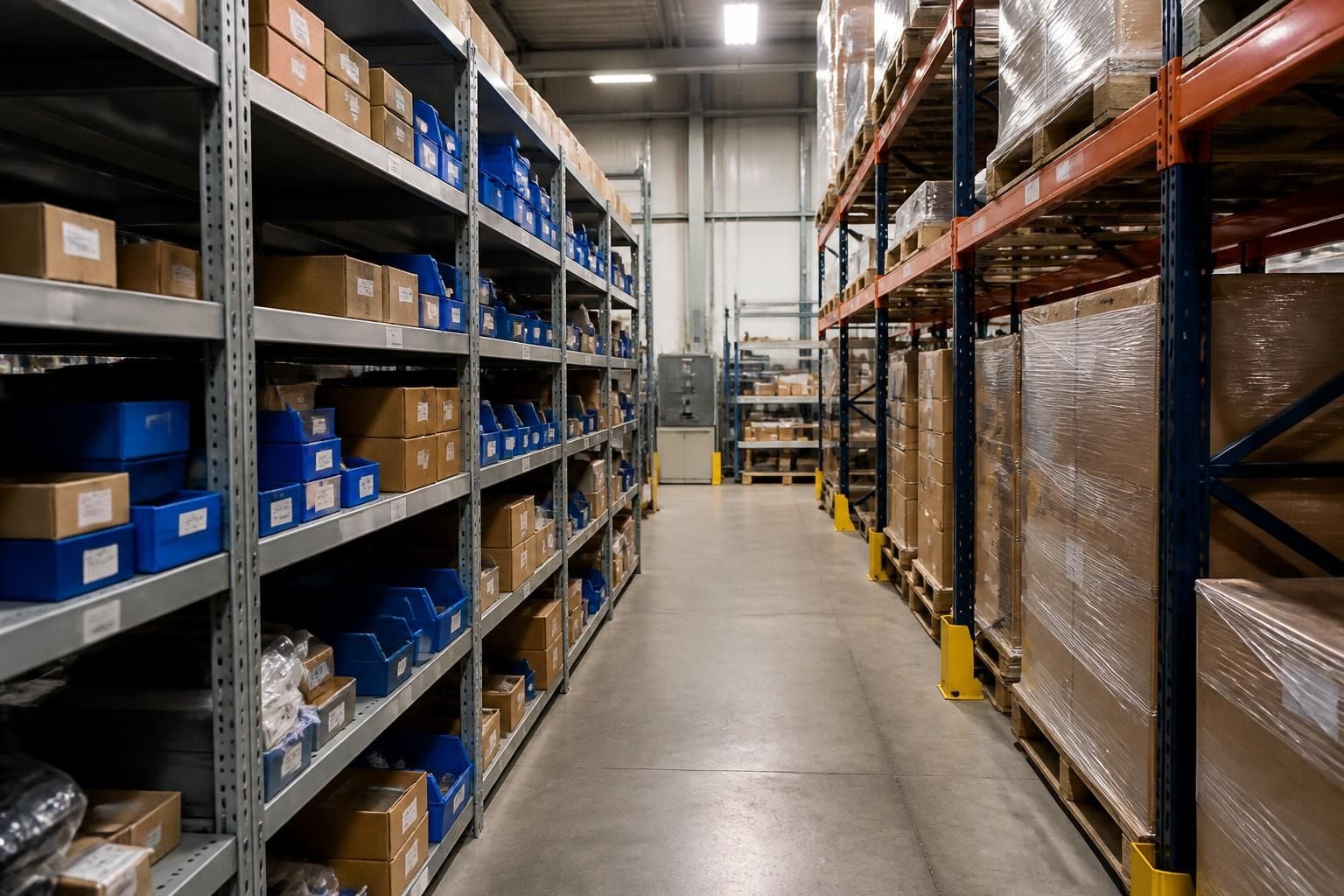
When is industrial shelving preferable to pallet racking?
Industrial shelving is preferable when you store smaller, lighter items that require frequent manual access rather than palletised stock.
Pallet racking suits pallet loads and mechanical handling, so the right choice depends on your stock, available space and workflow.
Industrial shelving is generally preferable when storage is organised around individual products rather than pallet positions. It supports piece-picking, where someone selects one item or carton at a time.
This arrangement suits stock such as components, tools, packaged goods, office records and maintenance items. It works particularly well when products have different descriptions and small quantities require regular retrieval.
Choose industrial shelving when:
- People need to identify and reach individual items directly.
- Stock arrives in cartons, containers, boxes or loose units.
- Several product lines share one storage area.
- Picking accuracy and clear identification matter more than pallet density.
- Stock does not need forklift access for every movement.
- Items need arranging by product type, reference or frequency of use.
Shelving can make stock visible at the point of use. That can support orderly picking and reduce the need to move a full pallet for one item.
Industrial shelving also suits stores where people add or remove stock throughout the day. The layout should leave enough room to stand, handle items and move safely between bays.
Pallet racking remains preferable when:
- Goods are stored and moved on pallets.
- Forklift or other mechanical handling equipment loads the storage positions.
- The main objective is holding larger quantities in fewer locations.
- Stock arrives in consistent pallet loads.
- Vertical storage capacity matters more than direct access to every unit.
Pallet racking organises pallet loads into defined positions. Industrial shelving organises individual items for hand access. The distinction is usually clearer than choosing by product weight alone.
Stock weight still matters. Shelving must suit the load carried by each shelf, while pallet racking must suit the pallet load and handling method. Items that are awkward, unstable or difficult to handle may need another arrangement.
Stock movement also affects the decision. Frequently selected items may benefit from direct shelf access. Less frequently moved reserve stock may suit pallet racking, provided the handling equipment and layout support it.
Many premises use both systems. Pallet racking can hold reserve pallets, while industrial shelving supports picking, small parts and day-to-day access. This separates bulk storage from individual-item handling.
A combined layout can also help you use different areas for different tasks. For example, one zone may hold incoming pallet loads, another may support picking, and another may hold smaller components.
Review these points before choosing:
- What forms your stock takes, including pallets, cartons, boxes and loose items.
- The weight, size and shape of each stored item.
- How often people select or replenish each product line.
- Who handles the stock and what equipment they use.
- Available floor area, height and movement routes.
- How easily people must see, identify and reach each item.
- Whether stock needs a dedicated picking area or reserve storage.
Do not select shelving solely because it appears simpler, or pallet racking solely because it uses height. The arrangement must fit the stock, access method and working layout.
We can discuss these points through a no-obligation consultation. Where useful, this includes a site meeting and survey, followed by a written proposal and working drawings.
Spartan Direct Limited has worked on storage and workplace layouts since 1982. For businesses in the West Midlands, that process can clarify whether industrial shelving, pallet racking or a combination fits the premises.
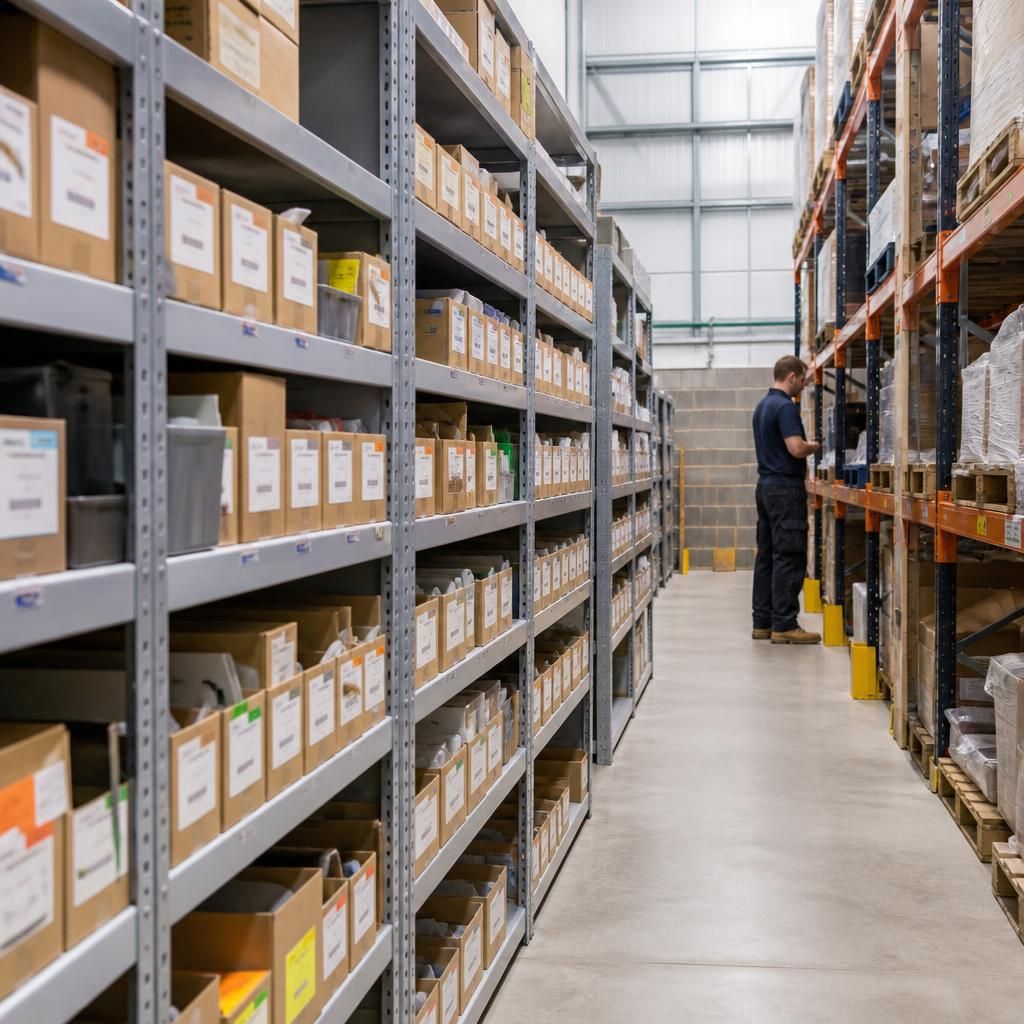
Industrial shelving can suit stores where stock changes frequently and each shelf needs a clear purpose. Grouping items by department, product reference or task helps people return goods to consistent locations.
This approach can support orderly stores for maintenance supplies, components or records without assigning every item a pallet position. The shelf arrangement should reflect how people use the stock, not simply the available floor area.



