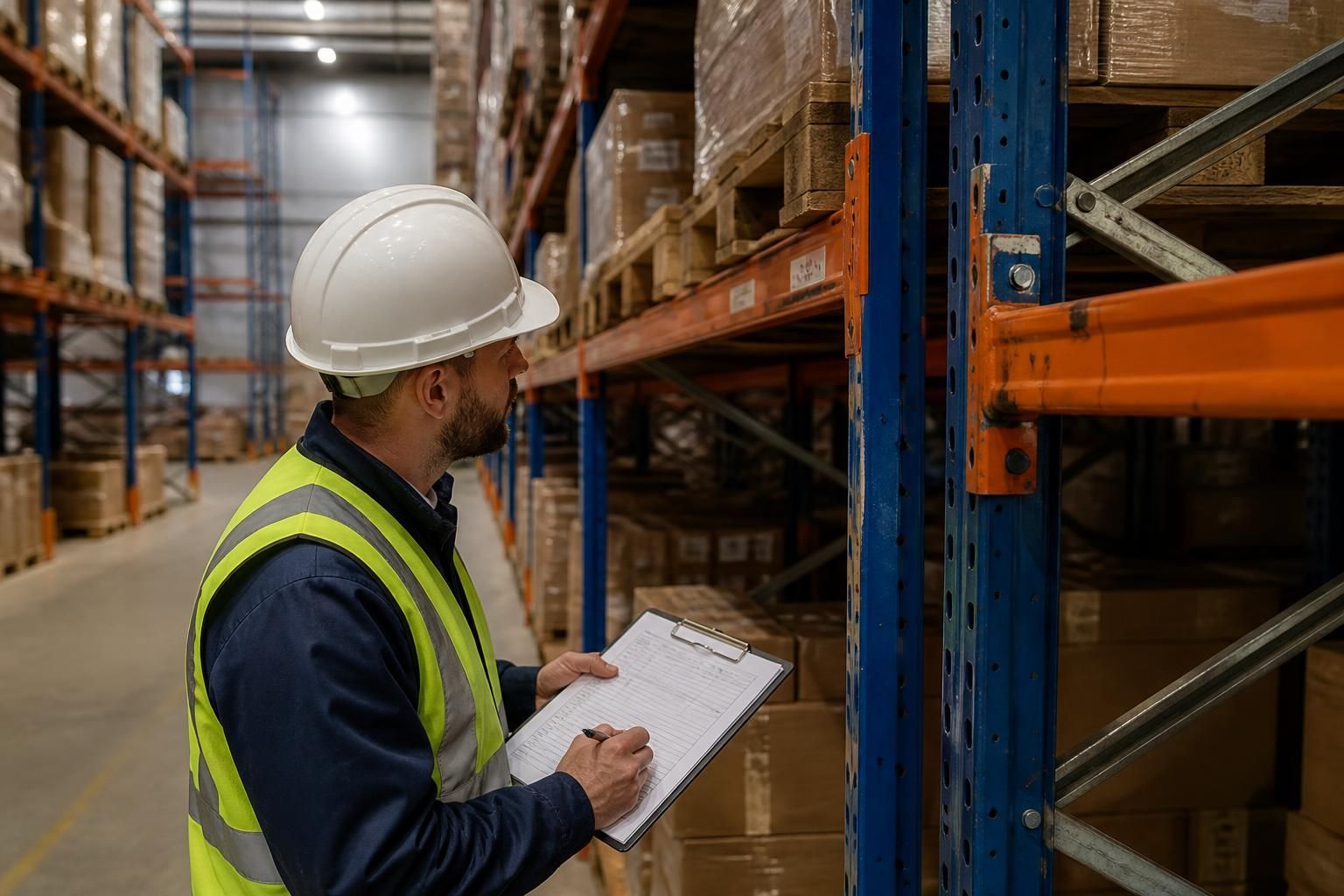
What safety checks should warehouse pallet racking undergo?
Warehouse pallet racking should undergo routine visual checks and recorded formal inspections, covering damage, stability, load notices, protection and safe access. Checks should also follow alterations, impacts or changes to stock and layout, with defects isolated and addressed before use.
Warehouse pallet racking should undergo planned checks that assess condition, loading, stability, protection and safe operation. Staff checks identify problems during use, while a competent person’s formal inspection reviews the system in greater depth.
The inspection process should reflect the site risk assessment, the racking manufacturer’s instructions and relevant UK workplace safety guidance. It should also cover changes to stock, equipment, layout and working methods.
Check the physical condition
- Look for bent, twisted or damaged uprights, beams, braces and connectors.
- Check beam locking pins and other retaining components are present and correctly positioned.
- Inspect floor fixings, baseplates, frame protection and end-of-aisle barriers.
- Look for impact marks from lift trucks, pallet trucks and other handling equipment.
- Check for corrosion, loose components, missing guards and signs of movement.
- Confirm that the racking remains upright and that components have not been altered without approval.
Small defects can affect how loads transfer through the structure. Staff should report damage instead of attempting an informal repair or adjustment.
Check loads and configuration
Load notices should match the installed arrangement and the stock being stored. Inspectors should compare beam levels, bay configuration and component types with the available drawings or system information.
- Confirm that pallets suit the beams, supports and available clearances.
- Check that loads remain within the stated capacity for the relevant level and bay.
- Look for leaning, overhanging, unstable or damaged pallets.
- Ensure loads sit evenly and do not obstruct access routes or protection equipment.
- Check that heavy, awkward or unusually shaped stock has an appropriate storage arrangement.
Changing beam levels or adding components can alter the system’s capacity. Treat these changes as a design matter, rather than assuming the original load notice still applies.
Check aisles, access and protection
Safe pallet racking depends on the surrounding working space as well as the steelwork. Checks should consider lift-truck movements, pedestrian routes, picking activity and stock-handling practices.
- Keep aisles clear of pallets, packaging, waste and temporary equipment.
- Check that vehicles can approach, place and retrieve loads without striking the structure.
- Maintain suitable separation between pedestrians and handling equipment.
- Ensure fire exits, escape routes, access points and safety equipment remain unobstructed.
- Check that barriers and guards protect vulnerable corners, ends and crossing points.
- Review whether changed traffic routes create new impact risks.
The inspection should consider the way people use the warehouse, not only the condition of individual bays. A sound structure can still create risk if access routes or operating practices have changed.
Use a formal inspection record
A formal racking inspection should identify the areas examined, findings, risk level and required action. Photographs, bay references and clear descriptions can help staff locate each issue.
Records should show who completed the inspection, when it took place and whether each action remains open. Keep evidence of repairs, replacements and follow-up checks with the inspection record.
Inspection records do not replace routine reporting. Warehouse staff should know how to report impacts, damaged pallets, missing components and unsafe loading as soon as they notice them.
Act on defects before normal use continues
Where a defect could affect safety, identify the affected bay or area and prevent further use. If necessary, remove the load using a controlled method that does not expose people to additional risk.
Repairs should use suitable replacement components and follow the system information available. Do not straighten, weld or modify damaged racking without an appropriate technical decision.
After repair, confirm that the affected area is suitable for return to service. Update the records and investigate repeated impacts, overloading or poor access if the same problem returns.
Review checks after changes
Reassess the inspection arrangements when the warehouse introduces different pallets, heavier stock, new handling equipment or altered traffic routes. Relocation, extension or reconfiguration also warrants a review.
This review can identify whether the existing load information, protection and aisle arrangement remain suitable. It can also show where additional barriers, line marking or workplace segregation may support safer operation.
How we can support the review
We provide pallet racking inspections and aftercare as part of our storage work. A consultation may include a site meeting and survey, followed by written proposals and working drawings where changes are needed.
For projects involving layout changes, protection or installation, we can coordinate the proposal, drawings, installation and project management through final commissioning where required. This gives you a documented basis for deciding what needs attention, without assuming that every bay requires replacement.
Choose the inspector for their understanding, not their job title. A competent person should recognise racking damage, understand load arrangements and assess how warehouse activity affects risk.
They should also know when an issue needs technical review rather than a local adjustment. This helps prevent assumptions based only on appearance or familiarity with the site.