


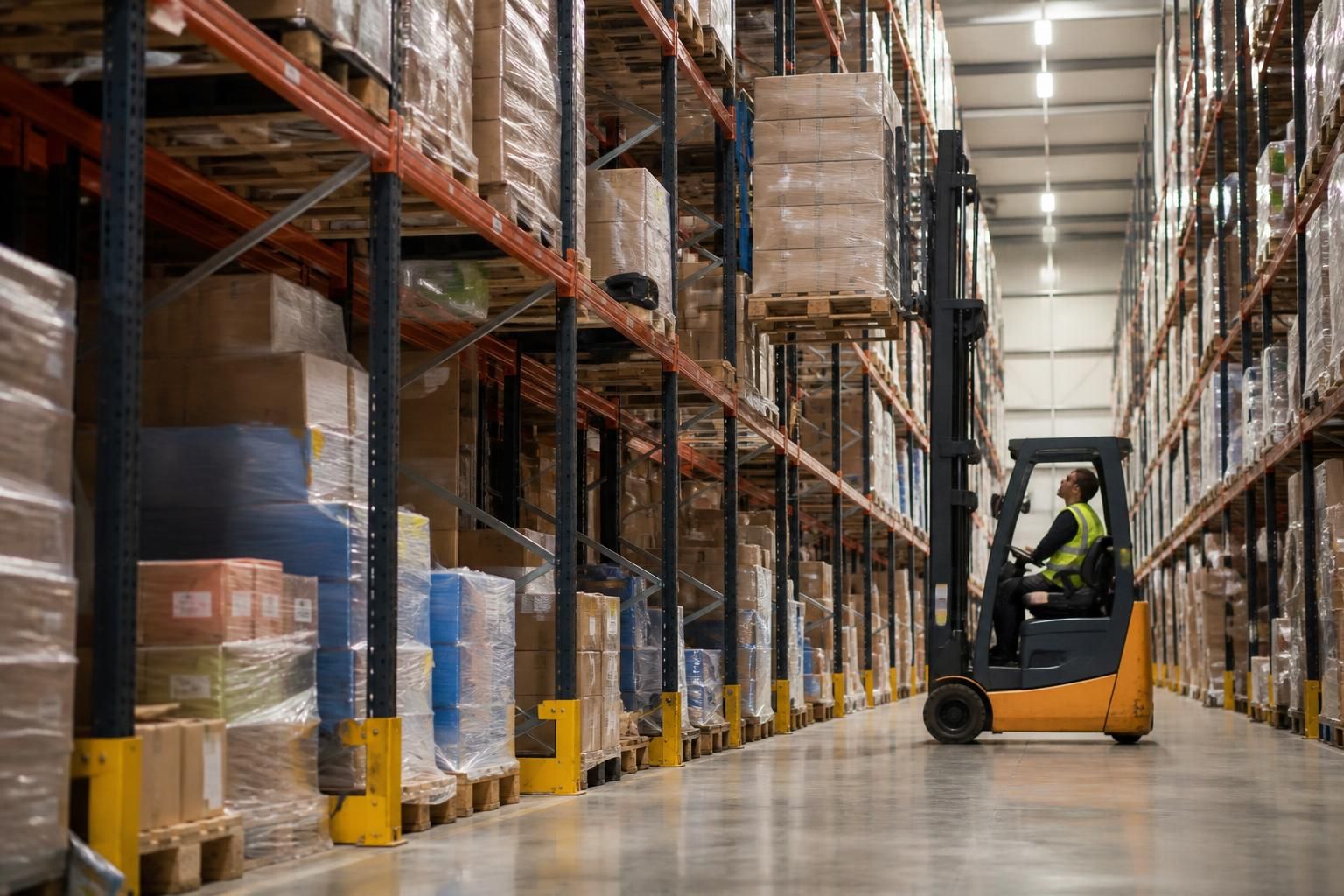
Which warehouse racking configuration suits your stock access requirements?
The right pallet racking configuration depends on how often you need each pallet, stock turnover, available space and handling workflow.
Selective racking gives direct access to individual pallets, while denser layouts can suit concentrated stock where access frequency is lower.
Pallet racking configuration should match how stock moves, how often it needs access and how many pallets each product requires. A mixed layout often works best when fast-moving, reserve and batch stock occupy different storage zones.
Start by separating stock according to access needs:
- Frequent individual access: use positions that let operators select a specific pallet without moving others.
- Regular batch access: consider deeper storage where several pallets share the same product or production batch.
- Occasional reserve access: denser storage can hold stock that does not need daily selection.
- Controlled rotation: choose a configuration that supports the required stock-rotation method.
Selective pallet racking suits warehouses with many product lines and changing picking requirements. Operators can reach individual pallet positions, making stock selection and replenishment more straightforward.
It can also support different pallet sizes and weights when the structure, beams and loading arrangements suit those requirements. The layout still needs clear load information and suitable handling equipment.
Double-deep pallet racking stores one pallet behind another. It increases storage density, but the rear pallet cannot be selected independently from the aisle.
This configuration suits grouped stock with several pallets per product. It is less suitable when operators must reach every pallet frequently or handle many single-pallet product lines.
Drive-in pallet racking creates dense storage blocks with fewer aisles. Handling equipment enters the rack structure, so the arrangement suits concentrated stock held in repeated pallet quantities.
Access becomes more limited as storage depth increases. Drive-in layouts often suit stock managed in batches, where the warehouse accepts reduced individual pallet access for greater density.
Drive-through pallet racking provides access from both ends of a storage block. This can support a planned movement pattern through the rack, subject to site layout and operating controls.
The correct choice depends on the number of stock lines, pallet quantities and required rotation method. It should not be selected from density alone.
Push-back pallet racking stores pallets at several depths while operators load and retrieve from one aisle. It can suit grouped stock where the front pallet is normally accessed first.
Because pallets move within the storage channel, the system needs compatible loads, equipment and operating procedures. It may not suit stock requiring unrestricted access to every pallet.
Pallet flow racking uses rollers to move pallets through a channel. It can support controlled stock rotation and separate loading from picking faces.
This arrangement can be useful where pallet movement follows a consistent process. Pallet condition, load stability and operating methods need review before selection.
Stock access also depends on more than the rack type. Review these points before confirming a configuration:
- the number of product lines and pallets held for each product;
- how often each pallet requires picking, replenishment or checking;
- pallet dimensions, weights, stability and condition;
- stock-rotation requirements, including first-in, first-out procedures;
- handling equipment, turning space and operator movements;
- required picking faces for fast-moving products;
- available building height and usable floor area;
- access routes, working areas and safety controls.
A configuration can work well for reserve storage but create delays at the picking face. Separating those functions often gives a clearer balance between density and access.
For example, selective pallet racking may serve frequently picked lines, while deeper storage holds repeat stock or reserve pallets. The right arrangement depends on the actual stock profile.
Configuration also affects future changes. A warehouse with changing product lines may need accessible positions and adaptable beam levels. A stable product range may justify deeper storage.
We can review these requirements through a no-obligation consultation, which may include a site meeting and survey. We then prepare written proposals and working drawings for consideration.
Where a project needs coordination, we may provide project management from proposal and tender stages through installation and final commissioning. This helps connect the selected configuration with the wider warehouse layout.
The aim is not simply to place more pallets in the building. The configuration should give operators suitable access, support stock control and fit the handling process safely.
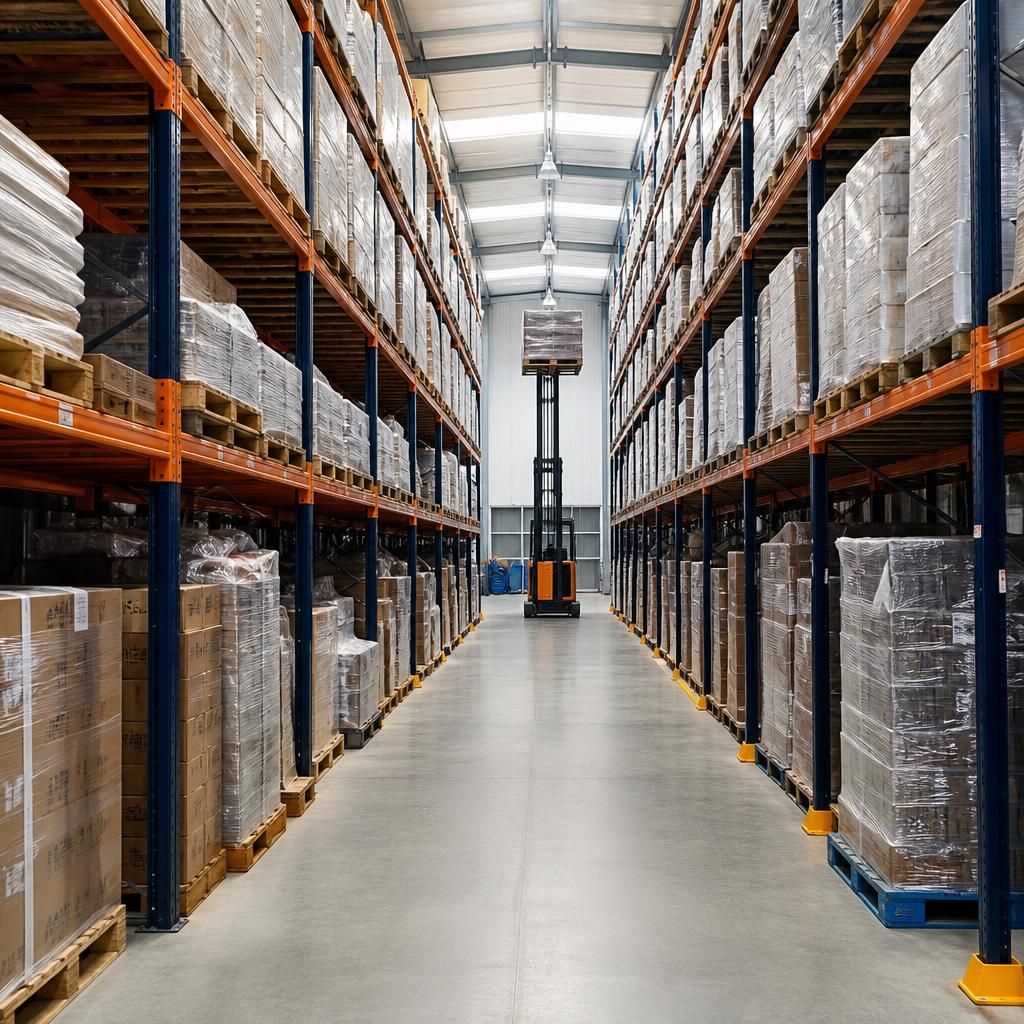
Stock access depends on more than the rack configuration. Keep staging and replenishment activity from obstructing the aisles, so operators can reach available pallet positions without working around temporary stock.
During planning, review where pallets wait before storage and after picking. This helps ensure the selected configuration supports the complete handling route, not only the storage position.



