


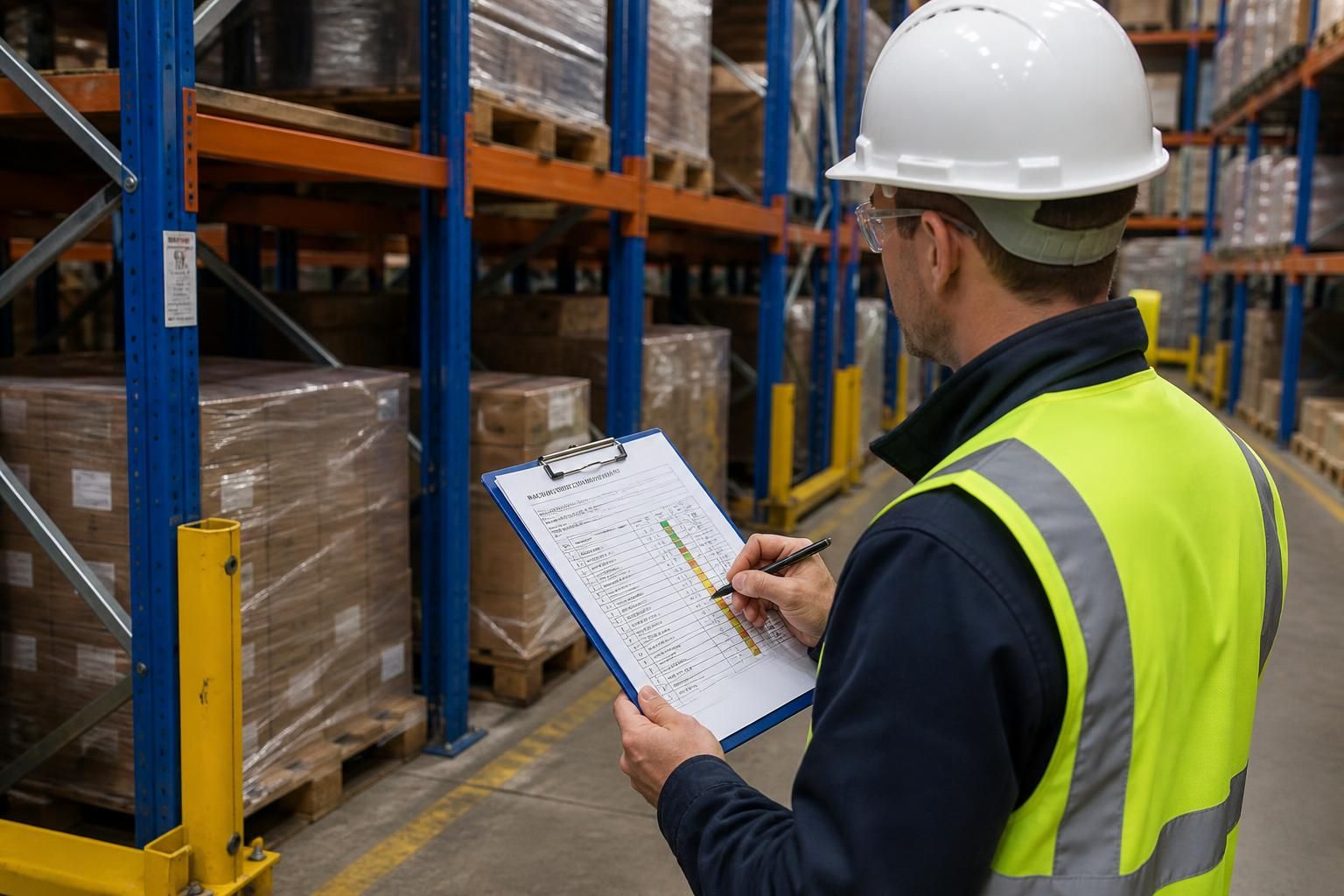
What records should you keep after a pallet racking inspection?
After a pallet racking inspection, keep the inspection report, photographs, damage findings, recommended actions, completion dates and follow-up checks. Store these records together so responsible people can track outstanding safety work.
Keep a complete, traceable inspection file for each pallet racking inspection. It should show what was examined, which issues were identified, who accepted the actions, and how closure was confirmed.
Include the inspection record
- Date of the inspection and the areas covered.
- The inspector’s name, role and organisation.
- Rack identifiers, location references or marked-up layout drawings.
- The inspection scope, including any areas not accessible or not examined.
- Damage descriptions, risk classifications and the affected components.
- Photographs that clearly identify the rack, location and damage.
- Any immediate controls, such as unloading, isolation or restricted access.
- Recommended repairs, replacements, monitoring or further assessment.
Use consistent rack references across the report, photographs and action log. This prevents confusion when several aisles contain similar frames, beams or protection.
Record the action taken
An inspection report alone does not show that identified risks were dealt with. Add the person responsible, target date, completion date and action status for each finding.
Keep supporting evidence with the finding. This might include purchase records, installation paperwork, repair details, updated drawings, photographs or a follow-up inspection record.
Where a rack remains in service with a restriction, record the restriction clearly. Note the affected location, required controls and the person who authorised continued use.
Close an action only when someone has checked the completed work. Record that check separately, including any remaining limitation or further monitoring requirement.
Retain related racking information
Keep the inspection history with other documents that affect safe racking use. Relevant information may include:
- Current rack layouts and identification plans.
- Load notices and agreed loading information.
- Records of alterations, relocations or changes to the rack arrangement.
- Installation, repair and replacement records.
- Previous inspection reports and outstanding recommendations.
- Records showing that responsible warehouse people received relevant instructions.
Remove superseded documents from active use, but retain them in an archive where they provide useful history. Mark current drawings and load information clearly.
How long should you keep the records?
Do not rely on a single assumed retention period for every site. Keep records for as long as they support the safe management of the installation and your legal or internal requirements.
As a practical minimum, retain each report until all actions are closed and the next inspection has been completed. Longer retention can provide valuable evidence when damage recurs, layouts change or responsibility moves between teams.
Set the retention rule in your warehouse safety procedure. Confirm any company, insurer, lease or legal requirements before disposing of older records.
Make the file easy to use
Store records where the responsible person can find them without delay. A secure digital register can link each finding to its photograph, action, completion evidence and follow-up check.
Use controlled access and regular backups for digital records. For paper files, protect the documents from damage and keep them in a known location.
Spartan Direct’s pallet racking inspections can form part of a wider review of storage safety and layout. If an inspection identifies recurring damage or access problems, the records can help define the next design, protection or workflow decision.
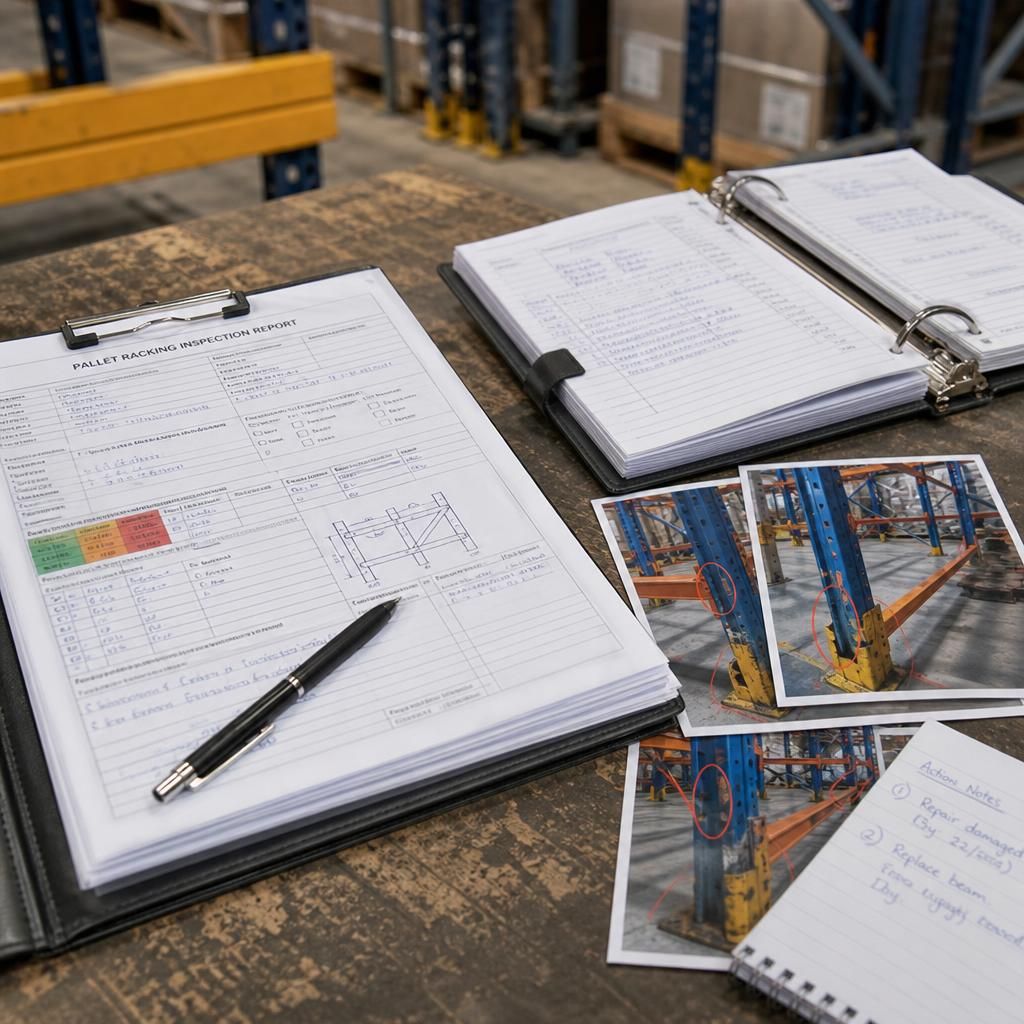
Keep an audit trail when an inspection record changes. Do not overwrite the original report, photograph or action entry.
Save the amended version with its date, author and reason for the change. This preserves the inspection history and shows which information informed each safety decision.



