



How often should pallet racking undergo a formal inspection?
UK guidance recommends a formal pallet racking inspection at least every 12 months, with shorter intervals where your risk assessment identifies greater risk. You remain responsible for arranging inspections by a competent person and acting on any safety concerns identified.
The calendar date alone does not determine a safe inspection interval. The risk assessment should consider how the pallet racking is used, the loads handled, traffic levels and any changes within the warehouse.
UK guidance commonly uses a formal inspection at least every twelve months as the starting point. Higher-risk conditions may require a shorter interval. The responsible person should record the reasoning behind the chosen schedule and review it when site conditions change.
What can require more frequent inspections?
- Frequent forklift or mechanical handling activity near the racking.
- High levels of stock movement, loading or unloading.
- Regular changes to beam levels, bay layouts or load arrangements.
- Heavy, awkward or unevenly distributed loads.
- Limited aisle space or difficult visibility around storage areas.
- Previous damage, repeated incidents or concerns raised during routine checks.
- Changes to the warehouse layout, floor conditions or operating methods.
A formal inspection is different from routine checks by warehouse staff. Routine checks can identify visible concerns during normal work. A formal inspection provides a structured examination by a person with suitable knowledge and experience of storage equipment and its risks.
The inspection should consider the condition and use of the complete installation. This may include upright frames, beams, connections, bracing, guards, floors, aisle clearances, load notices and signs of impact or instability. The inspector should also consider whether the installation remains suitable for the loads and operating methods in use.
Who is responsible for arranging it?
The employer or person controlling the workplace remains responsible for maintaining safe working conditions. That responsibility includes identifying racking risks, arranging suitable inspections and acting on issues identified.
Using an external inspection service does not transfer that responsibility. You should understand the report, make sure concerns receive appropriate attention and retain evidence of the actions taken.
Routine checks should continue between formal inspections. Staff should know how to report impact damage, missing components, overloaded bays, leaning frames or other concerns. A formal inspection cannot make an unsafe installation acceptable if problems are left unresolved between visits.
When should the schedule be reviewed?
Review the inspection frequency after a collision, relocation, alteration or significant change in stock. Review it after introducing different handling equipment or changing working practices.
A review may also be appropriate if routine checks identify recurring problems. Repeated damage can indicate that barriers, traffic routes, training or the layout need attention alongside the inspection schedule.
Newly installed or altered pallet racking should be checked before being placed into service. The same principle applies after work changes the structure, capacity or configuration. The inspection should confirm that the installation matches the approved drawings, load information and intended use.
What should the inspection produce?
A written report should identify the areas examined, findings and recommended actions. It should make clear which points require attention and support follow-up by the responsible person.
Keep the report with relevant risk assessments, installation information, load details and records of completed actions. These documents help demonstrate how the inspection programme was selected and managed.
Spartan Direct Limited provides pallet racking inspections and aftercare as part of its storage work. Since 1982, we have designed and installed storage systems for companies of different sizes across the UK. Our inspection service can help you review the condition and use of existing installations in the West Midlands.
Where the findings indicate a need for changes, a no-obligation consultation may include a site meeting and survey. We can then prepare written proposals and working drawings where required, helping you consider the relationship between storage capacity, access and warehouse workflow.
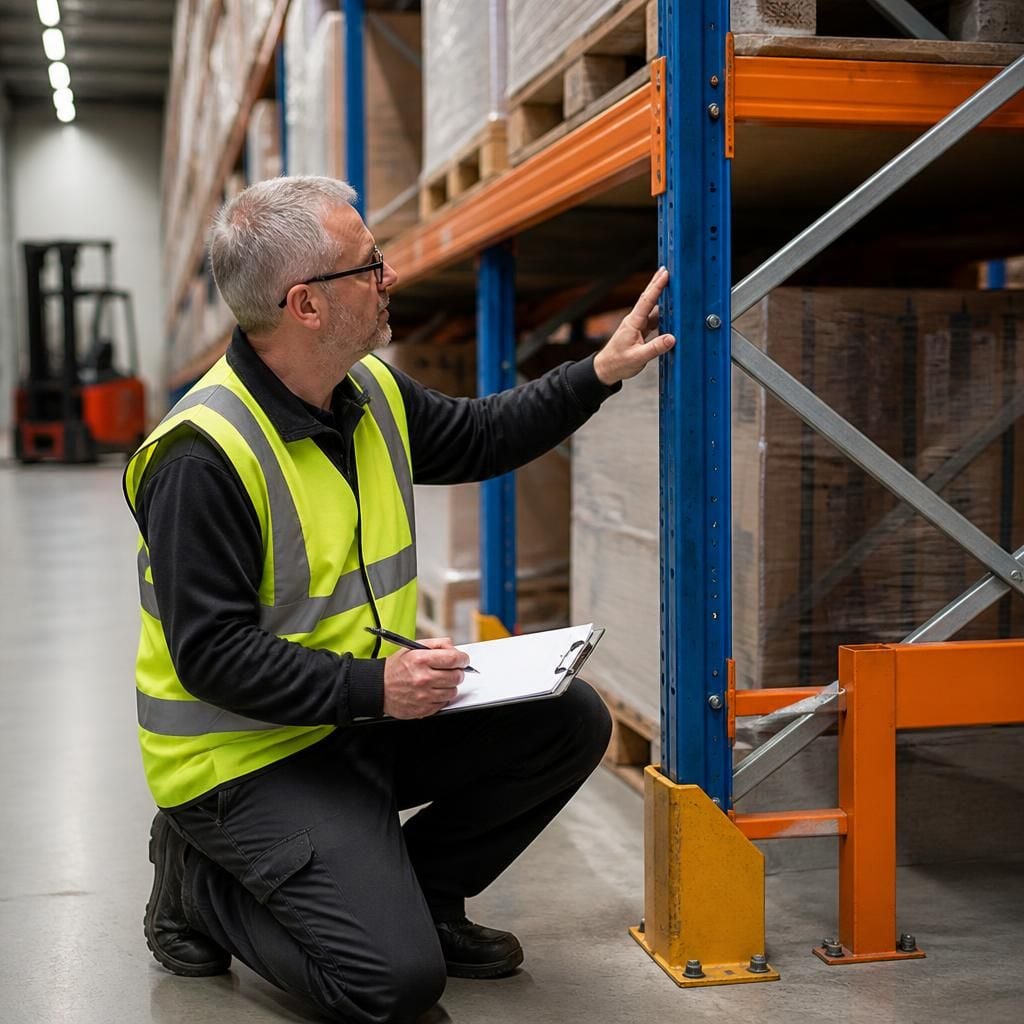
An annual inspection date should not be treated as approval for the following year. It is a point at which you assess whether the installation remains suitable for its actual use.
Use the findings to check that load information, access arrangements and working practices still match the racking in service. This keeps the inspection focused on present conditions rather than an assumed schedule.



