What upright protection does wide aisle pallet racking need?
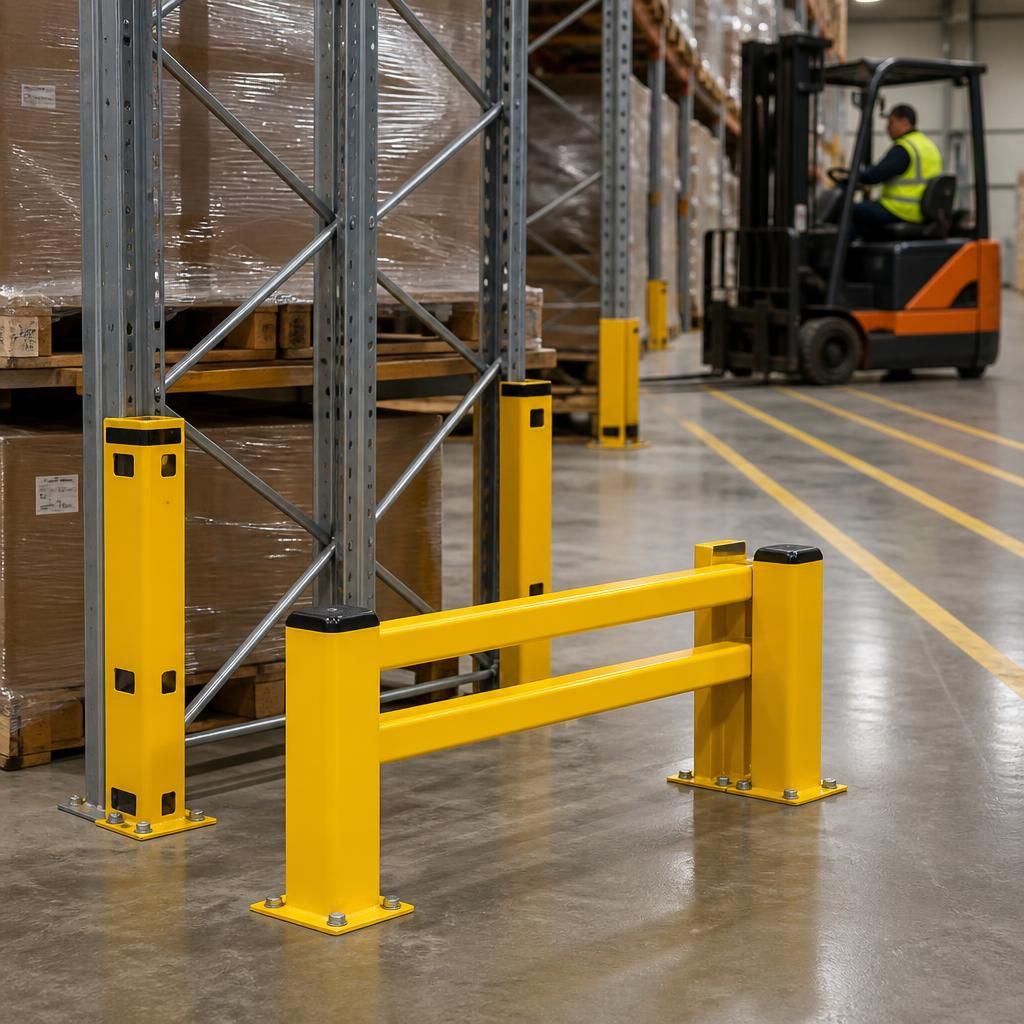
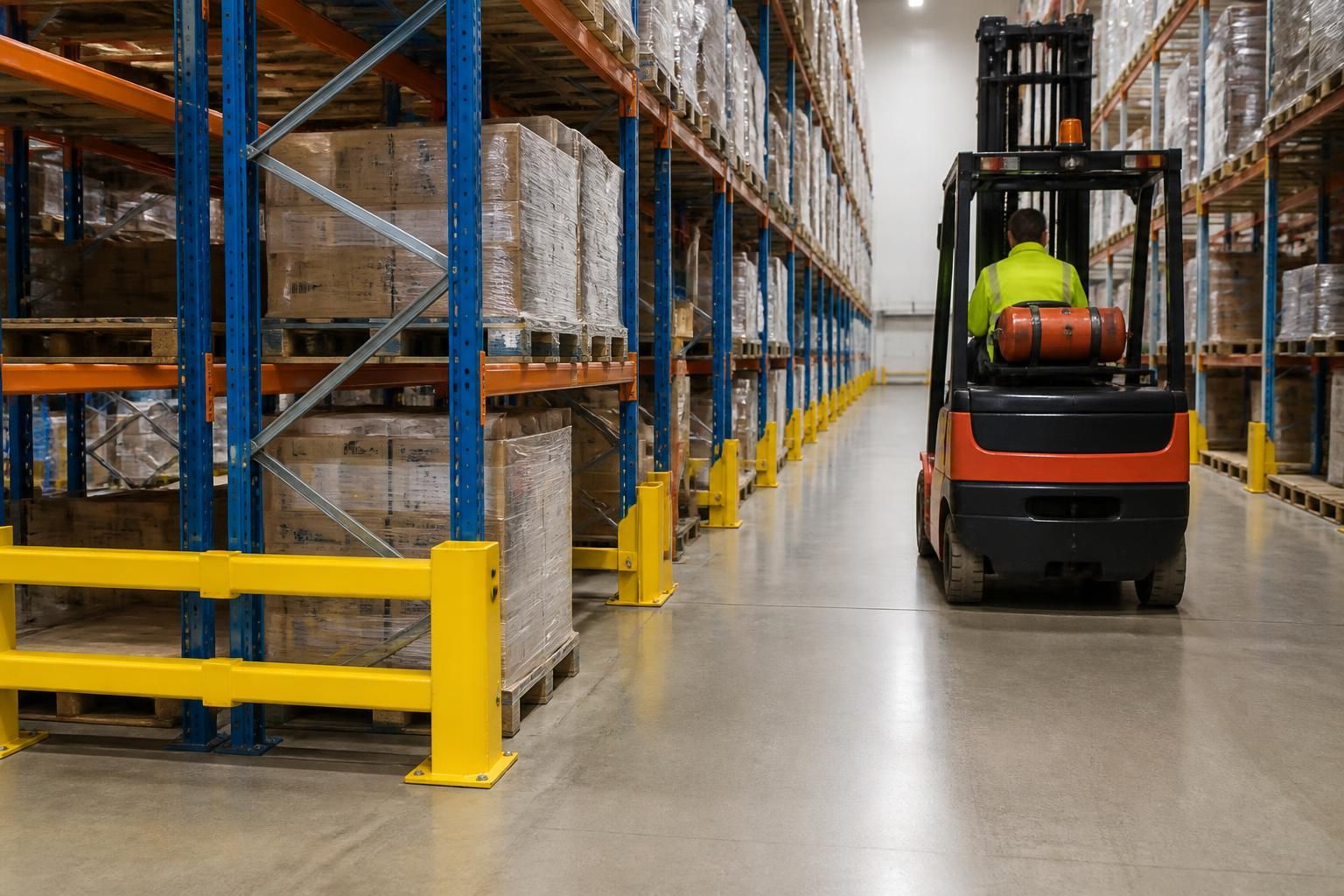
Wide aisle pallet racking typically needs upright guards at exposed frames, with end-of-aisle barriers where forklift traffic could strike the rack. The right arrangement depends on forklift routes, aisle ends, stock handling and the surrounding layout.
Protection should cover every credible impact point, not only the most visible rack uprights. The arrangement depends on vehicle movements, aisle junctions, pedestrian routes, stock handling and the surrounding layout.
Assess the complete traffic pattern
Review how forklifts approach, turn, load and leave each aisle. Pay particular attention to reversing movements, crossing routes and areas where operators have limited visibility.
- Mark vehicle routes and pedestrian walkways separately.
- Identify rack corners facing loading areas or crossing points.
- Check clearances around aisle entrances and end locations.
- Consider temporary obstructions, staging areas and changing stock movements.
Protection selected without this review can leave another vulnerable point elsewhere in the layout. It can also reduce useful access if it extends into operating clearances.
Choose protection for the exposed structure
Upright protection should suit the rack frame, base arrangement and likely direction of contact. Some locations need protection around individual frame legs, while others need a longer physical separation from vehicle traffic.
End-of-row protection should reflect the length of the exposed rack end and the traffic approaching it. Rack corners, junctions and isolated frames may need separate consideration rather than one repeated arrangement throughout the warehouse.
Where people and vehicles share space, safety barriers and workplace segregation can create a clearer physical boundary. Line marking can reinforce that boundary, but it should not replace suitable impact protection where vehicles can reach the rack.
Allow for the rack and its operation
Protection must leave sufficient room for pallets, forks and handling equipment to operate without creating a new obstruction. Check the position of anchors, floor condition and the relationship between protection and rack components.
Do not assume that a larger barrier always provides better protection. Its position, height, strength and layout must suit the risks identified during the site review.
Protection should also avoid blocking access to pallets, labels and inspection points. A practical arrangement protects the structure while preserving the workflow that wide aisle racking is intended to support.
Inspect and maintain the arrangement
Impact protection needs regular visual checks, especially after a collision or near miss. Look for movement, distortion, loose fixings, damaged coatings and contact marks around the rack and protection.
Report damage before normal handling continues in the affected area. A damaged guard can indicate that the rack frame, floor fixing or nearby component also needs assessment.
Racking inspections provide a structured review of the storage installation and its condition. We can discuss inspection arrangements alongside rack protection, safety barriers and workplace segregation.
Confirm the arrangement through a survey
We can review site traffic, storage requirements and existing layout during a no-obligation consultation. Site meetings and surveys may lead to written proposals and working drawings.
Those drawings help you assess protection positions before installation begins. Where a project needs coordination, project management may continue from proposal and tender stages through installation and final commissioning.
The result should be a protection arrangement based on the actual site, stock and handling requirements. It should support safe access without forcing you to sacrifice useful storage space or relocate unnecessarily.
Keep upright protection positions linked to the rack layout. If you change a bay, aisle or staging area, review the drawing again so the revised arrangement does not create a new exposed point.
This record also gives installers and warehouse managers a shared reference. It shows which protection belongs to each rack location, rather than treating guards as interchangeable items.