



What maintenance does wide aisle pallet racking require?
Wide aisle pallet racking requires planned inspections, routine checks for impact or damage, prompt repairs, and accurate load information. We provide racking inspections and aftercare, identifying issues that require remedial action to support safe storage access.
Wide aisle pallet racking needs a documented maintenance regime covering housekeeping, operational controls, component condition, load information and planned remedial work. The exact regime should reflect traffic levels, forklift use, stored goods and any changes to the layout.
Keep storage areas clear. Loose packaging, damaged pallets and debris can obstruct access or affect forklift movements. Remove unsuitable pallets and keep aisles, escape routes and working areas free from stored items. Good housekeeping also makes emerging defects easier to identify.
Check how the system is being used. Forklift impacts often result from restricted visibility, poor positioning or unsuitable travel routes. Review access around end frames, intersections and loading points. Reinforce site rules where handling practices place uprights, beams or bracing at risk.
Monitor the main components. Maintenance should consider the condition and position of:
- Uprights, frames and horizontal or diagonal bracing
- Beams, beam connectors, locking devices and supporting members
- Floor anchors, baseplates and upright protection
- Decking, pallets and any components supporting stored loads
- Load notices and identification marking
Look for bending, distortion, loosened connections, displaced components, corrosion, damaged anchors and changes in alignment. Damage to one part can affect the stability or intended capacity of the wider bay, so isolated repairs should not be assumed suitable without assessment.
Control damaged areas. A suspected defect should be reported through a clear site process. Prevent further loading where the condition could affect safe use, record the location and arrange an appropriate assessment. Do not straighten, weld or alter racking components as an improvised repair.
Repairs should use compatible replacement components and follow the original design information or a competent assessment. After remedial work, confirm that the bay is correctly reassembled, anchored where required and marked with accurate load information before returning it to service.
Review load and layout changes. Maintenance also applies when the storage arrangement changes. New pallet dimensions, heavier loads, different beam levels, altered aisle routes or additional equipment can affect the original design assumptions. Recheck the working drawings, load notices and access arrangements before making changes.
Do not add beams, remove bracing or relocate components without confirming that the amended arrangement remains suitable. If the storage requirements have changed, a site review can establish whether the existing wide aisle pallet racking remains appropriate.
Keep useful records. A maintenance record should identify the inspection date, affected bay, observed condition, action required and completion status. Retain details of replacement parts, layout changes and revised load information. Clear records help the person responsible for the site track outstanding work and demonstrate how concerns were managed.
Inspection frequency should suit the level of use and the risks present. High forklift traffic, frequent stock movement, changing operators or a history of impact may justify more frequent review. The responsible person should also reassess the regime after an incident, significant layout change or change in stored loads.
Use a structured inspection service where required. We provide racking inspections and aftercare, with findings recorded for consideration of remedial action. A consultation may include a site meeting and survey, followed by written proposals and working drawings where the inspection identifies wider changes.
For work involving repairs, alterations or related storage planning, we can coordinate the proposal, installation and project management through final commissioning where required. This gives you a defined route from an identified maintenance issue to an agreed corrective scope.
Maintenance should therefore be treated as an ongoing management process, not a single visit. Clear operating rules, controlled changes, accurate records and suitable remedial work help keep wide aisle pallet racking aligned with the loads and workflow it supports.
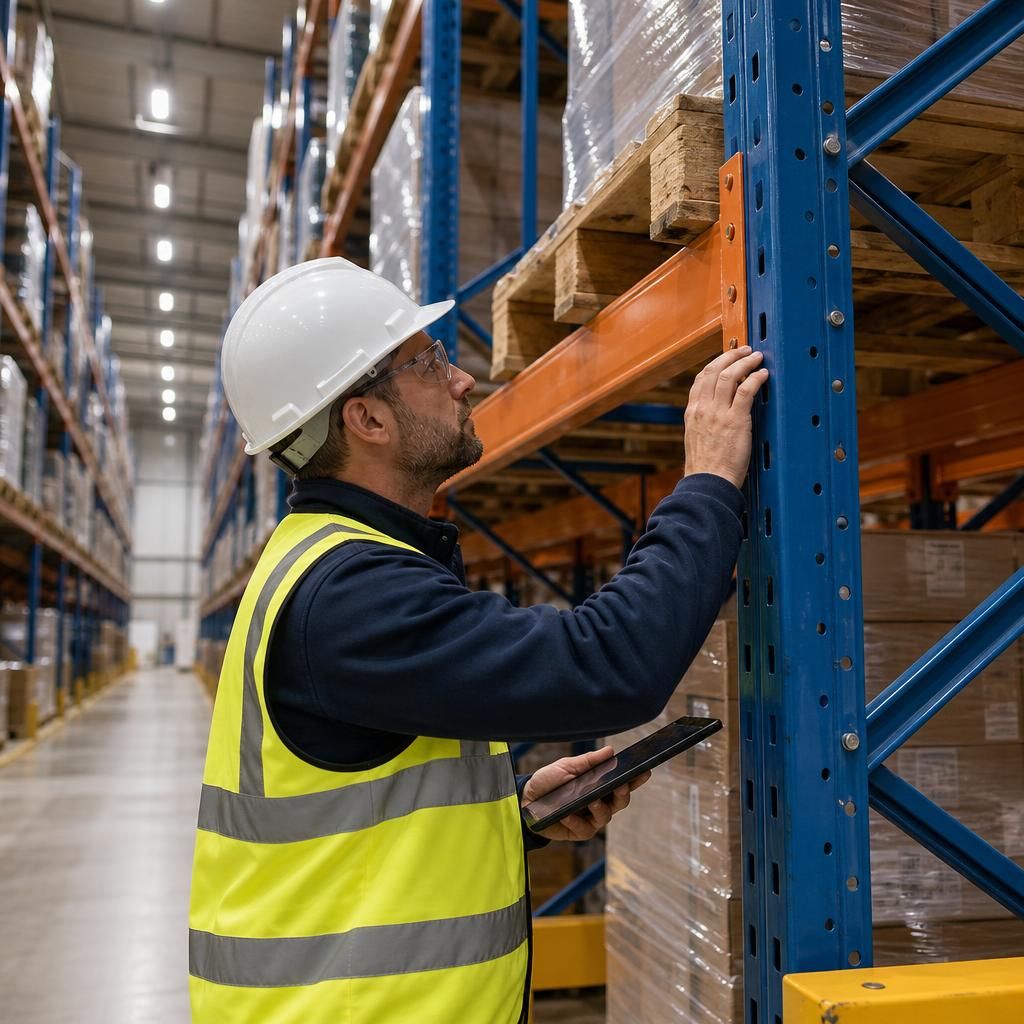
Wide aisle pallet racking maintenance should include the pallet interface, not only the steelwork. Damaged pallets can sit unevenly on beams or decking and make stored loads less stable.
- Check pallets for broken boards, missing supports and distortion before storage.
- Confirm pallets are suitable for the beam or decking arrangement.
- Keep loads positioned within the intended support area, without overhang that could obstruct handling.
- Replace damaged pallets rather than relying on the racking to compensate.
This check gives operators an additional control between formal inspections and everyday storage activity. It also helps separate pallet defects from damage requiring attention to the racking itself.



