What load information should be confirmed for wide aisle pallet racking?
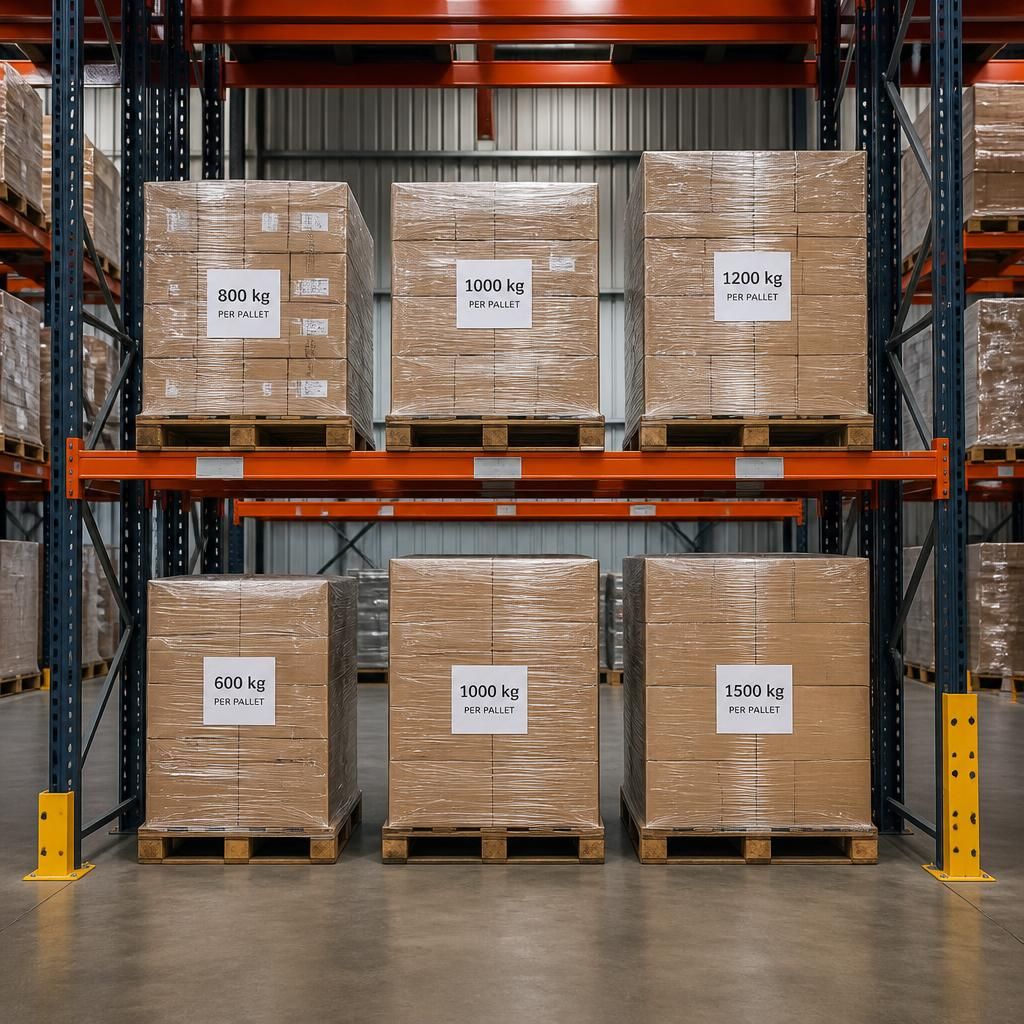
Wide aisle pallet racking should be specified against each pallet’s dimensions, gross weight, load distribution and storage levels. Confirming these details with us helps determine suitable rack dimensions and load requirements for the proposed warehouse layout.
Confirm the complete load case before specifying wide aisle pallet racking. The key information includes pallet type, unit weight, load stability, level arrangement and any expected changes.
Confirm the actual unit load
- Record the gross weight of each stored unit, including the pallet, packaging, wrapping and contents.
- Identify the heaviest load that the rack may carry, rather than relying on an average stock weight.
- Separate standard loads from occasional heavier items, mixed pallets and loads with uneven weight distribution.
- State whether the load remains stable during storage, handling and removal.
Weight should reflect the stock as it will reach the rack. A product specification may not include packaging, pallets or changes in contents.
Describe how each load sits on the beams
We need to understand how the pallet transfers weight into the rack. Confirm whether the load is evenly distributed or concentrated at particular points.
- Note any gaps beneath the pallet or limited contact with the support beams.
- Identify loads that flex, sag, overhang or do not sit squarely.
- Explain whether pallets use different entry orientations or support arrangements.
- Flag damaged, non-standard or reusable pallets that may behave differently from new pallets.
These details can affect the proposed beam arrangement and the way the load is supported. Photographs of typical pallets can support the initial review.
Set out the storage configuration
Load information must be linked to the intended rack arrangement. Confirm the number of pallet positions at each level and the planned operating pattern.
- List the load assigned to each storage level.
- Identify bays containing mixed pallet weights or different pallet formats.
- State which levels may carry the heaviest loads.
- Record any planned changes to beam positions or storage levels.
- Explain if loads will be stored temporarily in different positions during busy periods.
One general load figure may not represent the most demanding bay. The design information should show the loads expected in each rack configuration.
Include handling and operating details
Tell us how pallets will be placed, removed and positioned. Forklift movements can influence the practical arrangement and the information needed for the proposal.
- Identify the handling equipment used at the rack face.
- Explain whether pallets are placed centrally or may be positioned unevenly.
- Describe any two-pallet or other combined handling method.
- Record stock that requires direct access, frequent rotation or dedicated locations.
This information connects the load case with the working layout. It also helps identify where different storage rules may apply within one installation.
Allow for future stock changes
Confirm whether product weights, pallet types or storage methods may change. A rack arrangement based only on today’s lightest stock may not suit later requirements.
Provide the heaviest foreseeable load and explain any planned growth in stock variety. Tell us if the business may introduce new products, larger pallets or different packaging.
Do not assume spare capacity without checking the proposed configuration. Any future use should be included in the design discussion before drawings are prepared.
Use the information during consultation
A no-obligation consultation may include a site meeting and survey. We can review stock details alongside the proposed warehouse layout and operating needs.
We then use the confirmed information to prepare a written proposal and working drawings. These documents can set out the intended rack arrangement and the relevant load requirements.
Before approval, check that the proposal reflects the heaviest stock, mixed loads, pallet condition and planned storage levels. Tell us about any change before installation begins.
For projects requiring coordination, project management may cover proposal and tender stages through installation and final commissioning. Spartan Direct Limited is the contracting supplier identified in its terms by company number 3275287.
Keep an agreed load schedule with the racking documentation. Give each pallet type a clear reference and link it to the relevant bay or level.
A visible load notice gives warehouse teams a practical reference during daily operations. Review the information before introducing a different load, rather than relying on memory or an old stock list.