What decking options suit wide aisle pallet racking?
Wide aisle pallet racking can use timber, steel or mesh decking, with the choice guided by load requirements, stock, access and fire strategy.
We can assess the site and prepare drawings showing which option suits the storage layout and working conditions.
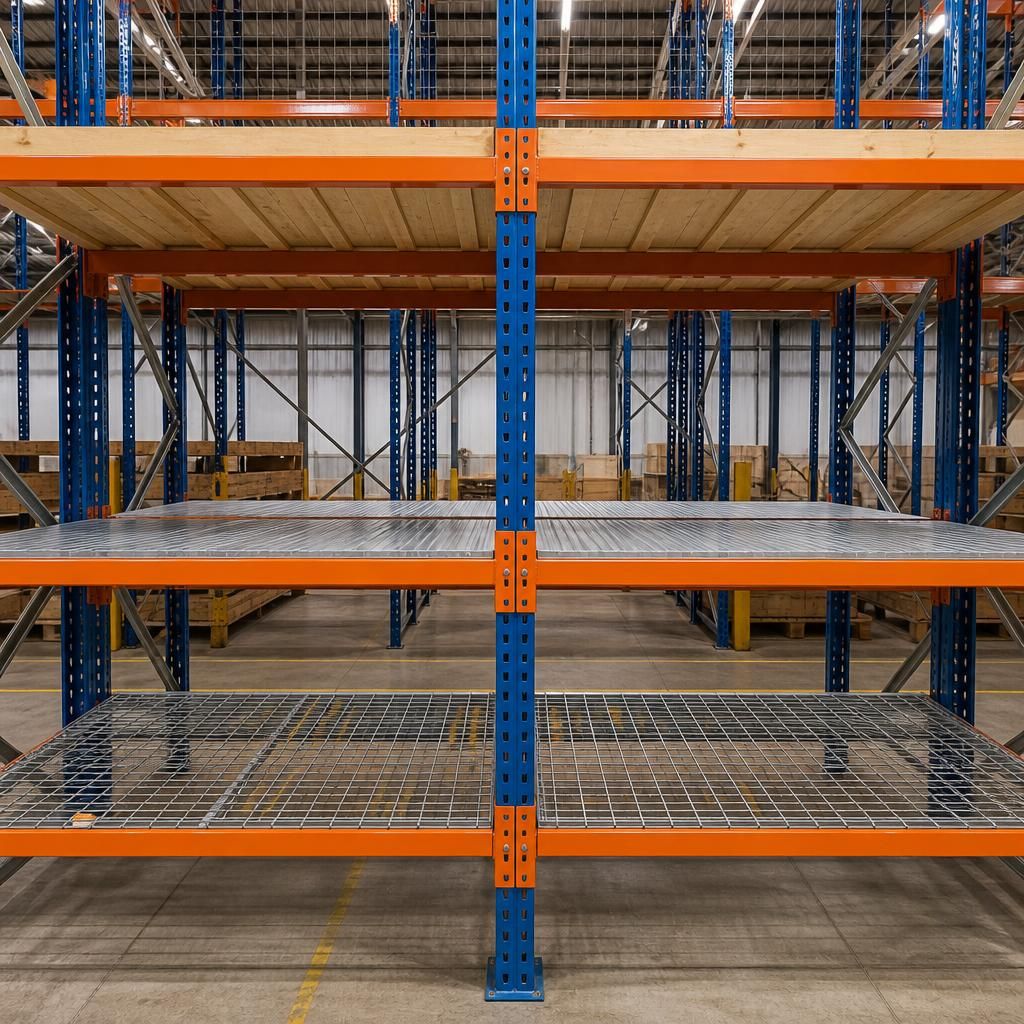
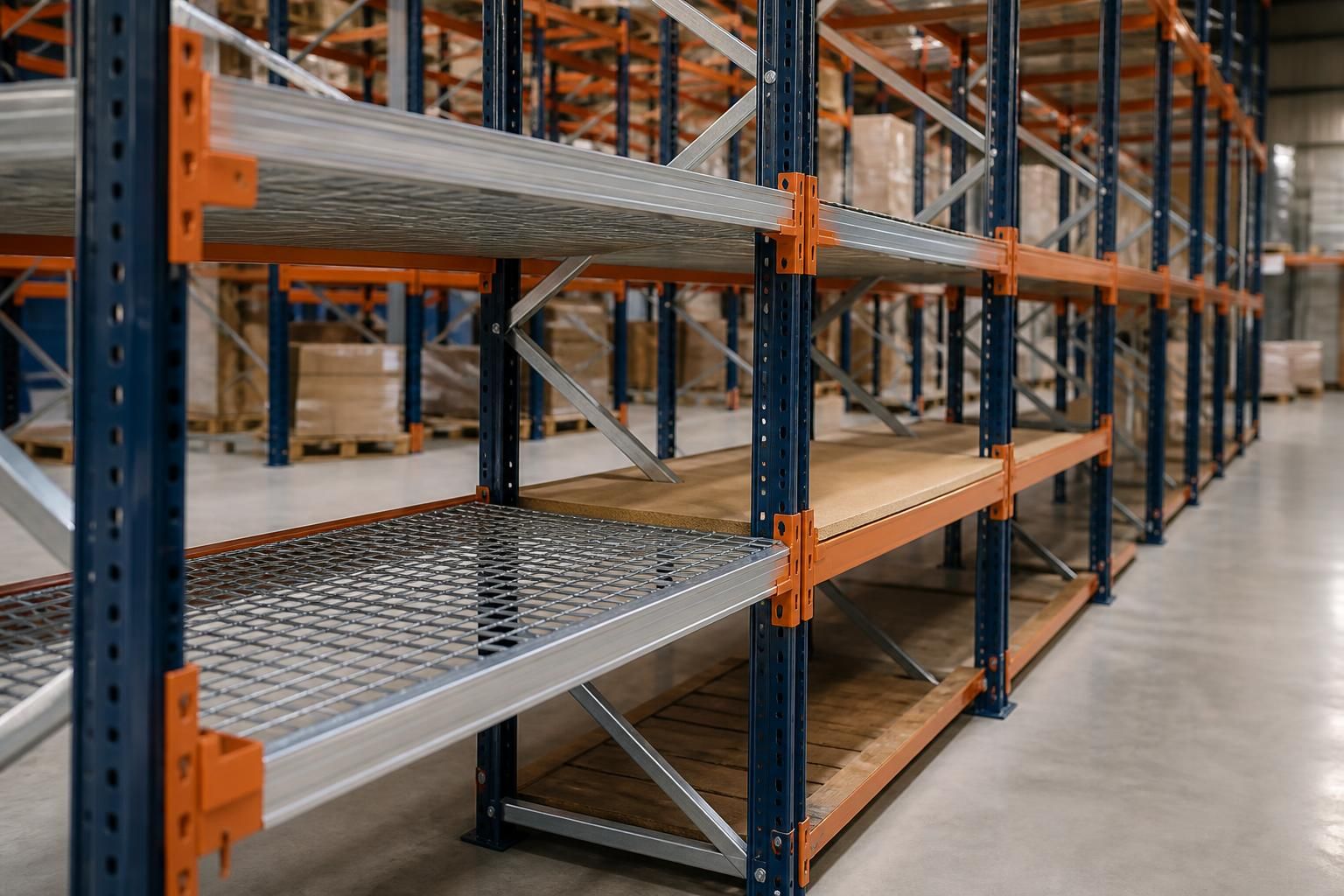
For pallet racking, timber suits carton-level storage, steel suits demanding loading conditions, and mesh suits visibility and ventilation. The correct choice depends on the deck’s purpose at each level, not simply the aisle width.
Timber decking
Timber panels provide a solid surface for cartons, boxes and other items picked by hand. They can make individual storage levels easier to use when stock does not sit on standard pallets.
A solid deck can also prevent smaller items from passing between beams. However, the panels must suit the span between supports and the intended load. Concentrated loads, unevenly distributed stock and repeated handling all need consideration.
Steel decking
Steel decking provides a firm surface for storage levels subject to demanding use. It can suit areas where the deck needs greater resistance to knocks, repeated loading or heavier stored items.
The specified steel profile, support arrangement and permitted load must match the pallet racking design. A deck should not be selected by material alone. Beam spacing, upright configuration and the way stock reaches the level also affect the specification.
Mesh decking
Mesh decking leaves an open surface between its supporting wires or sections. This can improve visibility through the rack and allow light to reach lower levels.
Its open construction may not suit loose small items without additional support. Boxes, components and packaged goods need checking carefully, particularly where they could settle between openings or extend beyond the storage position.
Mesh also needs consideration alongside the site’s fire strategy. Its use, spacing and arrangement should be reviewed with the person responsible for fire safety and the wider building requirements.
How to compare the options
- Stock form: Confirm whether each level holds pallets, cartons, containers, components or mixed items.
- Load pattern: Check the total load and whether it sits evenly across the deck or concentrates in particular areas.
- Handling method: Consider hand picking, pallet movement and the equipment used to place or remove stock.
- Level access: Review how people reach stored items, including the need to prevent items entering gaps or falling from edges.
- Site conditions: Consider dust, impact exposure, temperature, moisture and the cleaning requirements of the storage area.
- Future use: Allow for likely changes in stock sizes, load arrangements and the way each level will operate.
Decking must work with the rack’s beam levels and clearances. It must also leave enough room for safe placement and removal of stock. Adding panels to an existing rack without checking its structure can create an unsuitable arrangement.
Our consultation can include a site meeting and survey to record the existing rack layout, stock and handling practices. We then use that information for written proposals and working drawings showing the decking arrangement.
For storage areas using more than one deck type, the drawings can identify which material belongs at each level. That avoids treating every bay as though it has the same load, access and protection requirements.
After installation, include decking condition within planned checks of the pallet racking. Look for damaged panels, displaced supports, sharp edges, distortion and changes to the stored load. Any damage should be assessed before the affected level returns to use.
For wide aisle pallet racking in warehouses, the strongest option is not automatically the best option. Timber, steel or mesh should be selected for the stock, handling pattern and safety arrangements recorded during the design process.
Decking for pallet racking is a storage surface, not a working platform. If people need a raised packing or work area, mezzanine floors provide a separate floor for that purpose.
Separating these uses keeps the decking choice focused on stock support and makes the layout clearer during the site survey and drawing stage.