


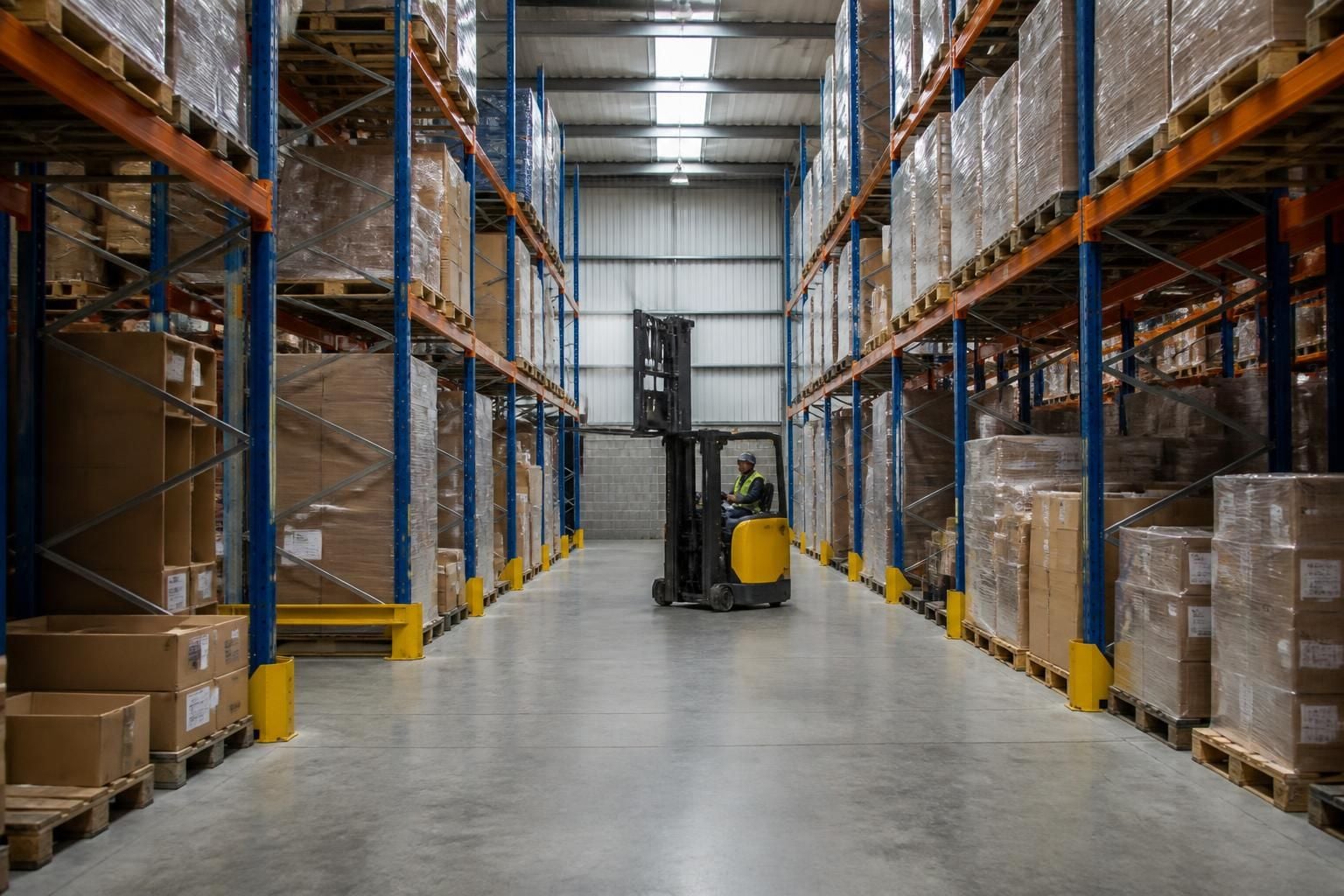
How does wide aisle pallet racking affect storage capacity?
Wide aisle pallet racking can reduce storage density because it leaves more room for forklift aisles, but it provides straightforward access to each pallet position. The capacity you achieve depends on available floor area, rack height, load requirements and forklift movement, so we assess the site and stock before proposing a layout.
Wide aisle pallet racking can increase usable pallet positions by using building height and keeping each location accessible. However, its capacity is measured against the whole warehouse layout, including aisles, columns, doors, working areas and required clearances.
Storage capacity is not simply the amount of floor covered by racking. A practical assessment considers the number of bays, levels and pallet positions available after excluding areas that cannot safely accommodate equipment or stock.
- Rack height: Additional levels can use unused vertical space, subject to building height, load requirements and handling equipment.
- Pallet dimensions: Pallet length, width and weight affect beam selection, bay arrangement and the number of positions each run can provide.
- Building restrictions: Columns, doors, fire exits, lighting, services and slab conditions can limit the arrangement.
- Operational space: Goods-in, despatch, picking areas and working clearances must remain usable alongside the rack layout.
Wide aisle pallet racking also affects capacity through stock access. Each pallet position can remain identifiable and reachable, rather than being buried behind other pallets. This suits warehouses handling many stock lines or goods with different movement patterns.
That accessibility may reduce the need to move surrounding stock before reaching a selected pallet. It can therefore support orderly picking and replenishment, even when the layout does not provide the highest possible pallet density.
The best capacity balance depends on how stock enters, moves through and leaves the building. A layout holding more pallets may be less suitable if it creates longer travel routes or restricts picking activity.
We can review stock information, pallet sizes, load weights and handling requirements during a consultation. A site meeting and survey help identify usable areas, obstructions and height restrictions. We then prepare written proposals and working drawings showing the proposed arrangement.
Those drawings allow you to review pallet positions alongside access routes and working areas before installation. They also help identify space that should remain available for stock growth, operational changes or future adjustments.
For an existing warehouse, this approach shows whether wide aisle pallet racking can improve capacity without requiring a move. The result is a layout based on the building, stock and workflow rather than a pallet-position estimate alone.
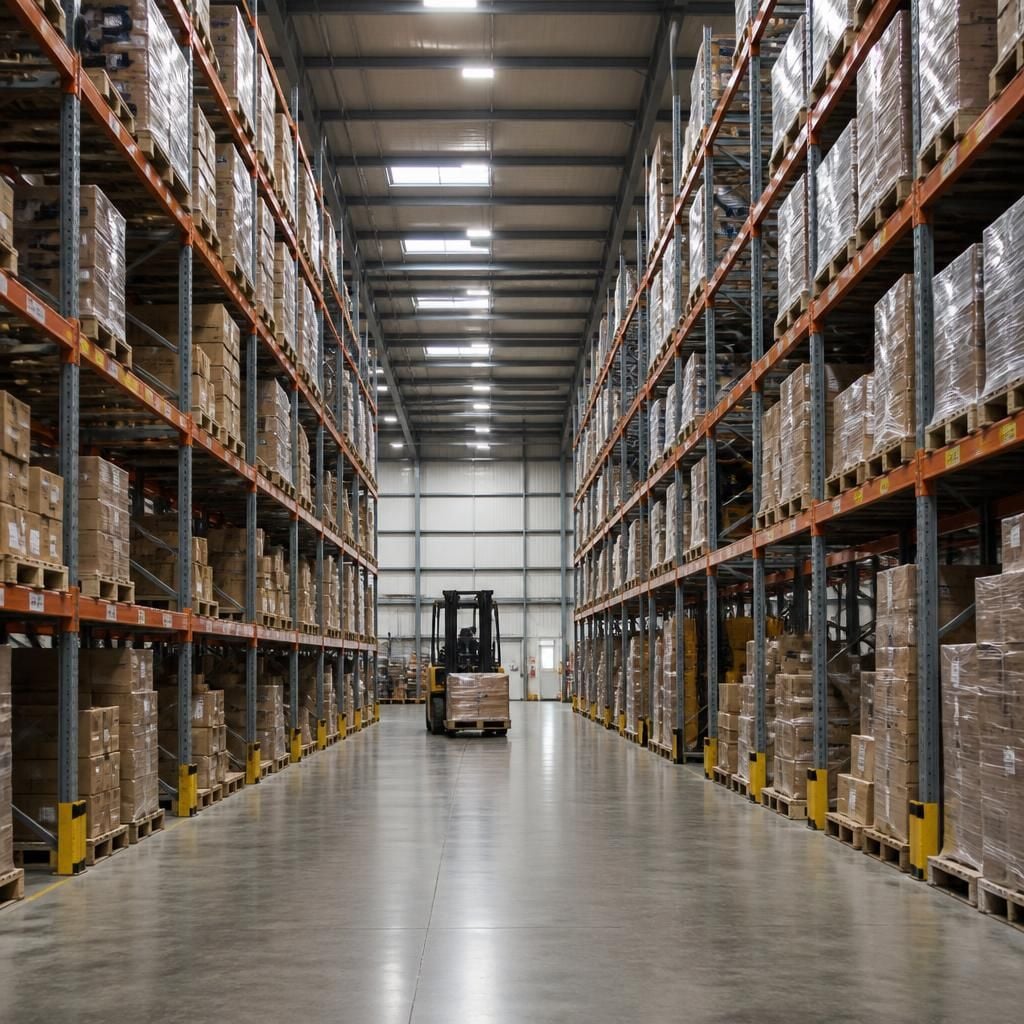
Capacity also depends on how much stock you need to hold at one time. Leaving suitable locations for incoming goods, returns or seasonal changes can make the available capacity more useful than filling every position.
Wide aisle pallet racking gives you a clear framework for assigning stock locations and reviewing occupancy. This makes changes easier to identify when product ranges, pallet quantities or storage priorities change.



