


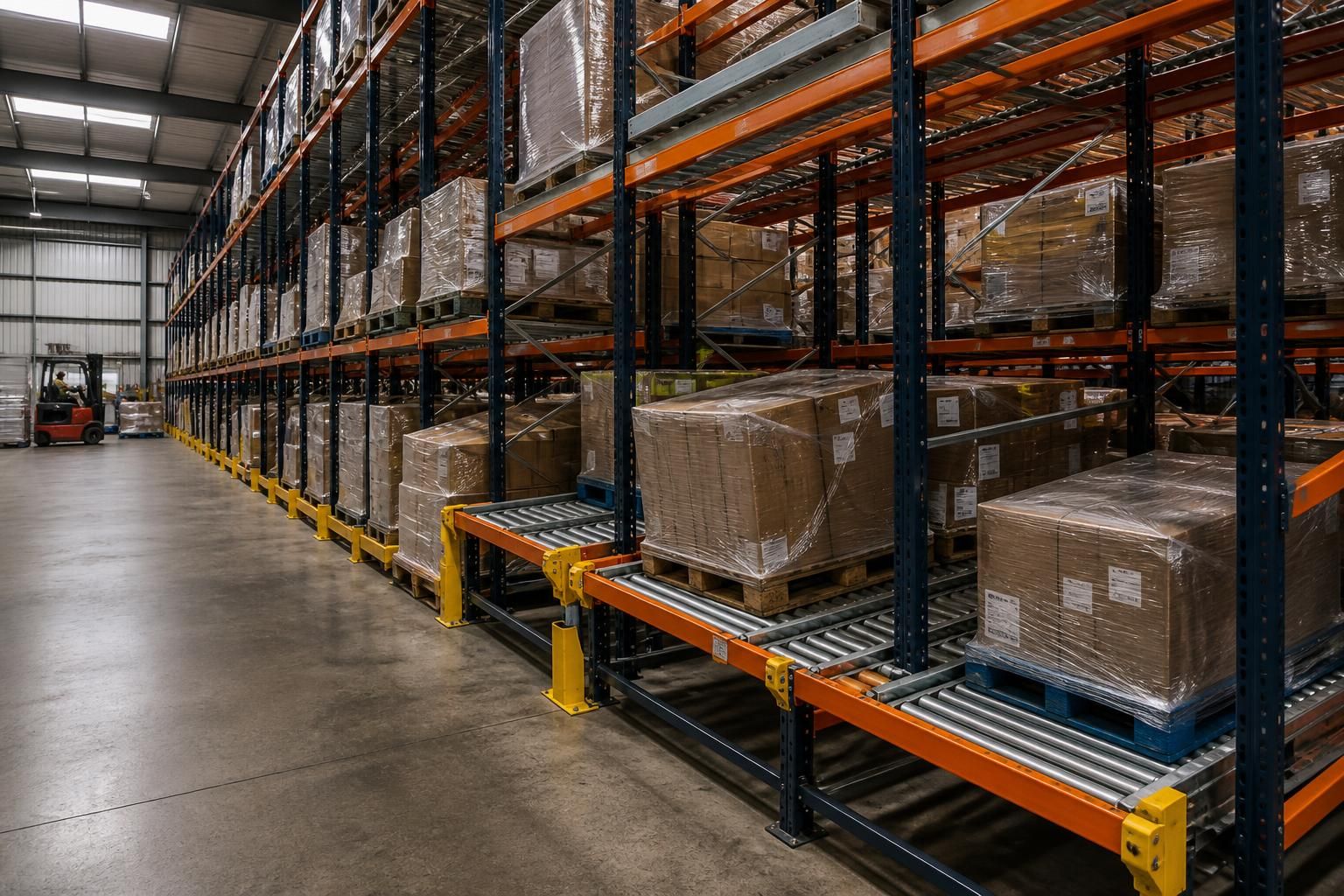
Which pallet racking type suits your stock rotation requirements?
Pallet racking type should match whether stock needs first-in, first-out (FIFO) access or last-in, first-out (LIFO) storage.
Pallet live racking supports FIFO, while drive-in and push-back pallet racking generally suit LIFO stock rotation.
The right pallet racking type depends on how stock enters, moves through and leaves the warehouse. Stock rotation, access frequency, pallet condition, available space and forklift movement all matter together.
For controlled first-in, first-out movement: pallet live pallet racking is usually the strongest starting point. Inclined roller lanes move pallets towards the picking face, so replenishment takes place from the opposite side. This arrangement can support dated, batch-controlled or perishable stock where older pallets should leave first.
Allow space for separate loading and unloading sides. Pallets must also suit the roller lanes. A survey can confirm whether pallet dimensions, weights and operating methods fit the proposed arrangement.
For last-in, first-out storage: drive-in pallet racking stores pallets deep within shared lanes. Forklifts enter the lanes to place and retrieve pallets, reducing direct access to individual positions. This can suit larger quantities of the same product, particularly where immediate access to every pallet is less important.
Push-back pallet racking also generally supports last-in, first-out movement. Pallets sit on nested carriers that move along rails as the forklift loads the lane. The arrangement gives better access to separate product lines than deep lane storage, while still using storage depth efficiently.
Both systems need careful consideration of product batches. If older stock must always leave first, a last-in, first-out arrangement may create rotation problems unless operating controls address the sequence.
For greater access to individual pallets: wide aisle pallet racking provides forklift access along each storage aisle. It can suit stock with many product lines, irregular demand or frequent retrieval. The trade-off is that aisles occupy floor area, leaving less room for storage positions than denser arrangements.
Narrow aisle pallet racking reduces aisle width and can increase the number of available storage positions within the same building. It requires suitable handling equipment and careful consideration of manoeuvring space. The storage density should not restrict safe pallet placement or retrieval.
For selective access with improved space use: double deep pallet racking places one pallet position behind another. It can hold more pallets than a single-depth layout, but the rear pallet is not directly accessible from the aisle. This makes it more suitable where stock lines move in larger quantities and some selectivity can be accepted.
Mobile pallet racking places storage runs on powered bases that open an access aisle when required. Closing unused aisles can release floor space for storage, while opening the required aisle preserves access. The operating sequence and retrieval frequency should be reviewed before selecting this arrangement.
For stock with different movement patterns: a warehouse may need more than one pallet racking type. Pallet live racking could serve dated goods, while conventional or deep storage could hold reserve stock. Separating these functions can make the intended rotation clearer for warehouse staff.
Do not select a system from stock rotation alone. Consider these practical points:
- Stock characteristics: product type, pallet dimensions, load weight, batch control and date sensitivity.
- Movement pattern: deliveries, replenishment, picking frequency and the expected order in which pallets leave.
- Access needs: direct access to every pallet, access to selected lanes or storage by product group.
- Building constraints: floor area, clear height, columns, doors, fire arrangements and working routes.
- Handling equipment: forklift dimensions, lift height, turning requirements and operator visibility.
- Future changes: changes in product lines, pallet formats or throughput can affect the suitability of a fixed layout.
Heavy duty pallet racking describes the load-handling requirement rather than a stock rotation method. Pallet racking parts and accessories can support safe, organised storage, but they do not determine whether stock follows FIFO or LIFO.
We can review the movement pattern during a no-obligation consultation. This may include a site meeting and survey, followed by written proposals and working drawings. Those documents can show aisle positions, storage levels, loading arrangements and the relationship between different racking types.
Where required, project management can continue from proposal and tender stage through installation and final commissioning. This gives you a structured basis for comparing storage density, forklift access and rotation control before committing to a layout.
The most suitable pallet racking type is therefore the one that supports the required stock sequence without making access, handling or site constraints harder to manage.
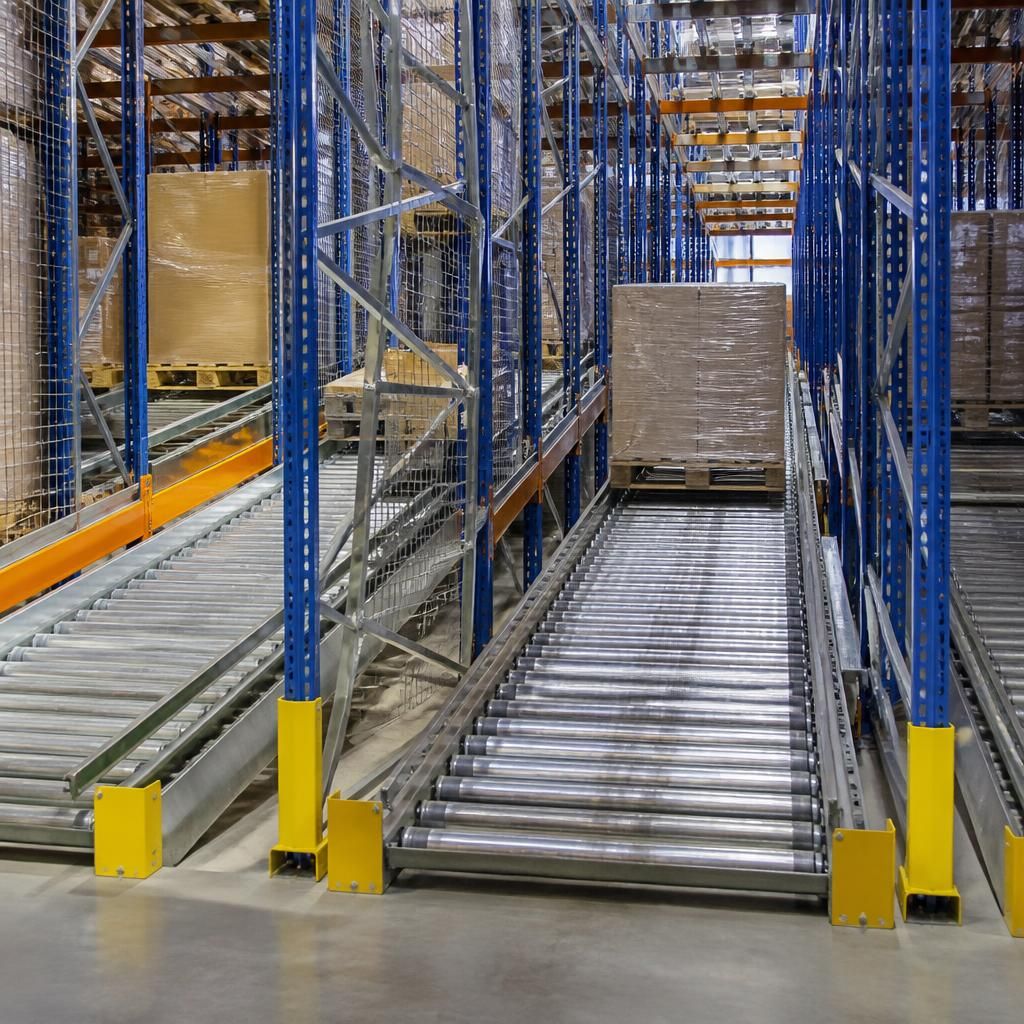
Pallet racking supports stock rotation only when the operating sequence remains clear. For FIFO storage, staff load replenishment stock from the designated supply side and retrieve older pallets from the picking face.
Clear markings, batch identification and consistent forklift movements help maintain that sequence. During planning, compare the proposed pallet racking arrangement with how stock is actually received, stored and picked.



