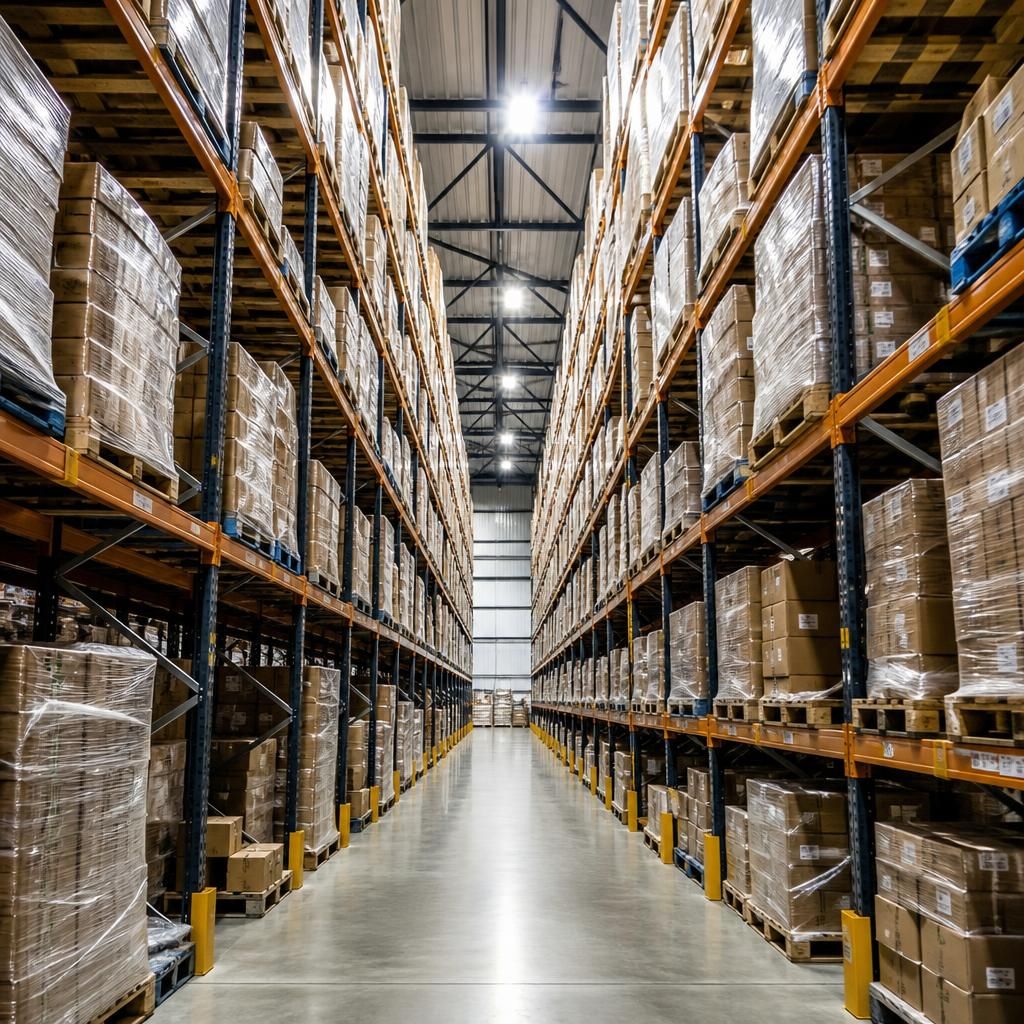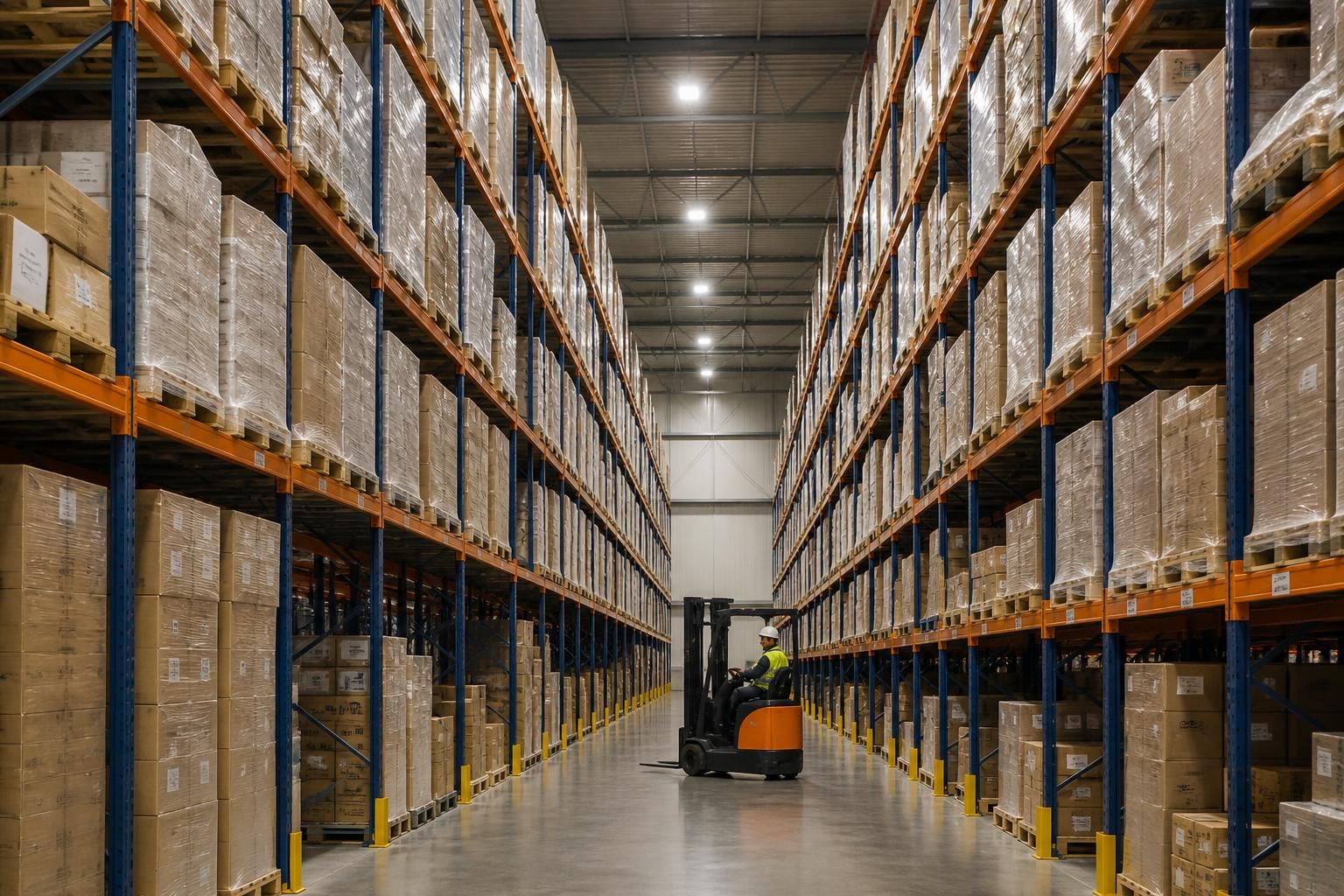
When is high bay racking suitable for a warehouse?
High bay pallet racking suits warehouses with sufficient clear height and stock that can be stored safely at elevated levels. We use site surveys, written proposals and working drawings to assess whether the arrangement fits your space and workflow.
High bay pallet racking is most suitable when palletised stock, handling methods and building constraints support vertical storage. It can help you use upper storage levels while keeping valuable floor space available for movement, picking or production activities.
The decision depends on more than the building’s overall height. Services, lighting, sprinkler systems, roof structure, doors and other obstructions can limit usable height. The available height above the racking must also allow safe handling and suitable clearance.
Stock characteristics are equally important. High bay pallet racking generally suits goods stored on pallets with consistent dimensions and known weights. Your stock requirements should account for:
- Pallet size, weight and condition.
- How often each product moves through the warehouse.
- How many pallet positions each product needs.
- Whether staff need direct access to individual pallets.
- Whether the stock requires separation by product, batch or handling condition.
Fast-moving stock may need clear access and simple picking routes. Less frequently handled stock may suit storage at higher levels, depending on the operating method.
Forklift access can determine whether high bay racking works in practice. The handling equipment must reach the required levels and operate safely within the available aisles. Turning space, travel routes, pallet presentation and floor conditions all affect the layout.
High bay storage does not automatically require one particular racking configuration. Selective pallet racking may suit operations needing direct access. Double deep, drive-in, push back or pallet live arrangements may suit different stock rotation requirements.
The most suitable choice depends on how you store and retrieve goods, rather than height alone. A layout designed around the wrong access pattern can create avoidable travel, handling or replenishment difficulties.
Floor capacity and building condition also require attention. Taller racking introduces loads through its upright frames and baseplates. The floor must be considered alongside the proposed configuration, pallet weights and operating equipment.
Site activity matters too. Existing walkways, loading areas, workstations and production routes can influence the position of the racking. The arrangement should support stock movement without creating unnecessary conflict with people or vehicles.
Safety planning should include protection at vulnerable points, workplace segregation, line marking and barrier protection where appropriate. Racking inspections can also support ongoing checks of storage equipment after installation.
High bay pallet racking may be less suitable when stock needs frequent manual access, pallet sizes vary significantly or the building has limited usable height. It may also need further consideration where handling equipment cannot serve upper levels efficiently.
Other storage arrangements could suit these conditions better. Lower-level shelving may support smaller goods and frequent manual picking. Cantilever racking may suit long products, while mezzanine floors can create additional workspace or storage at another level.
Choosing high bay racking therefore involves balancing storage density with access, safety and workflow. More storage positions do not necessarily improve operations if retrieval becomes difficult.
We can discuss the stock profile, handling requirements and building constraints during a no-obligation consultation. Site meetings and surveys can inform written proposals and working drawings for the intended arrangement.
For projects requiring several workplace changes, project management may continue from proposal and tender stages through installation and final commissioning. Spartan Direct provides this service for warehouse and industrial environments across the West Midlands.
Before proceeding, you should have a clear view of pallet dimensions, maximum loads, stock rotation, access equipment and future capacity requirements. These details provide a practical basis for deciding if high bay pallet racking fits the operation.
High bay pallet racking may suit a warehouse where floor space is limited but usable vertical volume remains. It can add pallet positions without extending the storage footprint, leaving ground-level areas available for receiving, dispatch or production.
The arrangement must support the way your operation may develop. Reviewing planned stock levels, access equipment and building constraints helps establish whether high bay storage offers practical capacity, rather than height alone.