What is the difference between push-back and drive-in pallet racking?
Push-back pallet racking offers access from the aisle, with pallets moving along rails or carts, while drive-in racking lets forklifts enter storage lanes. Push-back suits multiple-product storage with direct aisle access; drive-in prioritises high-density storage for fewer product lines and last-in, first-out rotation.
The deciding difference between push-back and drive-in pallet racking is the balance between stock selectivity, storage density and forklift movement. Push-back generally supports more accessible product groups, while drive-in prioritises concentrated storage for fewer product lines.
How push-back pallet racking operates
Push-back pallet racking uses inclined rails or carts within each lane. A forklift places a pallet at the front, then pushes it backwards as further pallets are loaded.
During retrieval, the front pallet leaves first. This creates a last-in, first-out loading sequence within each lane. You can normally reach the front position from the aisle without driving into the rack.
This arrangement can suit operations holding several product types, where separate lanes provide clearer stock grouping. It also supports loading and retrieval from the same aisle, reducing the need for forklift travel inside the rack structure.
How drive-in pallet racking operates
Drive-in pallet racking creates storage lanes with supporting rails. The forklift enters a lane to place or remove pallets at different depths.
The deepest pallet is loaded first, with subsequent pallets positioned closer to the aisle. Removal follows the reverse sequence, so standard drive-in arrangements usually operate on a last-in, first-out basis.
Because the forklift enters the lanes, the layout can reduce the aisle space needed between rack runs. This supports high-density storage, particularly where the same product or batch occupies several pallet positions.
Stock access and selectivity
Push-back offers better access to separate lanes, but it does not provide direct access to every pallet position. The front pallet must usually be removed before reaching those behind it.
Drive-in provides less selective access because pallets sit behind one another in the same lane. This is less suited to many product lines requiring frequent individual retrieval.
Consider how often you change products, batches or pallet positions. Mixed stock with regular picking often points towards push-back. Consistent bulk stock can make drive-in more appropriate.
Stock rotation and workflow
Neither standard arrangement should be selected without checking the required stock rotation. Last-in, first-out storage can leave older pallets behind newer ones.
That may suit products with stable batches or no strict first-in, first-out requirement. If stock age, expiry dates or batch control matter, the loading and retrieval sequence needs careful review.
Push-back can reduce the number of forklift movements into storage lanes. Drive-in can reduce aisle requirements, but operators need controlled entry, positioning and reversal within the rack.
Space, loads and equipment
Drive-in may provide greater storage density, but density depends on the building, pallet dimensions, load weights and available handling equipment.
Push-back also requires suitable rail or cart capacity, pallet condition and clearances. Damaged or inconsistent pallets may affect how either system operates.
The forklift type, mast height, turning space and operating aisle all influence the practical layout. Rack height, lane depth and access points must match the building and working pattern.
For both systems, safe operation depends on suitable design, installation, protection and ongoing inspection. Forklift routes and pedestrian movement should form part of the layout assessment.
Which system should you consider?
- Choose push-back pallet racking when front-facing access, product separation and multiple pallet positions per lane are important.
- Choose drive-in pallet racking when high-density storage matters more than individual pallet selectivity.
- Review both options when stock rotation, pallet variation or forklift access could limit the available arrangement.
We assess the storage requirement through consultation and, where appropriate, a site meeting or survey. Written proposals and working drawings can then show how each arrangement fits the available space, loads and workflow.
This process helps you compare usable access with storage density before selecting pallet racking. It also allows related protection or workplace requirements to be considered within the same layout.
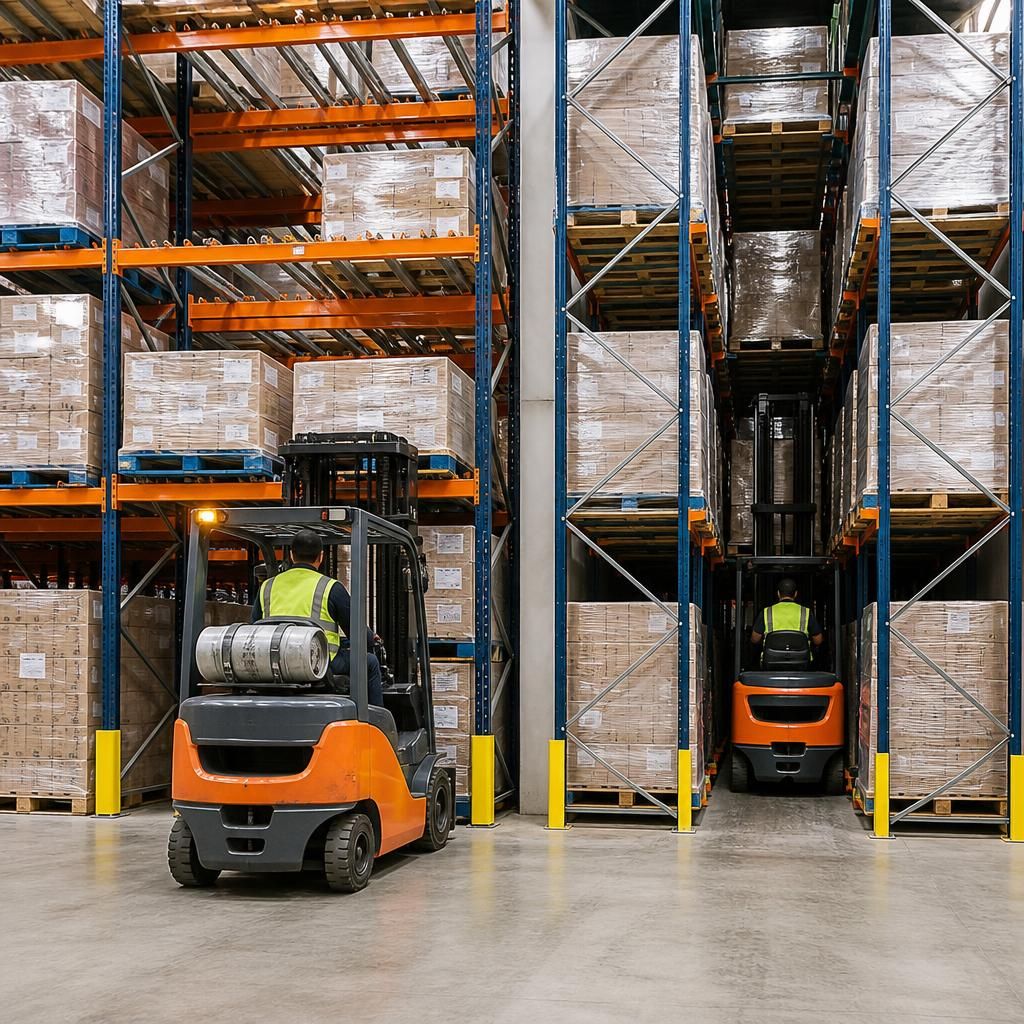
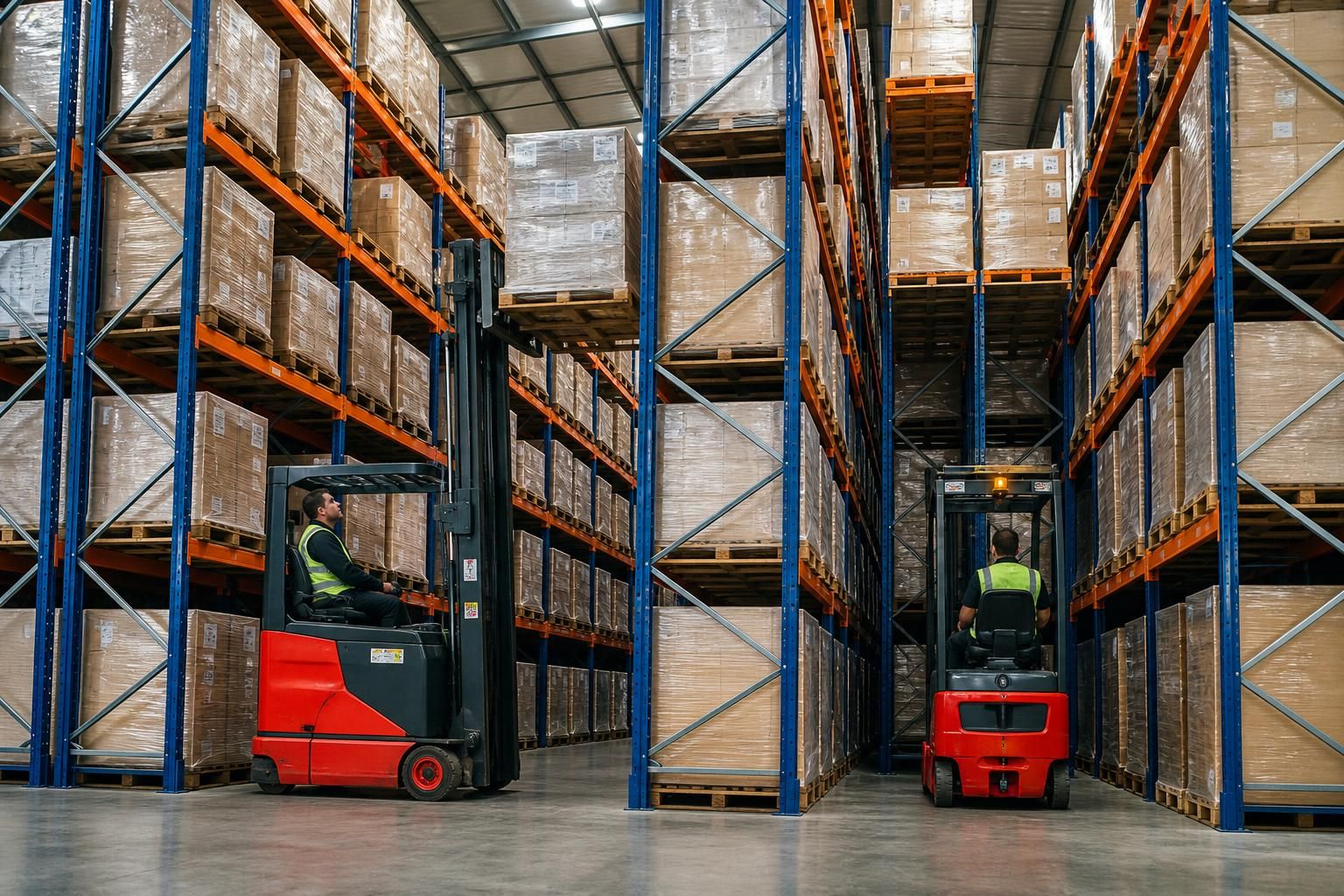
The image shows the access difference clearly: push-back pallet racking keeps forklift activity at the aisle, while drive-in pallet racking requires entry into each storage lane. That distinction affects operator movement, lane planning and daily handling procedures.
Compare both arrangements against the way stock enters and leaves your warehouse. A site survey and working drawings can show the practical access points, clearances and pallet positions before you choose between storage density and easier handling.