


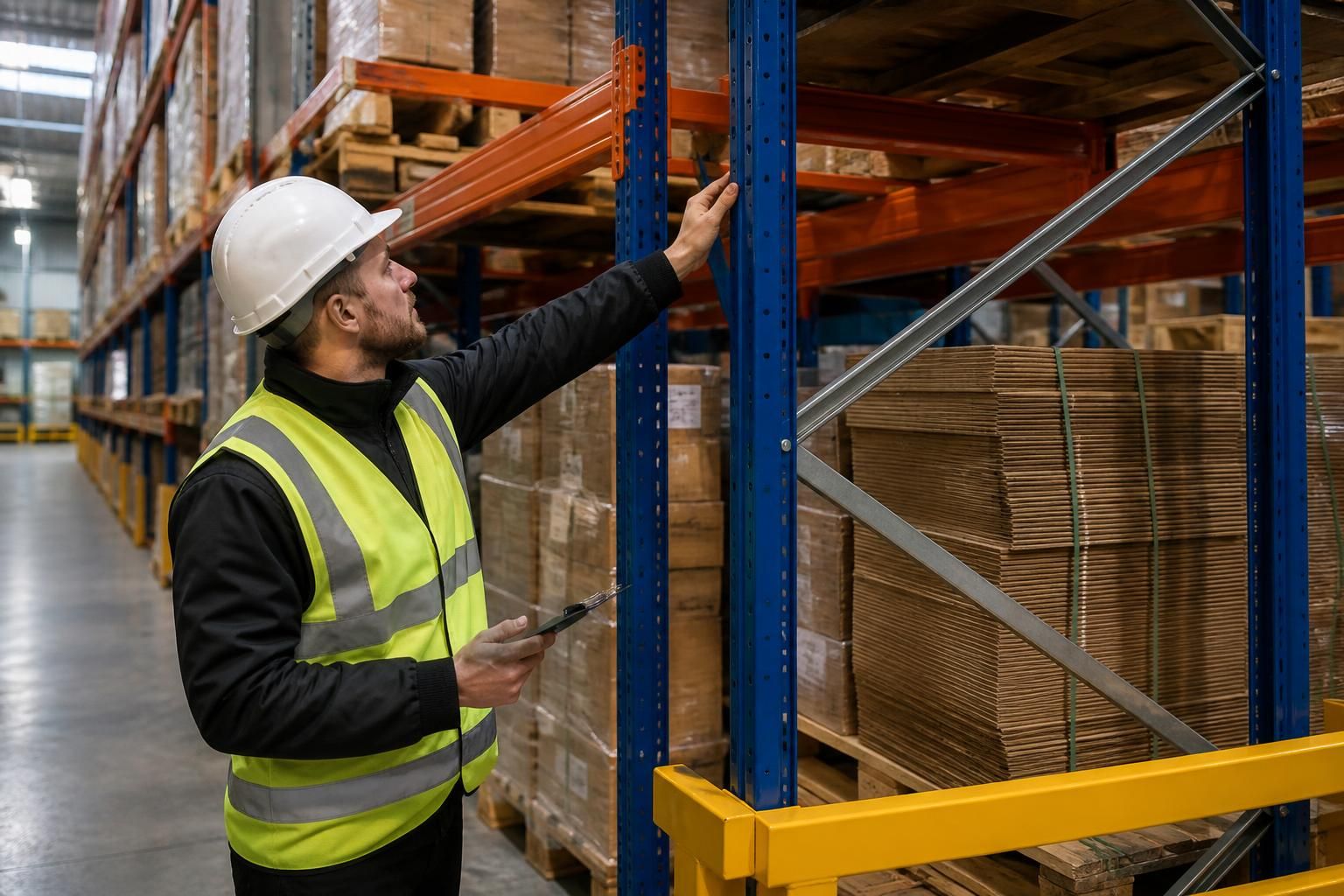
Can used pallet racking meet current workplace safety requirements?
Used pallet racking can meet current workplace safety requirements when its condition, configuration, load limits and protection are properly assessed. We can inspect the system and advise on suitable remedial work or replacement before installation.
A compliant installation needs more than sound-looking frames. It needs clear records, suitable components, controlled loading, safe access, protection from impact and planned inspections.
Start with identification and records
Before using second-hand pallet racking, establish what each component is and where it belongs. Frames, beams, bracing, connectors and guards must form a compatible system.
- Record manufacturer details where available.
- Note component dimensions, quantities and visible damage.
- Confirm beam levels and frame arrangements against the proposed layout.
- Keep load information with the installation.
- Mark each bay with its relevant safe working load.
Missing information should not be replaced with an assumption. A survey can identify what needs checking before the installation proceeds.
Check the structure and components
Look for bent uprights, damaged bracing, distorted beams, cracked welds, missing locking pins and loose connections. Corrosion, drilled components or unauthorised alterations also need attention.
Damage is not always obvious from the aisle. The rear of frames, floor fixings, beam connectors and lower-level protection need inspection. Any component with uncertain strength should remain out of use until assessed.
Replacement parts should match the system and its intended loading. Mixing parts without confirming compatibility can alter how the structure carries weight.
Confirm loads and configuration
The proposed arrangement must suit the pallets, goods and handling equipment used at the site. Consider:
- pallet dimensions and condition;
- individual pallet weights;
- load distribution across each beam level;
- bay widths, clearances and beam positions;
- the number of levels in each bay;
- forklift access and operating routes; and
- floor capacity and fixing requirements.
Load notices should reflect the installed configuration, not a previous warehouse layout. Changes to beam levels, pallet types or operating methods may require a fresh review.
Control impact and access risks
Forklift contact can damage uprights and reduce the capacity of a bay. Guards, end barriers and other safety barriers can help protect vulnerable areas where the layout requires them.
Protection must not obstruct fire routes, pedestrian movement, doors, equipment or loading operations. A safe arrangement includes suitable aisle clearance and a clear separation between vehicles and people where required.
Walkways, stairs, gates and mezzanine interfaces need particular care. Office fit-outs or partitioning near storage areas should not create hidden access conflicts or reduce required clearances.
Consider installation quality
Installation should follow the agreed drawings and the component supplier’s requirements. Frames must stand correctly, connections must be secured and floor fixings must suit the structure and substrate.
Working drawings help establish beam positions, protection, access routes and any linked safety measures before work begins. They also provide a reference for later inspections and alterations.
Where a project includes several workplace changes, we can coordinate proposals, drawings, installation and project management through final commissioning where required. This helps keep storage, access and separation measures aligned.
Plan inspections after installation
Safety does not end when the racking is assembled. Users should report damage, overloading, unstable pallets and other concerns immediately. Damaged areas may need isolation until a suitable decision is made.
Planned inspections should consider the condition of frames, beams, bracing, fixings, guards, pallets and load notices. They should also check changes to the layout or working methods.
Our racking inspection service can provide a structured review of the installed system. The findings can identify items requiring monitoring, repair, replacement or further investigation.
Use a documented decision process
Keep the survey findings, drawings, load information, installation records and inspection reports together. This gives site managers a clearer basis for controlling use and reviewing later changes.
A no-obligation consultation may include a site meeting and survey, followed by a written proposal and working drawings. We can then explain which remedial work, protection or replacement appears appropriate for the stated requirements.
Do not place used pallet racking into service simply because it appears complete. Treat missing records, damaged parts, unclear loads and altered layouts as reasons for further assessment.
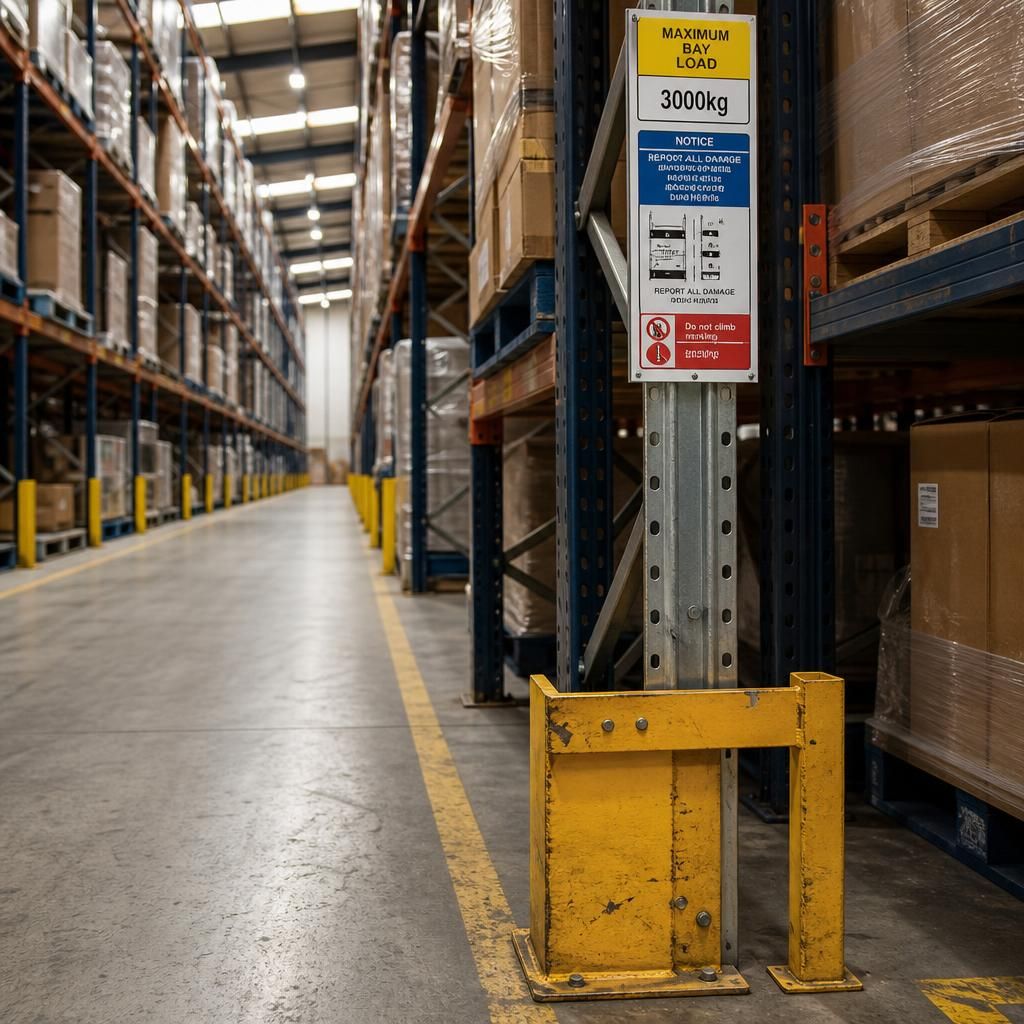
Used pallet racking must suit the way people handle stock, not just appear structurally sound. A load notice supports daily decisions, but it does not authorise changes to beam levels, pallet weights or handling routes.
Keep operators informed about the agreed loading arrangement. Prevent climbing, unauthorised alterations and use of damaged pallets or components. If stock, forklifts or workflow change, reassess the affected bays before use. This keeps safety decisions linked to actual operation, rather than the racking’s previous use or appearance.



