What forklift type suits narrow aisle pallet racking?
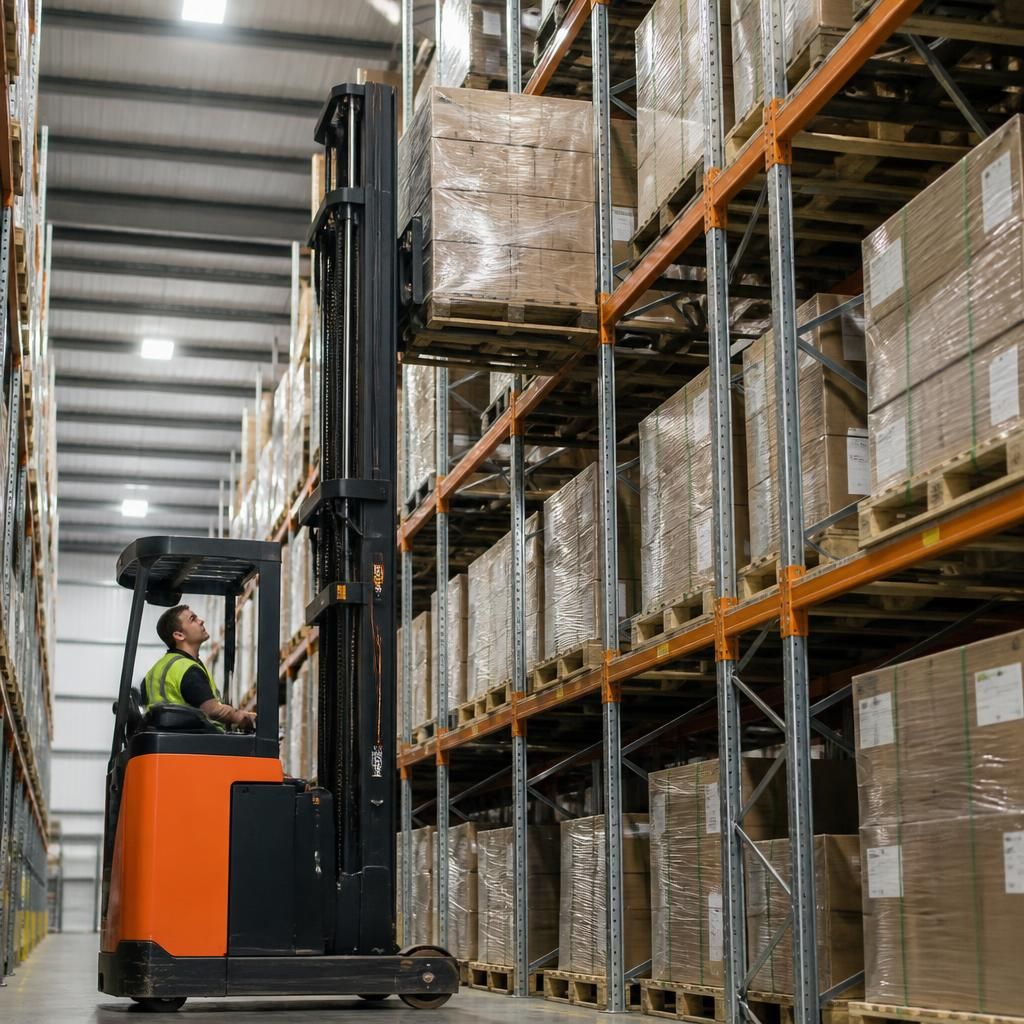
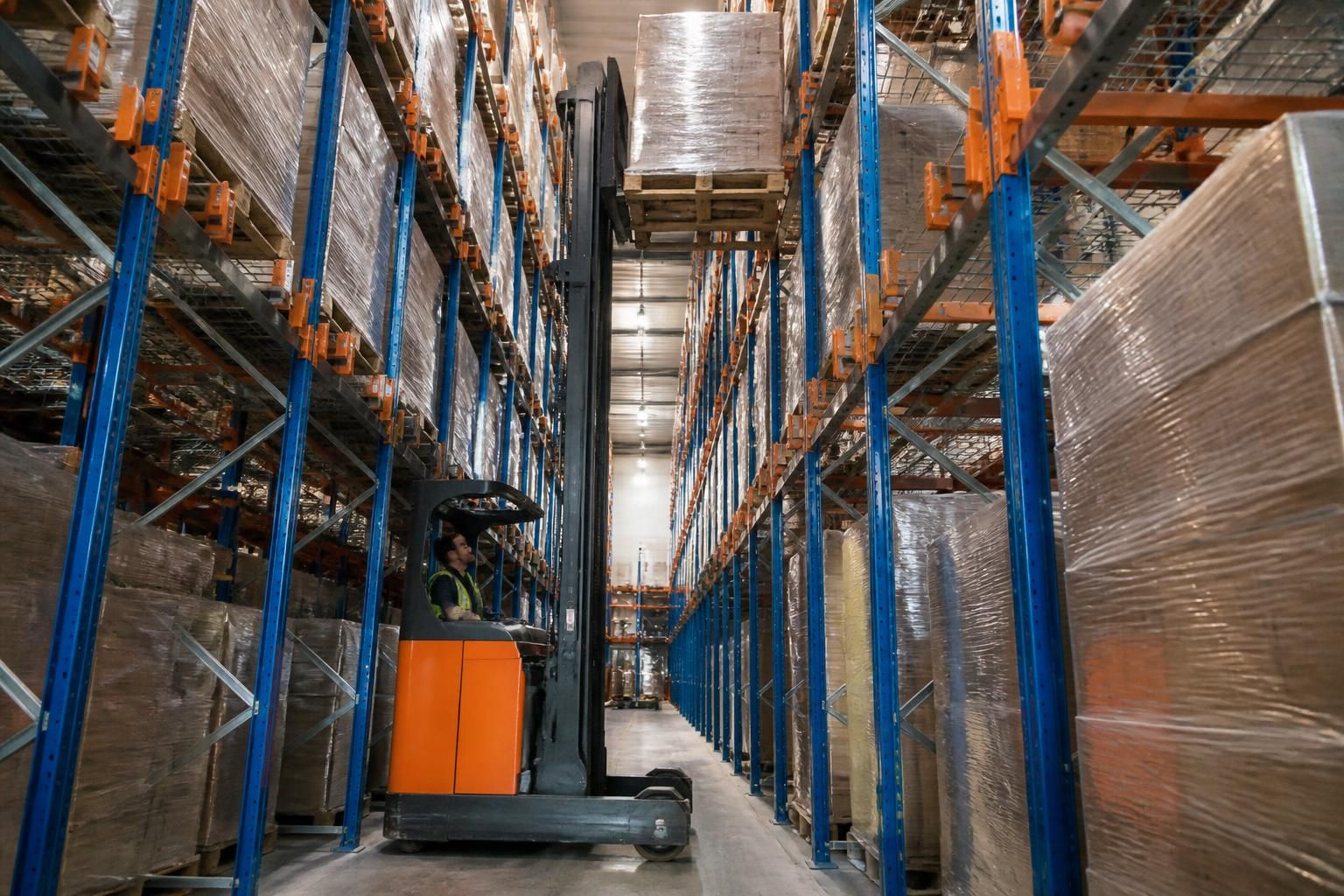
Reach trucks often suit narrow aisle pallet racking, while very narrow aisles may require a specialised VNA forklift. The choice depends on aisle width, rack height, load dimensions and workflow, which we assess through a site survey.
Reach trucks suit many narrow aisle pallet racking layouts, while VNA trucks suit the tightest arrangements. The correct choice depends on how the truck enters, lifts, turns and handles stock within the available space.
Reach trucks are often suitable where aisles remain wide enough for safe travel and load placement. Their extending mast allows the forks to reach into pallet positions without moving the whole truck as far forward. This can support good access at moderate and greater rack heights.
Check the reach truck’s lift height against the highest beam level. Allow space for the mast, load and pallet during lifting. The truck must also handle the pallet dimensions and weight without obstructing adjacent positions.
VNA trucks are intended for very narrow aisles where conventional reach truck movements may not fit. Some VNA arrangements use guided travel, allowing the truck to follow a defined route through the aisle. This reduces the steering space needed at floor level.
VNA equipment can support high-density pallet storage, but it may impose different operating requirements. Consider access at aisle ends, transfer points, pedestrian movements and the method used to retrieve pallets. The layout must support the complete movement cycle, not only the truck’s turning width.
Counterbalance forklifts may still have a role outside narrow rack aisles. They can move loads across loading areas, production spaces and open warehouse zones. However, their counterweight and turning movement can make them unsuitable for direct work inside tighter aisles.
Many sites therefore use different trucks for different tasks. One truck may move pallets between vehicles and staging areas. Another may place or retrieve pallets within the racking. This arrangement can work when transfer locations, traffic routes and handover points are clearly planned.
Forklift selection should consider these practical points:
- Aisle clearance: measure the operating width required for the chosen truck, load and pallet.
- Lift height: confirm the truck reaches the highest storage position with suitable clearance.
- Load dimensions: account for pallet size, overhang, weight distribution and any uneven loads.
- Rack access: check that the forks can enter and withdraw from each pallet position safely.
- Floor conditions: review the surface, level and condition across travel routes and rack aisles.
- Traffic layout: separate forklift movements from pedestrians, packing areas and other workplace activities.
- Operating pattern: consider the number of pallet movements, travel distances and required access sequence.
- Truck dimensions: allow for the chassis, mast, overhead guard, fork carriage and load during movement.
Rack height also affects the choice. A truck lifting to greater levels needs suitable stability, visibility and clearance. The operating method must prevent contact with beams, pallets and stored goods.
Stock rotation can influence the arrangement. Frequent-access goods may need positions that reduce unnecessary travel. Slower-moving stock may suit higher or less accessible locations, subject to safe handling and planned retrieval.
The pallet itself matters as much as the truck. Damaged pallets, inconsistent dimensions or loads that extend beyond the pallet can alter the required clearance. Tell us about these conditions before the racking layout and forklift access are finalised.
We can review the proposed truck against site measurements, rack heights, load information and workflow. A no-obligation consultation may include a site meeting and survey, followed by written proposals and working drawings.
Those drawings can help compare aisle arrangements, rack positions, access routes and transfer areas before installation. Where required, we can also coordinate project management from proposal and tender stages through installation and final commissioning.
The best forklift type is therefore the one that matches the complete storage operation. A reach truck may suit standard narrow aisles, while a VNA truck may suit tighter, higher-density layouts. The decision should follow measured site conditions rather than aisle width alone.
Choose the forklift and pallet racking as one operating system. The rack position, beam levels and pallet entry direction must suit the truck’s actual movement, not only its stated aisle requirement.
Review the full pallet journey from receiving to storage and retrieval. This shows where a reach truck, VNA truck or separate handling method fits the workflow, helping you avoid selecting equipment that works in the aisle but limits the wider operation.