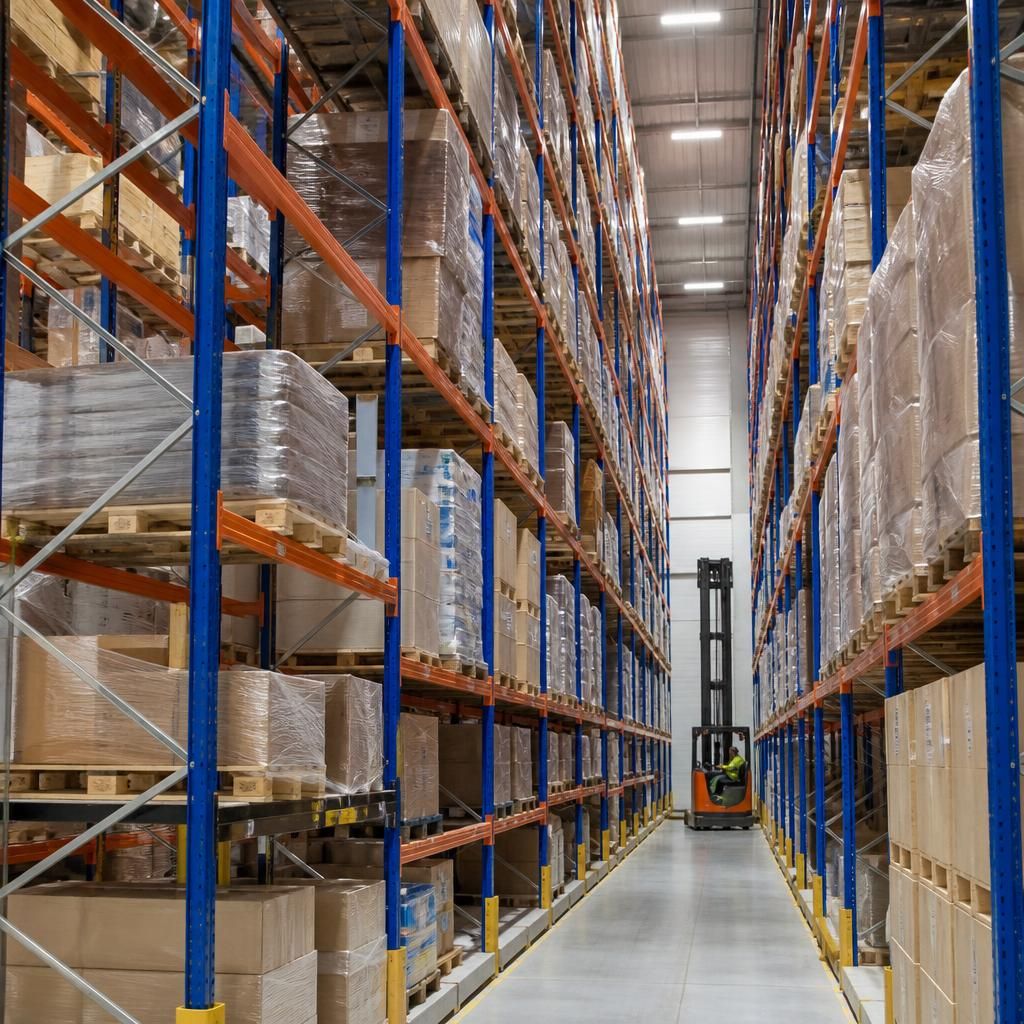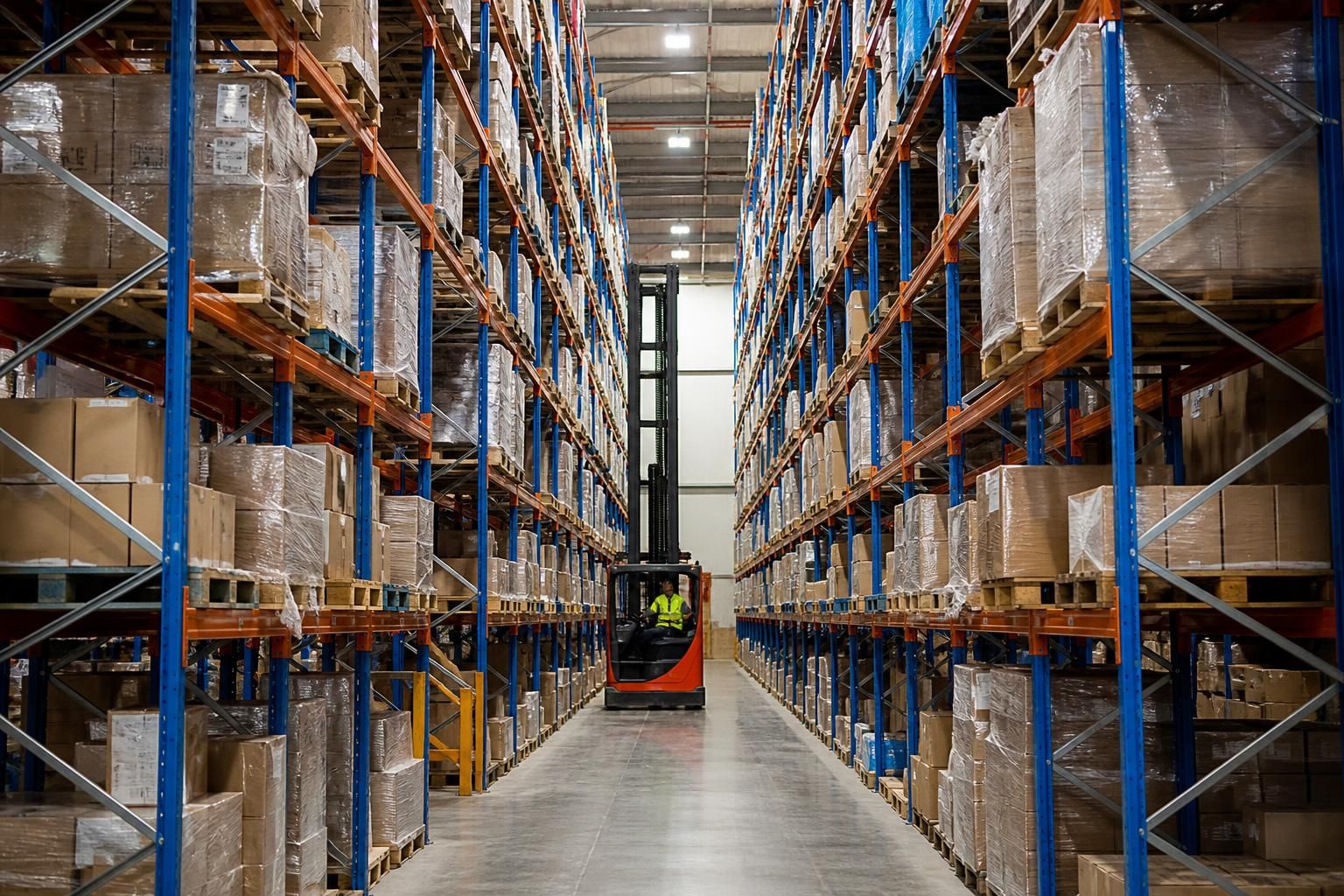
Can narrow aisle pallet racking adapt to changing stock requirements?
Narrow aisle pallet racking can adapt to changing stock requirements through adjustable storage levels and planned bay changes. We assess stock, loads, layout and forklift access before preparing proposals and working drawings for the revised arrangement.
Yes. Narrow aisle pallet racking can accommodate evolving stock, provided each change is checked against load requirements, pallet dimensions, clearances and handling methods.
Adaptability depends on planning for variation rather than designing around one fixed stock profile. The important question is how your stock may change, and which parts of the arrangement need to respond.
- Different pallet heights: Changed pallet heights can affect level spacing and the usable storage arrangement.
- Different pallet weights: Heavier loads require confirmation that the relevant beams, frames and bays remain suitable.
- Changing stock volumes: Stock increases or reductions can alter the number of positions needed for each product group.
- Different product ranges: New product dimensions may require a revised allocation of bays and storage levels.
- Changing workflow: Picking frequency and stock movement can influence where products should sit within the layout.
These changes are not always solved by moving one level. A new pallet height may affect several levels, while a heavier load may affect the bay specification.
Stock variation can also expose limits within an existing arrangement. A layout designed for consistent pallets may offer less flexibility when dimensions, weights or product groups vary significantly.
For that reason, retain the original technical information wherever possible. Load details, pallet sizes, bay dimensions and the intended handling method give a clear basis for reviewing future changes.
We can use a site meeting or survey to understand the proposed stock changes within the existing warehouse. Written proposals and working drawings can then show the revised arrangement for consideration.
Drawings should make the intended configuration clear. They can identify bay positions, storage levels, working clearances and any areas requiring a different treatment.
Where several stock profiles must share the same aisle, the arrangement needs careful allocation. Giving every product the same storage space may leave some positions underused while limiting room for others.
A practical approach is to distinguish stable requirements from likely changes. Stable products can inform the core arrangement, while variable stock may need positions that allow future adjustment.
Changes should also be reviewed before they are introduced. Do not assume that an empty position, a different pallet or a new product can be added without checking the design information.
Our consultation process brings together site information, written proposals and working drawings. Where required, project management can continue from proposal and tender stages through installation and final commissioning.
This gives you a defined route for adapting the arrangement as requirements develop. It also helps separate a straightforward storage change from a change requiring wider review of capacity, access or workflow.
Narrow aisle pallet racking can accommodate some stock changes through controlled position reallocation, without altering every bay.
We compare the revised product mix with existing positions, then identify where dimensions, loads and handling routes remain compatible. Where they do not, the proposed arrangement can show which bays require reconsideration.