When does mobile pallet racking outperform fixed pallet racking?
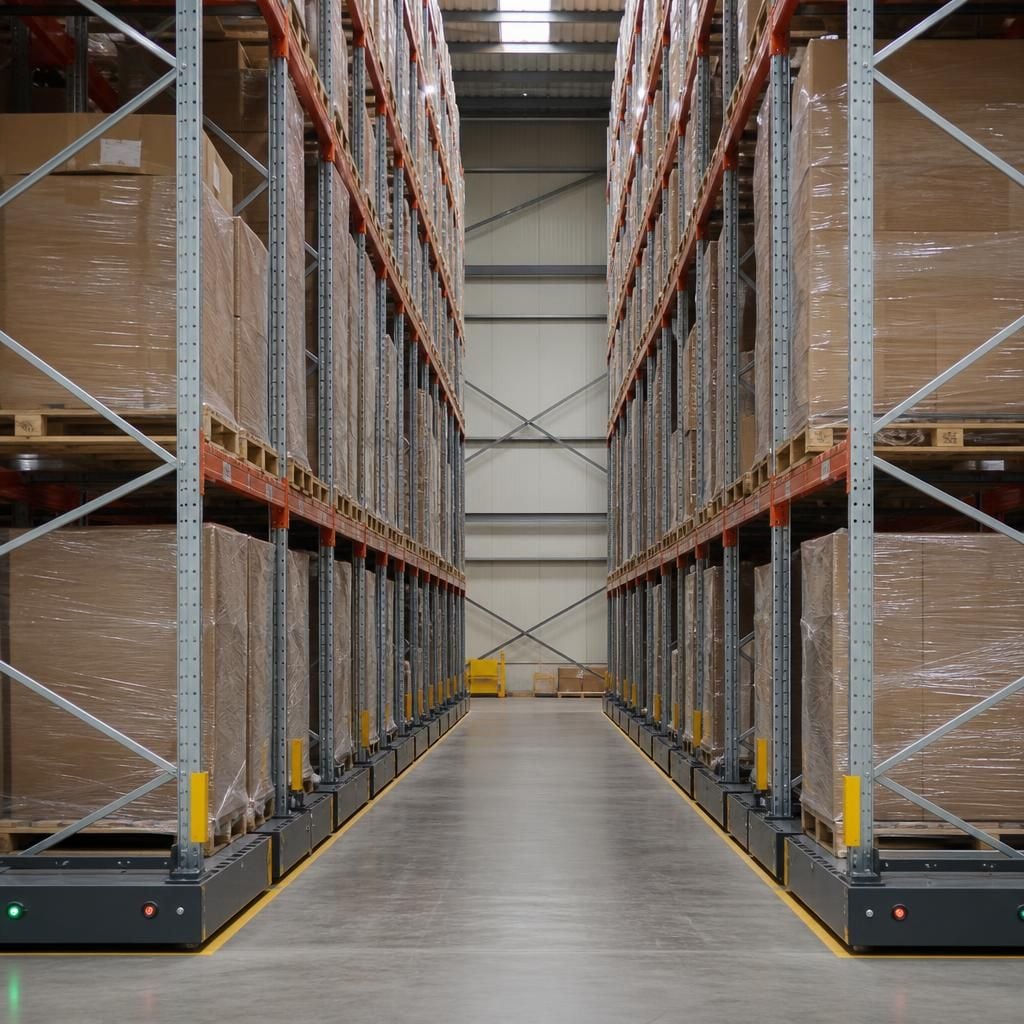
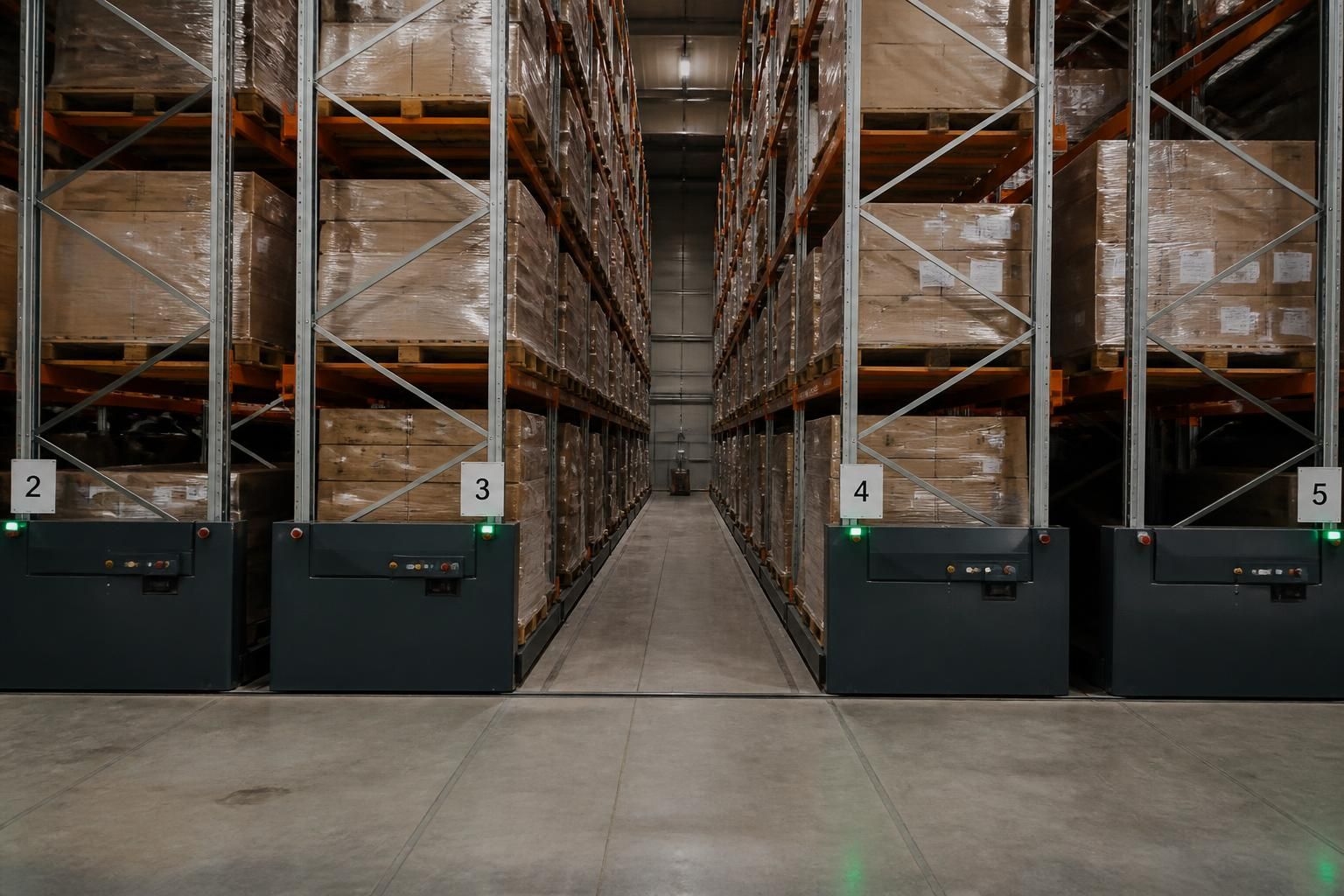
Mobile pallet racking can outperform fixed pallet racking where you need higher storage density within limited floor space.
It suits stock accessed periodically, because powered bases open an aisle when required while keeping other pallet positions compact.
Mobile pallet racking outperforms fixed pallet racking when usable floor area is restricted and access can be planned around stock movements.
The comparison should consider more than pallet capacity. You also need to assess retrieval patterns, forklift movements, building constraints, safety controls and future changes.
Mobile racking suits controlled access patterns. It can perform well when stock is stored for production runs, seasonal demand or planned order picking. Access requirements can then be scheduled, rather than keeping every aisle available continuously.
Fixed pallet racking may remain the stronger option where several forklifts need simultaneous access. It can also suit operations with constant movement through many aisles. In those settings, opening and closing mobile aisles could affect the working pattern.
Stock profile affects the result. Mobile racking is worth considering when pallet locations need compact organisation and stock does not require unrestricted access at all times. Fixed racking may suit a simpler layout when fast, direct access matters more than floor utilisation.
Review the following points before selecting either arrangement:
- Access frequency: identify which pallets move daily, weekly or less often. Frequent access across multiple aisles may favour fixed racking.
- Handling equipment: check forklift dimensions, turning requirements, reach and operating routes. Mobile layouts need movement controls that work with the handling process.
- Building constraints: assess columns, doors, sprinkler arrangements, floor levels and escape routes. These features can limit available layouts.
- Floor capacity: mobile bases and stored pallets transfer significant loads through defined points. A proposal should therefore include suitable floor-loading checks.
- Operating controls: consider how authorised staff open aisles, prevent movement during access and manage pedestrian separation.
- Future requirements: allow for changes in pallet sizes, stock volumes, product lines and workflow. A layout that fits today may restrict later changes.
Mobile racking often has the clearest advantage when the building cannot expand. It can help you examine whether additional storage fits within existing premises before considering relocation. The outcome depends on the site, loads and operating method.
It should not be judged by storage density alone. A layout that holds more pallets may perform poorly if access takes longer, forklift routes become awkward or staff cannot work safely. The right comparison balances capacity with practical use.
Installation conditions also matter. Mobile pallet racking requires coordinated work around bases, controls, floor interfaces and existing operations. Fixed racking can involve fewer moving components, although both arrangements need suitable installation planning.
Spartan Direct can assess the proposed arrangement through a no-obligation consultation, site meeting or survey. We then prepare a written proposal and working drawings for consideration.
Those documents can help you compare mobile and fixed pallet racking against the actual building, stock and workflow. Where required, project management can continue from proposal and tender stages through installation and final commissioning.
Mobile pallet racking is therefore most likely to outperform fixed racking when space is constrained, access can be managed, and the building supports the required loads and controls. Fixed racking may be preferable when immediate, simultaneous access is the overriding priority.
Mobile pallet racking can outperform fixed pallet racking when reserve stock needs density, while fast-moving stock needs simpler access.
A mixed layout can place frequently picked pallets in fixed racking and less frequently accessed stock on mobile bases. This avoids giving every pallet position a permanently open aisle.
The result depends on stock rotation, handling routines and the space available for each storage zone. Comparing these areas separately gives a clearer view than choosing one system for the whole warehouse.