


What safety controls should mobile pallet racking include?
Mobile pallet racking should include controlled movement, secure locking systems, end protection and planned inspections to reduce unintended movement and damage. We can review these requirements through a site survey and written proposal, considering stock, access and operating conditions.
Mobile pallet racking should combine physical safeguards, operator controls, pedestrian separation, load information and documented checks. The correct combination depends on the equipment, stock, vehicles, layout and working practices at your site.
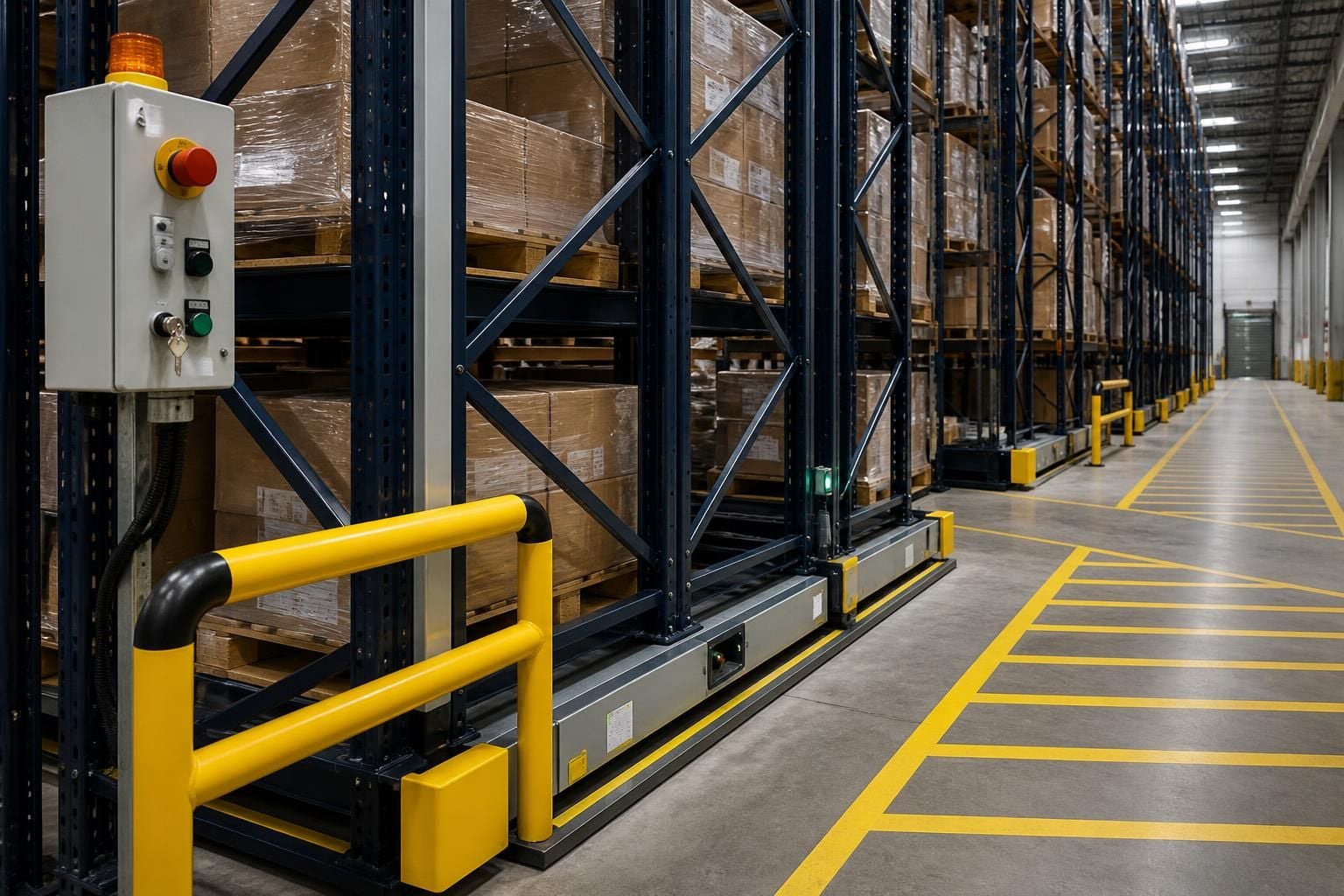
Movement controls should prevent an aisle opening when people or vehicles could be exposed to movement. This may involve controlled access, operator-held controls, presence-sensing devices or other interlocks. The control arrangement should make the operating status clear before movement begins.
- Controls should be positioned where operators can use them without entering a moving hazard zone.
- Only authorised operators should be able to start or control movement.
- Controls should prevent unexpected restart after an interruption or emergency stop.
- Operating instructions should explain normal use, faults and isolation procedures.
Emergency controls should allow movement to stop quickly when someone identifies danger. Emergency-stop devices should be visible, accessible and clearly marked throughout the operating area. They should not encourage people to reach between structures or enter an aisle during movement.
An emergency stop addresses immediate danger. It does not replace safe isolation, investigation or controlled reset procedures. The proposal should identify who can reset the system and how operators confirm that the area is clear.
Pedestrian protection matters where staff share space with forklifts, pallet trucks or moving bases. Safety barriers can separate travel routes from mobile pallet racking and loading points. Floor markings, designated crossing points and restricted access can make the intended route easier to follow.
Segregation should reflect the way people actually move through the building. A route that looks clear on a drawing may become obstructed by pallets, packaging or temporary work. Site discussions should therefore cover picking, replenishment, maintenance and emergency access.
Vehicle interaction needs separate consideration. Forklift drivers should have enough visibility and manoeuvring space for the planned movements. Physical protection may be needed at exposed corners, control stations, ends of rows and other impact points.
Protection should not create a new trip hazard or reduce access to emergency controls. Its position should support the layout rather than force vehicles closer to people or storage structures.
Load information helps operators recognise when storage conditions have changed. Pallet racking should display the relevant loading information for the configuration in use. Operators also need clear rules for damaged pallets, unstable loads and items that exceed the agreed arrangement.
Stock should sit squarely on the intended support points, without projecting into travel routes or obstructing controls. Changes to pallet dimensions, load weights, beam levels or handling equipment should trigger a review before use continues.
Visibility and warnings support safer decisions. Depending on the layout, the system may need warning signs, status indicators, audible alarms or visual signals. These should communicate movement, restricted access and fault conditions without relying on assumptions about operator experience.
Warning devices should remain visible from the locations where people approach the equipment. Signs should use plain instructions and match the site’s operating procedures.
Access during faults should be planned before installation. Staff should know how to stop using an affected aisle, isolate equipment and report the problem. Nobody should enter beneath, between or behind moving equipment to recover stock or investigate a fault.
Maintenance access also needs control. A safe system should identify isolation points and prevent movement while someone works in a hazardous area. The arrangements should cover both routine work and unexpected recovery tasks.
Records and review complete the safety arrangement. Keep the equipment information, operating instructions, inspection records and reports of damage or changes together. Review the controls when the stock profile, vehicles, layout or working method changes.
We can discuss these points during a no-obligation site meeting and survey. We then prepare a written proposal and working drawings that show the intended layout and relevant safety measures.
Where a project requires it, project management can continue from proposal and tender stages through installation and final commissioning. This gives you a documented basis for checking that the installed arrangement matches the agreed operating requirements.
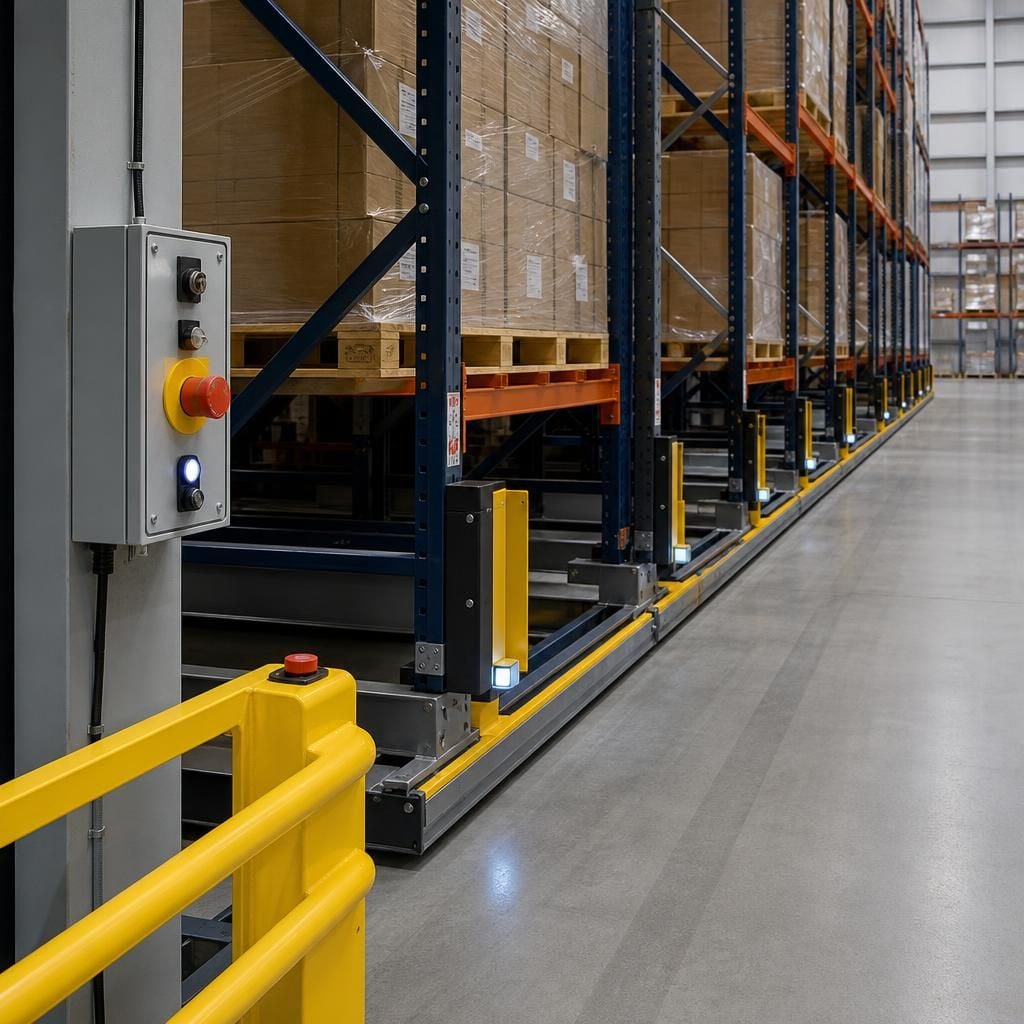
A written control plan should assign responsibility for each safety decision. Name who may open an aisle, isolate equipment, report damage and approve re-use.
This avoids uncertainty when responsibility passes between warehouse operators, forklift drivers and maintenance contractors. Keep the plan with the operating instructions and inspection records.



