


What maintenance does mobile pallet racking need after installation?
Mobile pallet racking needs routine visual checks, planned maintenance and formal racking inspections covering frames, beams, rails, moving mechanisms, controls and floor condition. Record damage or faults, take affected bays out of use where necessary, and arrange suitable repairs before returning them to service.
Mobile pallet racking maintenance should follow a documented cycle based on equipment type, operating conditions, usage and any changes to the storage arrangement. The aim is to keep movement controlled, preserve access routes and identify developing faults before they affect operations.
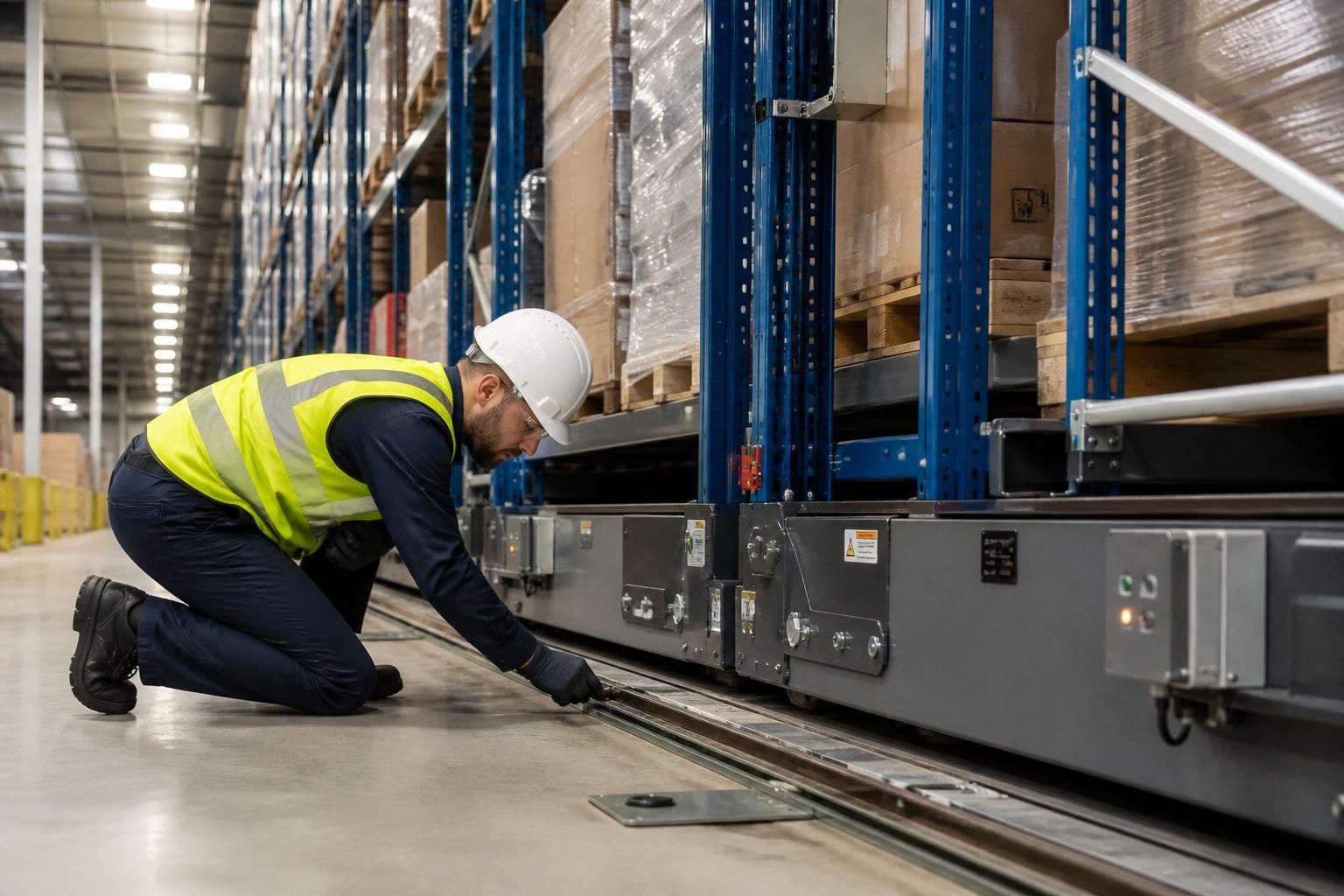
Maintenance should cover the moving equipment. Depending on the system, this may include drive motors, chains, wheels, bearings, rails, couplings, control panels, sensors, limit switches and emergency-stop functions. Maintenance personnel should follow the equipment supplier’s instructions and isolate moving parts before carrying out work.
- Keep rails clear of debris, packaging and stock.
- Check that mobile bases travel evenly and stop at the intended positions.
- Investigate unusual noise, vibration, movement or resistance.
- Check guards, covers and access points remain correctly fitted.
- Test controls and safety functions according to the system instructions.
- Record lubrication, adjustment, replacement and electrical work.
Cleaning is part of maintenance, not just presentation. Dust, stretch-wrap, pallet fragments and other debris can obstruct rails or interfere with moving components. Cleaning methods should avoid damaging electrical equipment, sensors or protective finishes.
Review the operating environment after installation. Changes to forklift routes, pallet sizes, storage heights, floor condition or working practices can affect the system. New stock may also alter load distribution or access requirements. Ask for a review before changing beam levels, adding components or using different pallets.
Do not treat a repair as complete until the affected equipment has been checked in operation. The record should identify the fault, the location, the action taken, the parts used and the person or contractor completing the work. It should also note any follow-up check required.
Maintenance records should sit alongside the original layout drawings, load information, operating instructions and inspection reports. Keep revisions together when the arrangement changes. This gives warehouse managers a clear history of the system and helps identify repeated damage or recurring faults.
Train operators in the site’s agreed procedure. They should know the correct travel controls, permitted access routes, emergency arrangements and reporting process. Operators should not force a moving base, bypass a safety function or attempt an unauthorised adjustment.
Damage patterns can indicate a wider issue. Repeated impact near an aisle end may point to a traffic problem. Uneven loading may indicate changes in stock handling. Obstructions around rails may reflect poor housekeeping or an altered layout. Correcting the underlying cause reduces the chance of repeated maintenance work.
Arrange additional checks after significant events, such as a collision, flooding, building work, electrical alteration or extended system shutdown. A change of stock profile or operating method can also justify a review. The appropriate scope depends on the equipment, the event and the information available.
Planned maintenance does not replace formal racking inspections. The two activities serve different purposes. Maintenance keeps equipment adjusted, clean and functional. An inspection assesses condition and identifies matters requiring action. Findings from either process should be reviewed together.
Spartan Direct can discuss racking inspections and aftercare as part of a wider storage review. A consultation may include a site meeting, survey, written proposal and working drawings where changes are being considered. For projects requiring several work stages, project management may continue through installation and final commissioning.
For an existing mobile pallet racking system, prepare the maintenance discussion with the layout, equipment details, previous records, known faults and proposed operational changes. This helps establish which checks are needed and whether repairs, adjustments or further investigation should be considered.
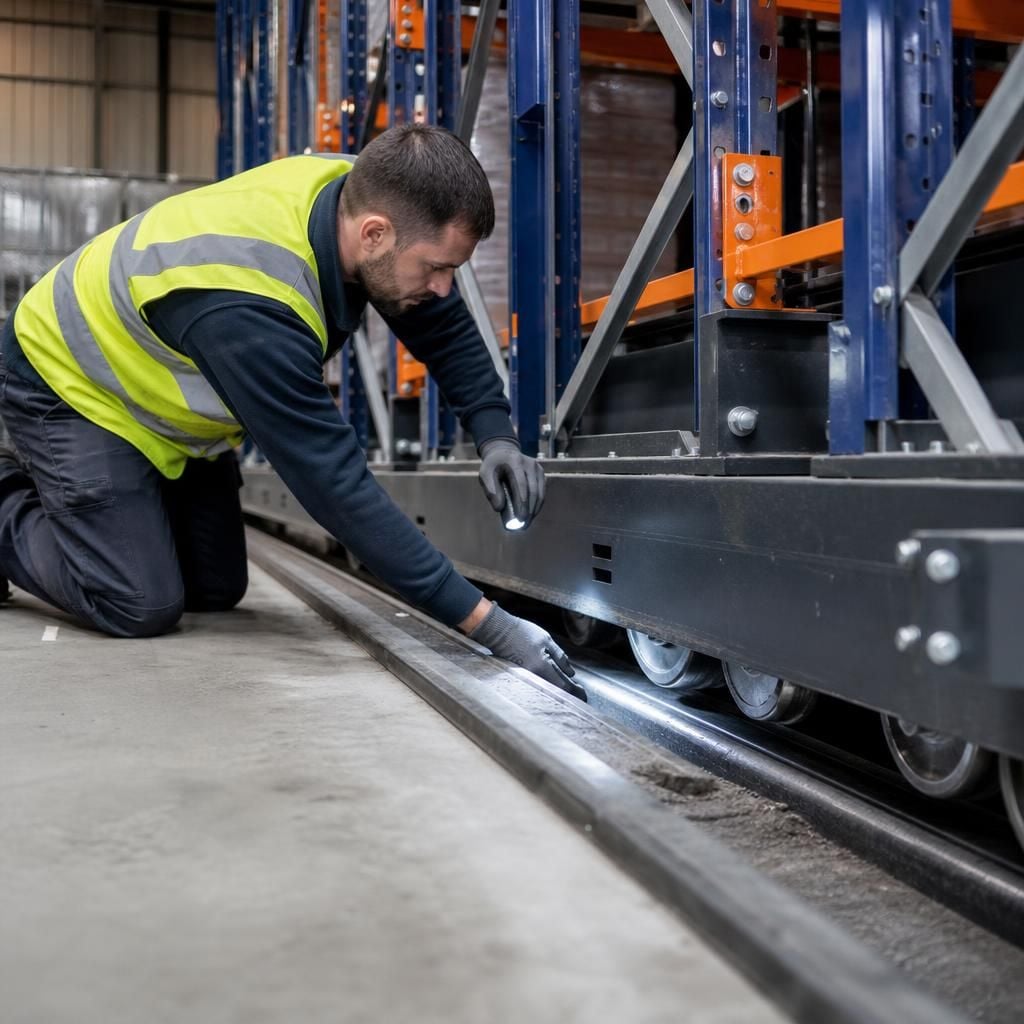
Maintenance should check the racking carried by each mobile base, as well as the drive equipment. Look for bent uprights, damaged beams, missing locking pins, displaced decking or altered load signs. Do not assume a satisfactory travel test confirms the racking is safe to load. Isolate affected bays and arrange an assessment before returning them to service.



