What disruption can mobile pallet racking installation cause?
Mobile pallet racking installation can temporarily restrict aisle access, require stock movements and interrupt picking or production.
We use site meetings and surveys, followed by written proposals and working drawings, to define the installation sequence and coordinate access requirements.
Mobile pallet racking installation can create short-term operational restrictions, but the impact depends on the layout, floor condition, stock position and installation sequence.
The main disruption usually comes from preparing the work area, installing rails or floor tracks, assembling the mobile bases, and connecting controls where the system is powered. Deliveries and lifting activities can also affect access around loading bays, aisles and pedestrian routes.
Work-area preparation
Installation needs a controlled work zone. Stock, pallets, handling equipment and other obstructions may need relocating before work starts. This creates additional handling and requires a suitable temporary holding area.
The required clearance depends on the proposed layout. An installation may affect one aisle, a complete racking block, or adjoining operating areas. The drawings should identify these boundaries so you can plan stock movements and maintain safe separation from installation activities.
Floor and track installation
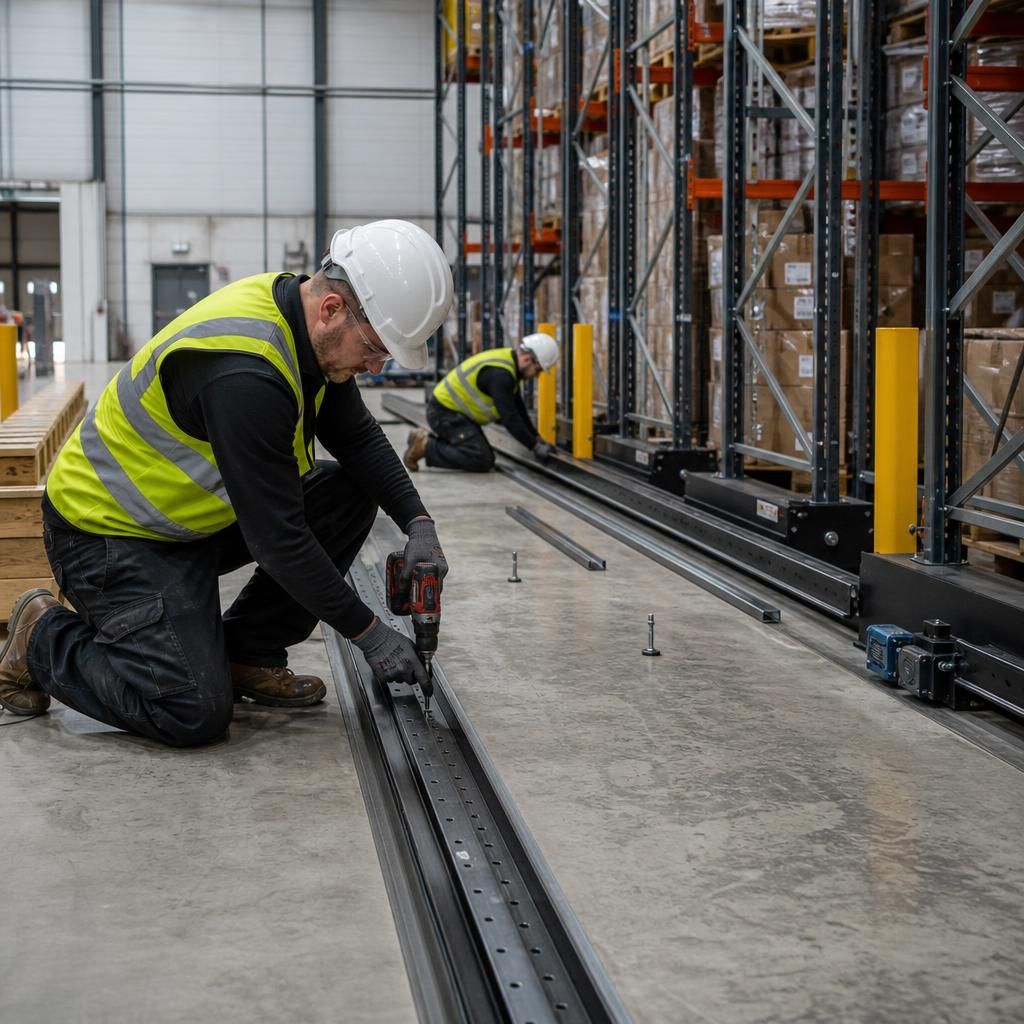
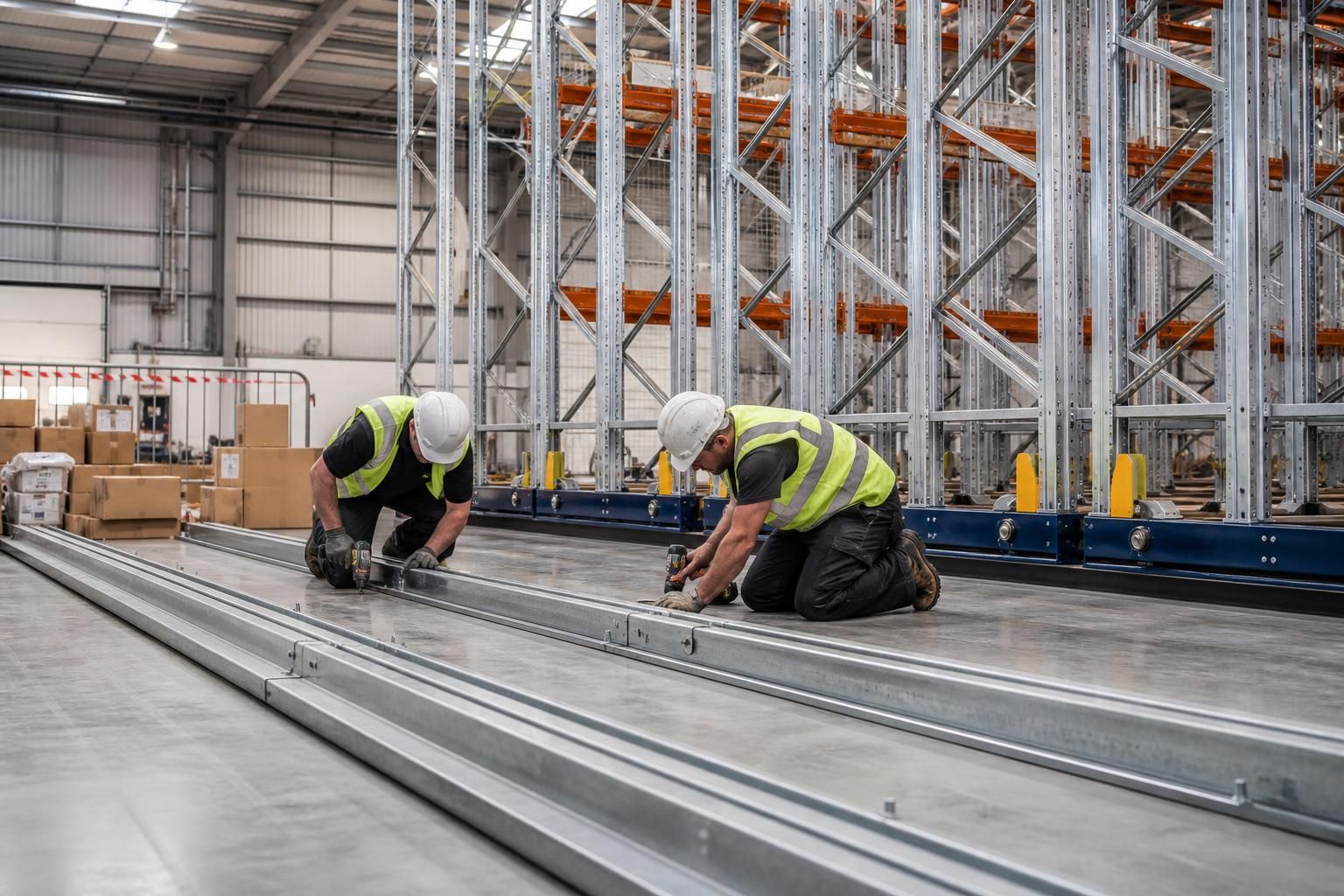
Mobile pallet racking relies on accurately positioned rails or tracks. Floor condition, level tolerances and existing services can influence preparation work. Drilling, fixing or local repairs may create noise, dust and restricted access.
Where floor work is required, the affected area should remain unavailable until the work is complete and suitable for the next stage. Floor-loading checks also matter because the structure transfers concentrated loads through its rails and bases.
Assembly and commissioning
Racking frames, mobile bases, drives, safety controls and protective components are installed progressively. The work may involve delivery vehicles, lifting equipment and several trades or contractors on the same site.
Powered mobile pallet racking requires control connections and testing before normal operation. The system should not return to service until installation checks, safety functions and operating controls have been reviewed.
How the disruption can be controlled
- Phase the work: Install one bay, aisle or block at a time where the layout allows, rather than making the whole storage area unavailable.
- Agree stock movements: Identify which pallets need moving, where they can be held, and when each area can be cleared.
- Protect active operations: Separate installation zones from forklift traffic, pedestrians, production areas and emergency routes.
- Coordinate deliveries: Confirm unloading points, vehicle movements and lifting requirements before equipment arrives.
- Match the sequence to workflow: Prioritise areas that create the least interference with picking, goods-in or manufacturing activity.
- Record the completed arrangement: Update working layouts and operating information after commissioning, so teams understand the new access pattern.
A complete site shutdown is not automatically required. The practical choice depends on the number of aisles affected, available holding space, floor works, system controls and the need to keep forklift or production routes open.
For a live warehouse or manufacturing site, the proposal should distinguish installation activities from normal operations. It should also identify decisions that could change the sequence, such as unavailable stock locations, restricted delivery access or floor repairs.
We can coordinate the proposal, drawings, installation and project management through final commissioning where required. That gives you a defined basis for reviewing disruption before committing to the mobile pallet racking installation.
During consultation, we can assess the storage arrangement, access requirements and operating constraints at the site. The resulting written proposal and working drawings provide the detail needed to compare phased installation with a more concentrated programme.
Installation disruption is a capacity-planning decision, not simply a question of programme length. A phased approach can preserve more storage access, while concentrated work may limit repeated interference but remove more capacity at once.
Compare each option against picking demand, production priorities and available holding space. The written proposal should make these trade-offs clear, so you can select an installation sequence that fits operational requirements.