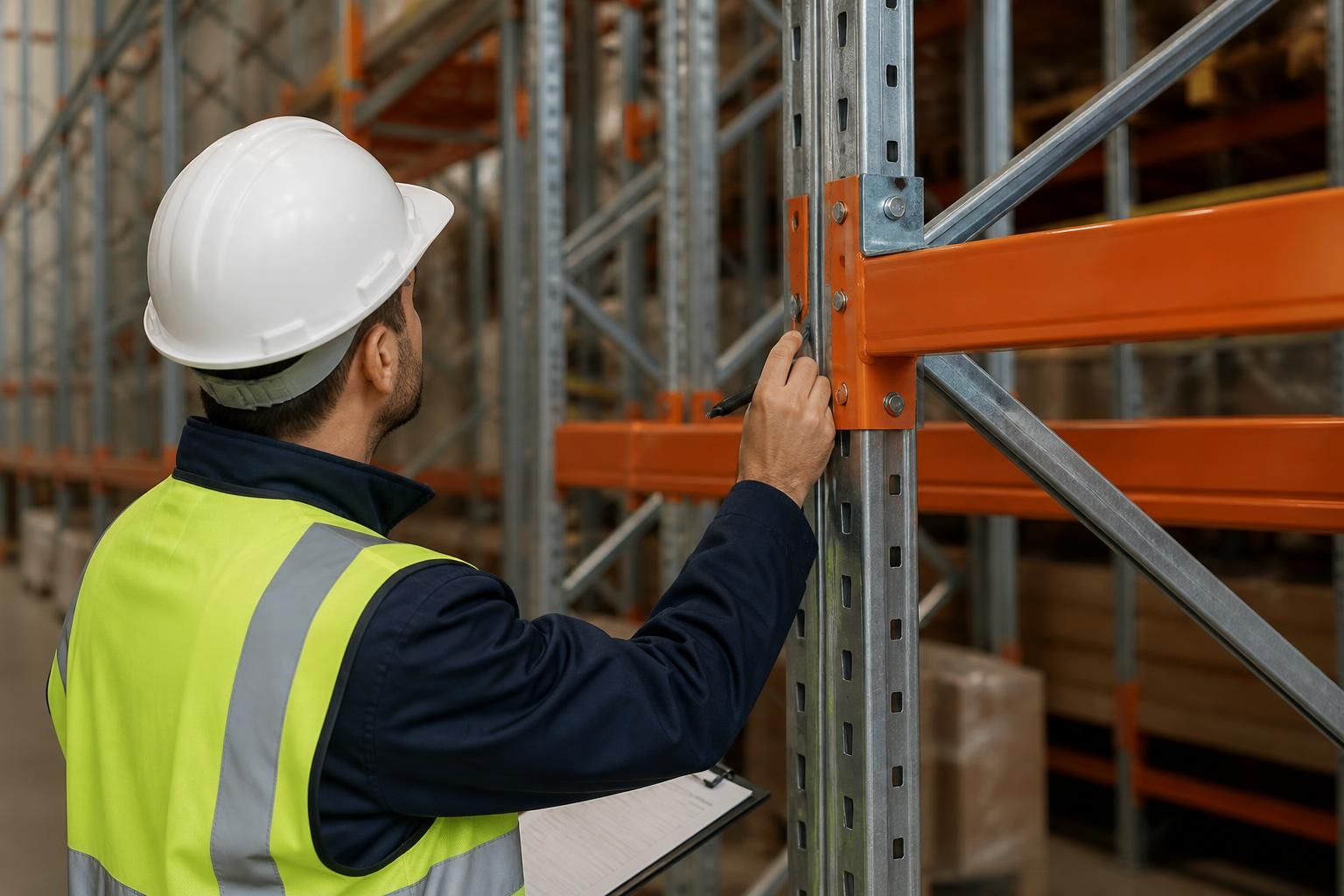
How do pallet racking types influence inspection requirements?
Pallet racking types influence inspection requirements because access routes, moving components, loading patterns and collision risks differ between systems. Selective, drive-in and mobile racking therefore need checks focused on their particular uprights, rails, guides, moving parts and operating clearances.
Inspection requirements vary by racking type. The inspection should examine each load-bearing, guiding and moving component relevant to the system.
A useful inspection also considers stock, handling equipment, aisle clearances and any changes made since installation. The same visual check cannot identify every risk across selective, drive-in, mobile and flow-based systems.
Selective pallet racking
Selective pallet racking gives direct access to each pallet position. Inspection therefore focuses on damage caused during loading and unloading, especially at accessible aisle ends.
- Check uprights, bracing, baseplates and floor fixings for impact or movement.
- Examine beams, connectors and locking arrangements for damage or displacement.
- Confirm that pallet positions remain clear and that loads sit correctly on the support levels.
- Review aisle widths, load notices and any changes to beam levels or storage patterns.
The inspection should record the position and severity of damage. It should also identify changes that require updated drawings, revised load information or further assessment.
Drive-in pallet racking
Drive-in pallet racking exposes internal rails, entry points and upright faces to repeated handling movements. Inspections must therefore look beyond the front frame.
- Check guide rails, support rails and entry guides for impact, distortion or looseness.
- Inspect uprights, bracing and connections throughout each lane.
- Look for damage caused by pallets entering unevenly or handling equipment contacting the structure.
- Check pallet clearances, lane alignment and any fitted stops or protection.
Access into the lanes can make some areas harder to see. The inspection process should account for hidden contact points rather than relying only on an aisle-end view.
Double deep pallet racking
Double deep pallet racking places two pallets behind each other. Inspection must consider the rear pallet position, not only the front beam line.
- Check beam connections, frame alignment and pallet support at both depths.
- Review whether handling equipment can reach the rear position without contacting the frame.
- Examine rear access visibility, clearances and any signs of pallet overhang.
- Confirm that stock placement has not changed the intended loading arrangement.
Damage at the back of a bay may remain unnoticed during routine activity. Drawings and stock details can help define which areas require closer examination.
Push-back pallet racking
Push-back pallet racking includes moving components within the storage lanes. Inspection therefore covers the frame and the parts that support or guide pallet movement.
- Inspect carts, rails, guides and stops where these components form part of the system.
- Check that moving parts remain aligned and free from visible damage.
- Examine beams, uprights and connections for handling impacts.
- Review pallet dimensions, clearances and loading positions within each lane.
Changes to pallet size or handling equipment can affect how the system operates. The inspection should note such changes before judging the condition of the moving parts.
Pallet live pallet racking
Pallet live pallet racking uses a flow arrangement, so checks include both the structural frame and the components supporting pallet movement.
- Inspect rollers, lanes, guides, brakes and separators where fitted.
- Check lane alignment and the condition of entry and discharge areas.
- Look for damaged components that could affect controlled pallet movement.
- Review end stops, clearance points and pallet compatibility with the lanes.
Inspection should cover the full flow path. A problem at the loading end may affect movement or access at the opposite end.
Mobile pallet racking
Mobile pallet racking adds rails, bases and powered or manually operated movement. These features create extra inspection points beyond fixed-frame racking.
- Check floor rails, running surfaces, wheels and base alignment.
- Inspect drive components, controls and safety features where fitted.
- Review movement spaces, end clearances and access between open runs.
- Examine the racking frames for impact, movement or connection damage.
Inspection should consider the racking both when closed and when access aisles are open. Any change to the floor, layout or operating arrangement can affect the assessment.
Narrow aisle and high-level systems
Narrow aisle pallet racking demands close attention to operating clearances. Small changes to frame position, floor condition or guidance features can affect access.
Checks should include uprights, beams, protection, floor interfaces and the clearances used by handling equipment. Where guidance rails or other access features exist, inspect their condition and alignment.
High-level storage requires careful review of upper frames, beams, bracing and connections. The inspection should also consider access equipment, load information and visibility at elevated positions.
How the inspection plan should be set
Inspection requirements should reflect the racking type, handling method, stock, layout and exposure to impact. They should also account for alterations, relocations and changes in use.
A practical plan can define:
- Which structural and moving components require examination.
- Which areas need closer access because they are hidden or difficult to view.
- How damage, displacement and missing components will be recorded.
- What action follows an issue, including further assessment or restricted use.
- When drawings, load details or installation information need review.
Inspection intervals should be set around the site’s operating conditions and the racking system in use. A fixed interval alone does not replace checks after impact, alteration or a significant change in stock.
Planning an inspection with Spartan Direct
We carry out racking inspections and aftercare for storage environments. A no-obligation consultation may include a site meeting and survey before written findings or proposals are prepared.
Where an inspection identifies a wider layout or capacity issue, we can coordinate working drawings, installation and project management where required. This provides a clearer route from identifying a concern to planning the necessary work.
For warehouses and industrial premises in the West Midlands, the suitable inspection approach depends on the installed system and the way you use it. The right assessment checks the parts that create risk, rather than applying one checklist to every racking type.
Compare inspection services by asking how they prioritise findings, not only which racking components they examine.
A useful report should identify the affected bay or component, describe the observed condition and explain the next action. This gives you a clearer basis for restricting use, arranging repairs or requesting further assessment.