


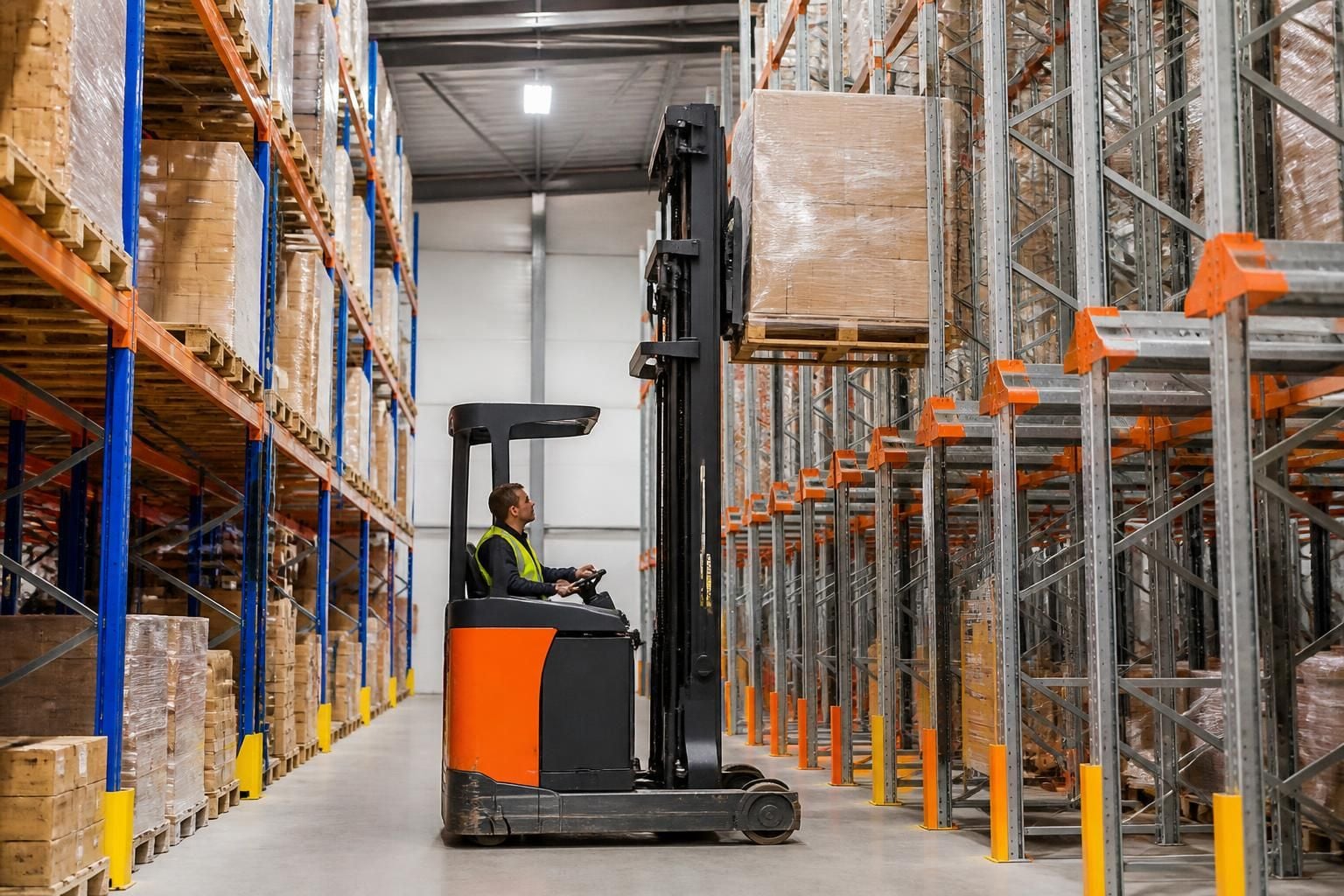
How do pallet racking types affect forklift access?
Pallet racking types affect forklift access through aisle width, entry direction and pallet presentation, determining which trucks can operate safely. Your stock, handling equipment and workflow should guide the choice, supported by a site survey and working drawings before installation.
Forklift access depends on how pallets enter, move through and leave the rack. Pallet racking types therefore affect truck selection, manoeuvring room, loading methods and stock accessibility.
Selective pallet racking gives a forklift direct access to each pallet position from an aisle. This supports mixed stock and frequent pallet selection, but each aisle must accommodate the truck, load and turning movement.
Double deep pallet racking stores one pallet behind another. A reach truck places the rear pallet beyond the front position, so the truck needs suitable reach capability and careful positioning. Access is less immediate than selective racking.
Drive-in pallet racking allows a forklift to enter rack lanes while placing or retrieving pallets. This reduces the number of access aisles, but the truck must travel inside the structure. The layout must allow safe entry, positioning and exit without contact with the rack.
Push-back pallet racking lets a forklift load pallets from the front. Pallets move along rails or carts as new stock enters the lane. The forklift does not need to enter the rack, although the loading face must provide enough room for accurate placement.
Pallet live pallet racking normally separates the loading and picking faces. Forklifts load from one side and retrieve pallets from the other. This can reduce cross-traffic, but the layout needs clear access to both faces and an appropriate replenishment route.
Mobile pallet racking moves rack runs to create an access aisle where required. This can reduce permanently open aisle space, but forklift movements depend on controlled aisle selection. Floor condition, rack movement and operating clearances require assessment before installation.
Narrow aisle pallet racking uses reduced aisle clearances and may require a suitable reach or very narrow aisle truck. The truck’s dimensions, mast movement and turning method become critical. A small difference in equipment can affect the usable layout.
Wide aisle pallet racking provides more room for forklift positioning and turning. It can suit sites using larger trucks or handling varied loads, but it may use more floor area for access routes.
Storage density alone should not determine the rack type. Consider pallet dimensions, load weights, pallet condition, lift height, truck dimensions and the frequency of access. Also consider whether stock needs first-in, first-out rotation or can follow last-in, first-out storage.
Forklift access also depends on obstacles beyond the rack. Columns, doors, loading areas, pedestrian routes, fire equipment and workplace barriers can restrict movement. A layout must leave safe routes for handling equipment and people.
The rack structure must suit the intended loading method. For example, drive-in lanes require forklift movement within the rack, while push-back systems require controlled loading at the front. The wrong combination can create difficult handling and unnecessary contact risks.
We assess the handling equipment alongside the storage requirements. A no-obligation consultation may include a site meeting and survey, followed by written proposals and working drawings.
Those drawings can show rack positions, access aisles, loading faces and surrounding constraints. They give you a clearer basis for checking forklift movements before installation begins.
For a warehouse changing its handling equipment later, the original rack layout may no longer provide suitable clearances. Review the truck and load together before altering aisle arrangements or storage levels.
Spartan Direct provides pallet racking planning and installation for warehouse and industrial environments across the West Midlands. We can discuss how each racking type would affect access within the available space and the existing workflow.
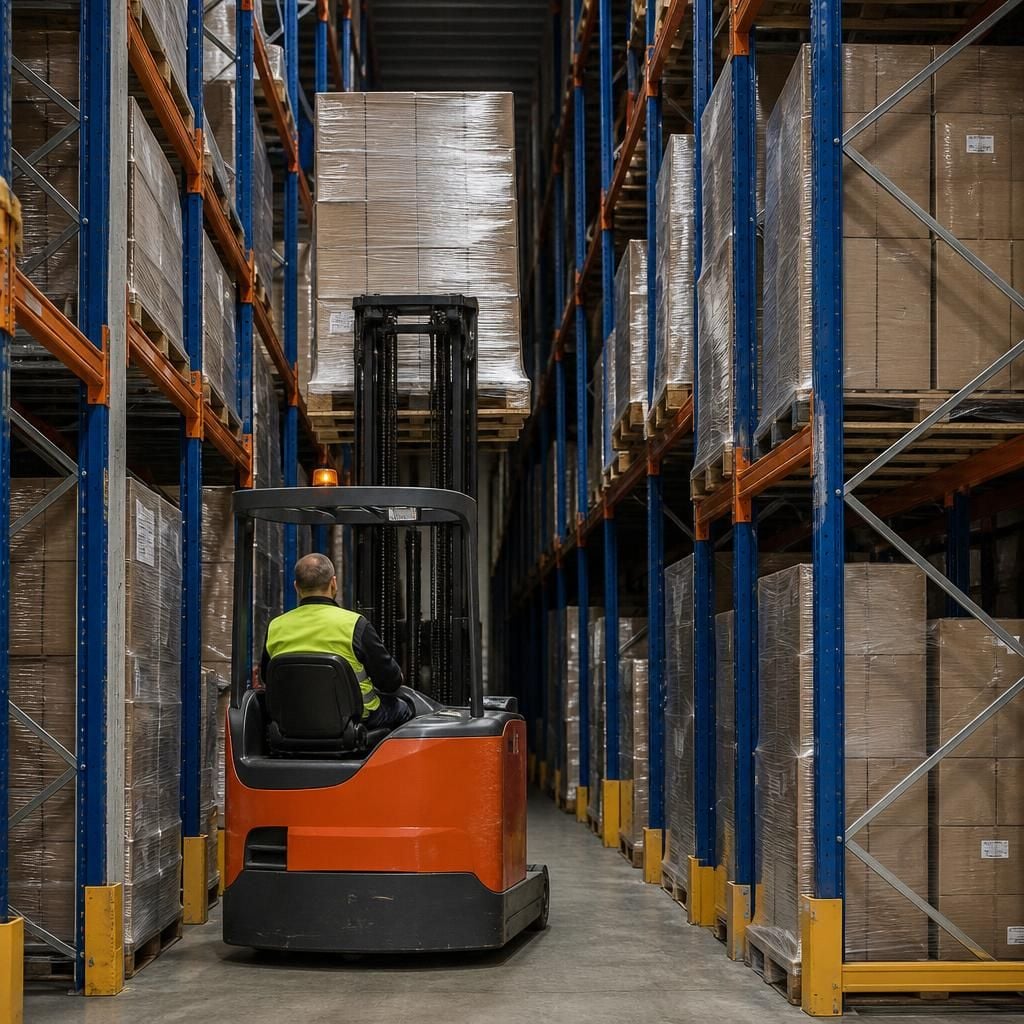
Forklift access is also vertical. The truck must raise each load to its storage level without the mast, load or overhead guard meeting lights, services or the roof structure.
Rack height and truck lift capability should therefore be checked together. A no-obligation site survey and working drawings can show these clearances before pallet racking installation.



