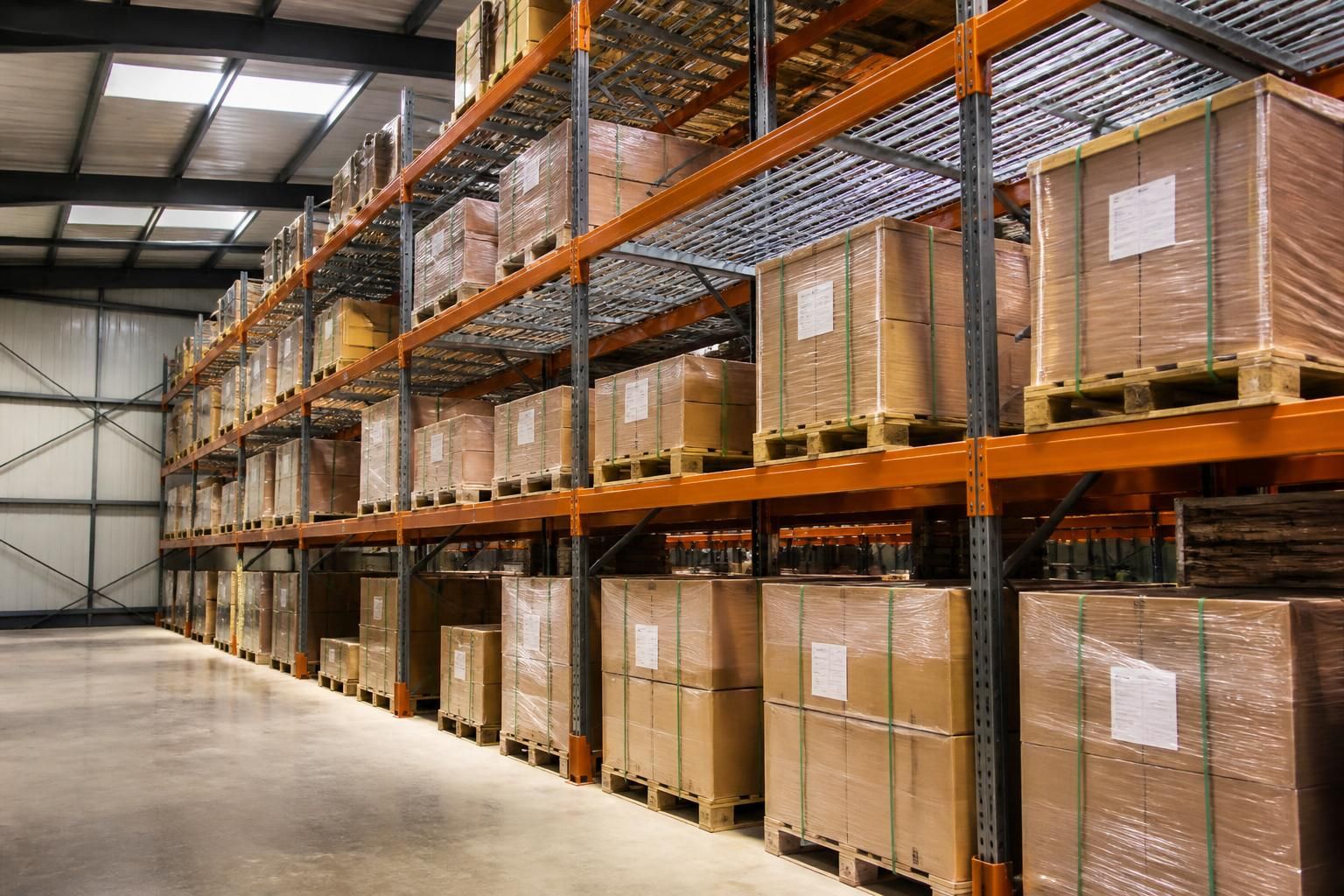
Which decking type suits heavy duty pallet racking?
Steel decking suits demanding pallet loads; timber offers a practical platform, while mesh decking supports visibility and safer load placement. We can assess the racking, stock and workflow before recommending the suitable option.
Steel decking is generally the strongest starting point for heavy duty pallet racking. The correct choice still depends on pallet weight, pallet condition, beam spacing, handling methods and the intended workflow.
Decking bridges the gaps between the racking beams. It must support the load without obstructing pallet placement or changing the designed load path. The racking layout, decking specification and load information therefore need to work together.
Steel decking suits demanding applications where pallets place substantial loads onto the storage levels. It provides a durable platform across the beams and can support regular handling activity. Steel may be appropriate where pallets vary in condition or where repeated loading makes a rigid surface important.
Timber decking can suit storage areas needing a solid working platform between beams. It may be practical for compatible pallet sizes and established handling routines. The specification must account for the timber grade, support arrangement, moisture exposure and the loads placed on each level.
Mesh decking suits sites where you need to see through the storage levels. The open surface can also reduce the chance of small items remaining hidden beneath pallets. Mesh still requires suitable load capacity, support spacing and correctly sized openings for the pallets being stored.
The best material is not decided by pallet weight alone. Consider these points before confirming the decking:
- Pallet footprint: Check the pallet length and width against the beam spacing. Unsupported edges, excessive overhang or awkward placement can affect safe storage.
- Load shape: A concentrated load behaves differently from a uniformly distributed load. Drums, machinery parts and uneven consignments may need closer assessment.
- Pallet condition: Broken boards, missing blocks and inconsistent bases can affect how loads sit on the decking. The storage method should reflect the condition of incoming stock.
- Handling equipment: Forklift movements and pallet placement can influence the required surface and clearances. The decking must suit the way operators load and retrieve stock.
- Storage levels: The bottom level, upper beams and any unusual bay dimensions may require different checks. Each level should remain compatible with the racking design.
- Working environment: Moisture, dirt, impact exposure and the surrounding layout can influence the suitable material. Cleaning and inspection access also deserve consideration.
Steel is not automatically correct for every heavy duty pallet racking installation. A timber or mesh arrangement may suit the loads and working pattern more effectively. Selecting the heaviest material without checking the complete layout can create unnecessary restrictions.
Decking should not be used to increase the stated capacity of the racking. Beam capacities, frame capacities, decking limits and pallet loads must remain consistent. Load information should be recorded clearly for the people using the storage system.
We can review the pallet sizes, load weights, bay dimensions and handling methods during a site meeting or survey. We then set out the proposed arrangement through written proposals and working drawings. Where required, project management can continue through installation and final commissioning.
For a changing warehouse, consider future pallet sizes and stock profiles before choosing the decking. A material that suits present loads may restrict later changes if clearances and support positions are limited.
The suitable decking is therefore the material that matches the complete heavy duty pallet racking design. Confirm the load data, beam arrangement and operating method before approving the final specification.
For a clear record, the written proposal and working drawings should identify the decking arrangement for each relevant bay and level.
This links the selected surface to the heavy duty pallet racking layout, so future discussions start with the specified configuration rather than assumptions.