


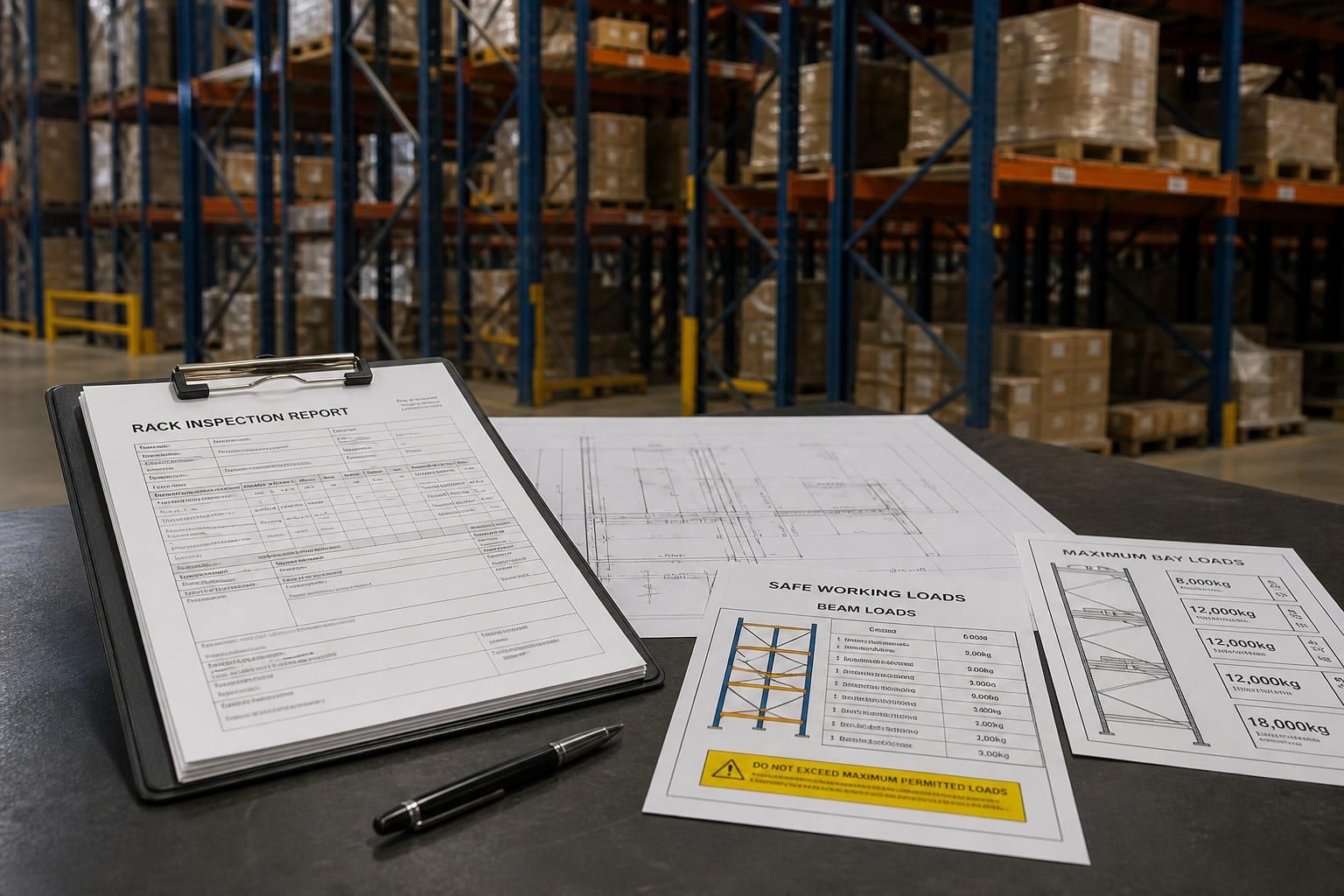
What compliance records should you request for heavy duty pallet racking?
For heavy duty pallet racking, request inspection reports, installation and commissioning records, load information, drawings, and documented repairs or alterations. These records help you check the system against its intended use and identify actions needed to protect staff, stock and warehouse operations.
Request records that connect the installed pallet racking with its design, permitted loads, inspections, repairs and later changes. Each record should identify the relevant rack, location, date, findings and action taken.
Inspection reports should describe the areas examined rather than simply record that an inspection occurred. Look for rack identifiers, aisle or bay references, visible damage, missing components, displaced beams, impact marks and other recorded defects.
The report should also show the inspection date, the person who completed it, the outcome and the action assigned. Where defects appear, request the stated priority, any temporary control and the date for review or rectification. Keep evidence showing when outstanding actions were closed.
Installation and commissioning records should establish what was installed and when it entered service. Ask for the final arrangement, relevant working drawings, installation details and any commissioning notes produced for the completed system.
Check that the documents describe the rack configuration at handover. They should be clear enough to compare the installed arrangement with the system now standing in the warehouse. If the layout has changed, the original handover information may no longer describe current conditions.
Load information should identify the permitted beam, bay and configuration limits relevant to each rack type. Request the load notices or written information used to communicate those limits to warehouse personnel.
Check that the recorded loads match the pallets, handling equipment and storage pattern used on site. Do not rely on a general load figure where bay levels, beam arrangements or frame configurations differ.
Drawings and layout records should show rack positions, aisle arrangements and any adjoining workplace features that affect access. Retain the current revision and mark older drawings as superseded.
Compare the drawing with the physical layout after relocations, extensions or changes to working areas. A drawing that no longer matches the warehouse can make inspection findings and load information harder to apply correctly.
Repair records should identify the damaged item, its location, the cause where known and the action taken. Ask whether the component was repaired, replaced or left subject to further control.
Keep records of replacement parts, completion dates and any follow-up inspection. A repair entry should not conceal an unresolved issue elsewhere in the same bay or aisle.
Alteration records matter whenever you move beams, change levels, extend rows, replace components or alter the surrounding layout. Request revised drawings, updated load information and records showing who authorised the change.
Do not treat an alteration as a simple relocation. Changes can affect the configuration represented by existing documents. The record should make clear which information remains current and which information no longer applies.
Action tracking should provide a clear trail from finding to closure. Use a register that records the reference, location, risk priority, responsible person, target date and completion evidence.
Separate completed actions from recommendations still under review. If work has not yet been completed, retain the interim control and review arrangements with the inspection record.
Handover information should stay together with later inspection and maintenance records. Store the documents in a controlled location, with access for the people responsible for warehouse operations, safety and facilities.
Use revision dates and document identifiers to prevent superseded load information or drawings being used. Keep photographs where they clarify damage, repairs or the condition recorded during an inspection.
If records are incomplete, ask for a documented review rather than reconstructing details from memory. A site survey can establish the existing arrangement, followed by written proposals and working drawings where further work is required.
Spartan Direct provides pallet racking inspections and aftercare, alongside design and installation work. We can discuss the records needed to relate inspection findings to the installed arrangement and current warehouse requirements.
For projects involving changes to storage or layout, project management may continue from proposal and tender stage through installation and final commissioning where required. This creates a clearer record of decisions, drawings and completed work.
Request a complete, current record set before approving further changes. It should allow you to identify the rack concerned, understand its permitted use, follow its inspection history and verify how defects or alterations were addressed.
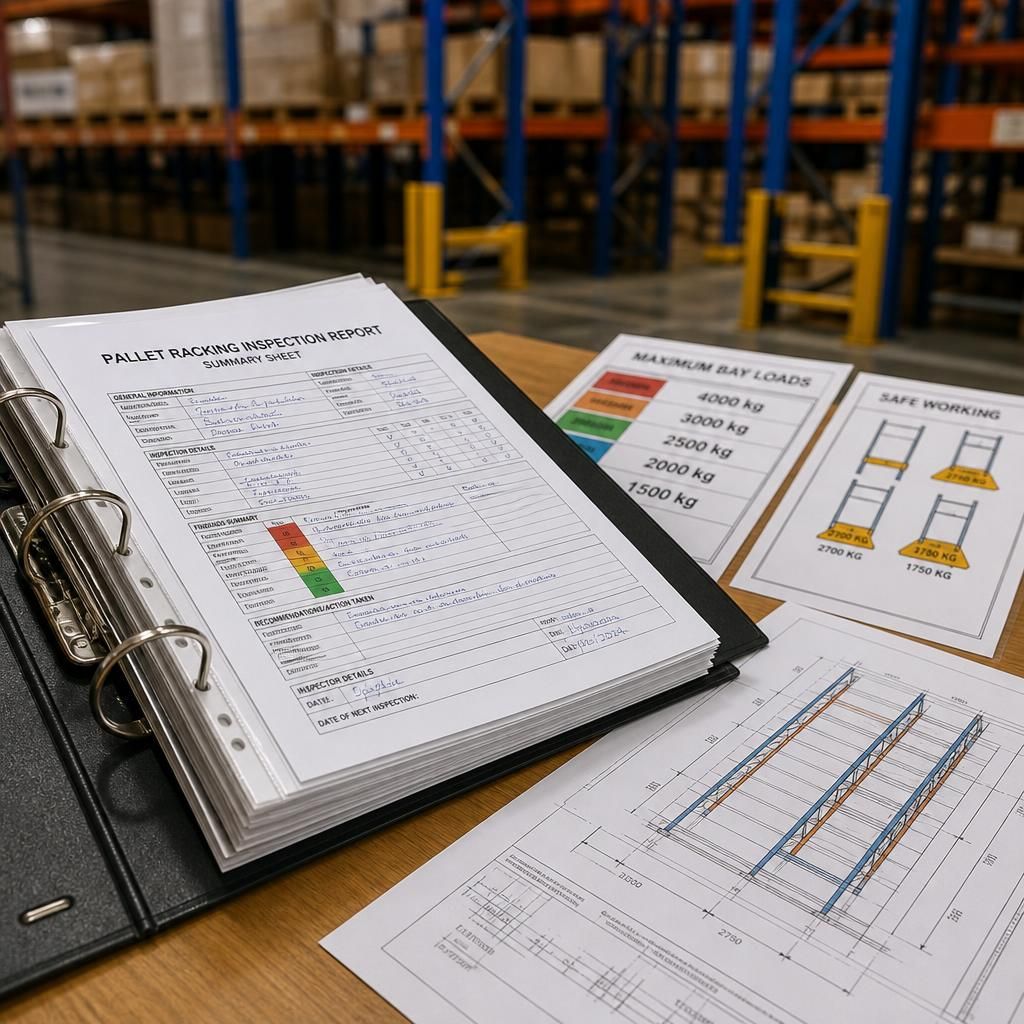
Check that the record set states the assumptions behind the heavy duty pallet racking arrangement, not only its conclusions.
Request confirmation of the pallet dimensions, load distribution, beam levels and handling method considered. If warehouse operations differ, ask for a documented review before relying on the existing records.



