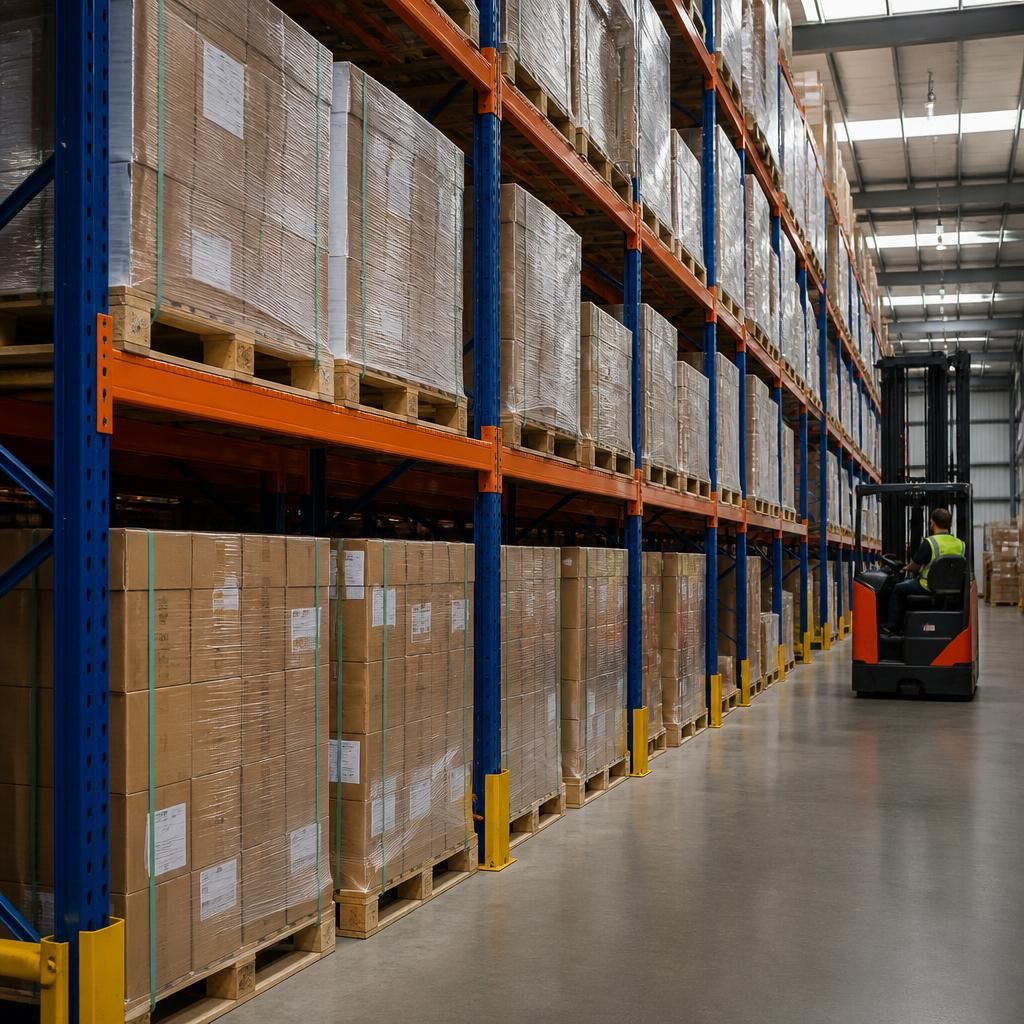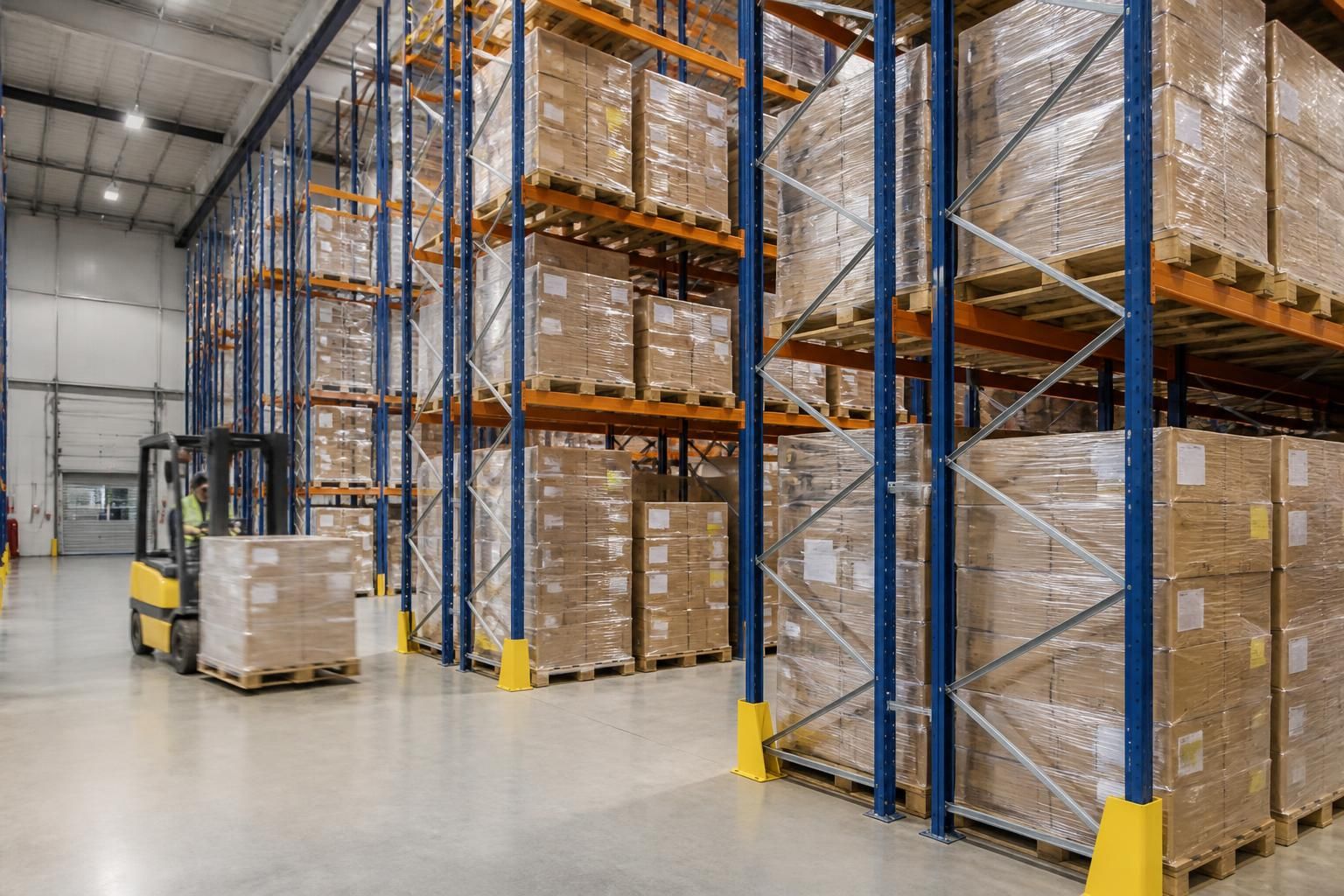
Is heavy duty pallet racking suitable for high-load pallet storage?
Heavy duty pallet racking can suit high-load pallet storage when the rack, floor, pallets and handling equipment match the required loads. We assess those requirements through a site survey before preparing proposals and working drawings for the storage layout.
Yes, but the term heavy duty does not establish suitability on its own. High-load pallet storage needs a rack design based on the loads, bay arrangement, floor conditions and handling method.
Start with the stored load. Record the weight of each pallet, including the heaviest expected load. Note pallet dimensions, load height, overhang and how evenly the goods sit across the pallet. Uneven or unstable loads can affect how safely pallets sit in the rack.
Also consider whether the load changes between products. A rack designed around one consistent pallet profile may need different beam positions or protection if stock sizes vary. Planned growth matters too, because adding heavier goods later can alter the original requirements.
Rack capacity must match the complete bay arrangement. The required capacity depends on the number of pallet levels, beam spans, bay width and the position of each load. The heaviest pallet may not be the only consideration. Several high loads in one bay can create a different demand from one isolated pallet.
Uprights, beams and connections work as one structure. Changing beam levels, removing components or adding bays can therefore affect the original arrangement. Do not assume that a heavier-looking frame can accept any pallet weight.
The floor forms part of the assessment. High-load storage transfers forces through the rack into the slab. The condition, level and capacity of the floor can influence where racks should stand and how the layout should be arranged.
Site information should identify floor joints, damaged areas, changes in level and any restrictions around columns or doors. These details can affect bay positions, aisle alignment and the available storage footprint.
Handling equipment also affects suitability. Forklift dimensions, turning space, lift height and operating routes must work with the rack layout. Insufficient clearance can increase contact risk and make pallet placement less controlled.
A high-load system should support the actual workflow, rather than simply add more pallet positions. Consider the frequency of access, stock rotation, picking activity and the need to separate different goods. A layout that restricts movement may reduce practical capacity, even when it holds the intended number of pallets.
Safety details need attention from the start. High-load racks may need suitable frame protection, end protection, aisle separation and clear operating routes. The appropriate measures depend on traffic, equipment and the arrangement of the storage area.
Keep pallets within the stated rack and handling requirements. Damaged pallets, shifted goods or loads that project beyond the intended footprint can change the risk in use. Regular checks should identify damage, movement or changes to the storage arrangement.
Heavy duty pallet racking may be unsuitable when:
- the heaviest pallet weight is unknown;
- pallet dimensions vary beyond the planned arrangement;
- the floor condition or capacity has not been considered;
- forklift access cannot maintain suitable clearance;
- loads are unstable, damaged or poorly distributed;
- the proposed layout conflicts with doors, columns, services or workplace routes.
In these circumstances, increasing the rack size does not resolve the underlying issue. The storage method, pallet type, layout or handling process may need reconsideration before a suitable arrangement can be specified.
What should you provide for an assessment? Useful information includes the heaviest pallet weight, pallet dimensions, load height, quantity, intended storage levels, forklift details and any plans for future stock. Photographs and site details can also help identify access and floor constraints.
We use this information alongside site conditions when developing heavy duty pallet racking for warehouse and industrial storage. Spartan Direct works with businesses across the West Midlands on storage layouts that support capacity, access and workplace separation.
The resulting written proposal and working drawings should make the intended arrangement clear. Review the stated load assumptions before approval, particularly if stock profiles or handling equipment may change. If those requirements change later, request a review rather than treating the existing rack as automatically suitable.
Heavy duty pallet racking needs a clear handover point after installation. Where required, we can manage the project through final commissioning, checking the completed arrangement against the written proposal and working drawings.
This helps you understand the installed bay layout, storage levels and agreed load assumptions before the system enters normal use. Keep that information with the site’s storage records for future planning.