



What load specifications should you confirm for double deep pallet racking?
Confirm pallet weights and dimensions, the required load per position, and the total load carried by each double-deep rack bay.
Also check load distribution, beam levels, pallet overhangs and forklift requirements through a site survey, written proposal and working drawings.
Confirm the complete load case, not only the weight of one pallet. Double deep pallet racking must suit the pallet, stored goods, rack arrangement, handling method and supporting floor.
Confirm these load specifications before approving the layout:
- Unit load: State the heaviest complete load, including the pallet, packaging, containers and any attachments.
- Load condition: Explain whether loads remain stable, shift during handling, or contain unevenly distributed contents. A partly filled pallet may behave differently from a full one.
- Pallet construction: Identify the pallet type, entry direction and underside support. Pallets must sit correctly on the rack supports without unsupported areas or damaged boards.
- Load centre: Record where the weight sits on the pallet. An offset centre of gravity can affect how the load enters and rests within the double deep position.
- Rack arrangement: Confirm the number of pallets stored in each bay, the number of storage levels and the proposed frame arrangement. These details affect the capacity calculation.
- Component capacity: Check the stated capacity for beams, frames and other structural components against the intended load case. The lowest relevant capacity governs the arrangement.
- Bay and run loading: Separate the capacity of one beam pair from the combined vertical load carried by a complete bay or rack run. Do not assume both figures are interchangeable.
- Clearances: Confirm the space required around each load for safe placement and retrieval. The calculation should reflect the actual pallet and goods, rather than nominal dimensions alone.
- Handling conditions: Record the equipment used to place and retrieve pallets, together with its operating method. Loading from the front into deeper positions creates different handling demands from single-deep storage.
- Floor loading: Check the imposed loads at the rack feet against the available floor information. Concentrated loads may matter even when the total rack load appears acceptable.
Ask for the assumptions behind the capacity figures. They should identify the load type, rack configuration, storage arrangement and any restrictions on use.
A useful load schedule should show the maximum permitted load for each relevant beam level and bay. It should also distinguish individual pallet limits from combined rack capacities.
Include the heaviest anticipated stock, not only the stock held today. If product weights or pallet types may change, state those possible changes before the rack arrangement is finalised.
Do not increase loads later because spare space remains above a pallet. Additional weight, changed pallet construction or a different storage pattern can alter the original capacity assessment.
For mixed operating conditions, identify the most demanding supported load and handling situation. The design should reflect the stated requirements rather than an assumed average load.
We can review these requirements as part of pallet racking planning and set them out in the project documentation. That gives you a clear reference for purchasing, loading and future changes.
Before use, compare the installed rack information with the agreed load specifications. If stock, pallets, rack components or handling equipment change, obtain a further assessment before altering the loading pattern.
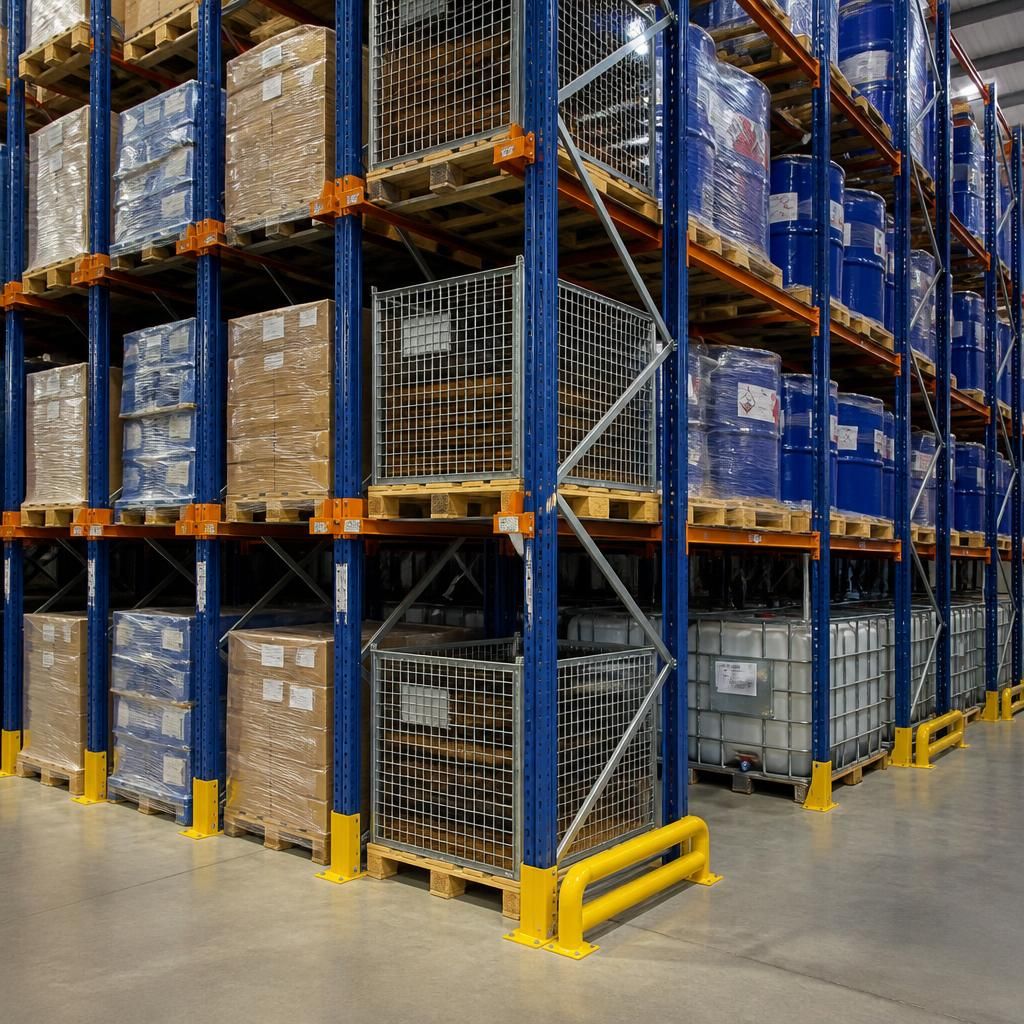
Double deep pallet racking should account for unusual load carriers, not only standard pallets. Record whether stock sits in cages, stillages, drums or other containers.
These carriers can change the contact points and how weight transfers onto the rack supports. Include their dimensions, tare weight and construction when confirming the load specification.



