


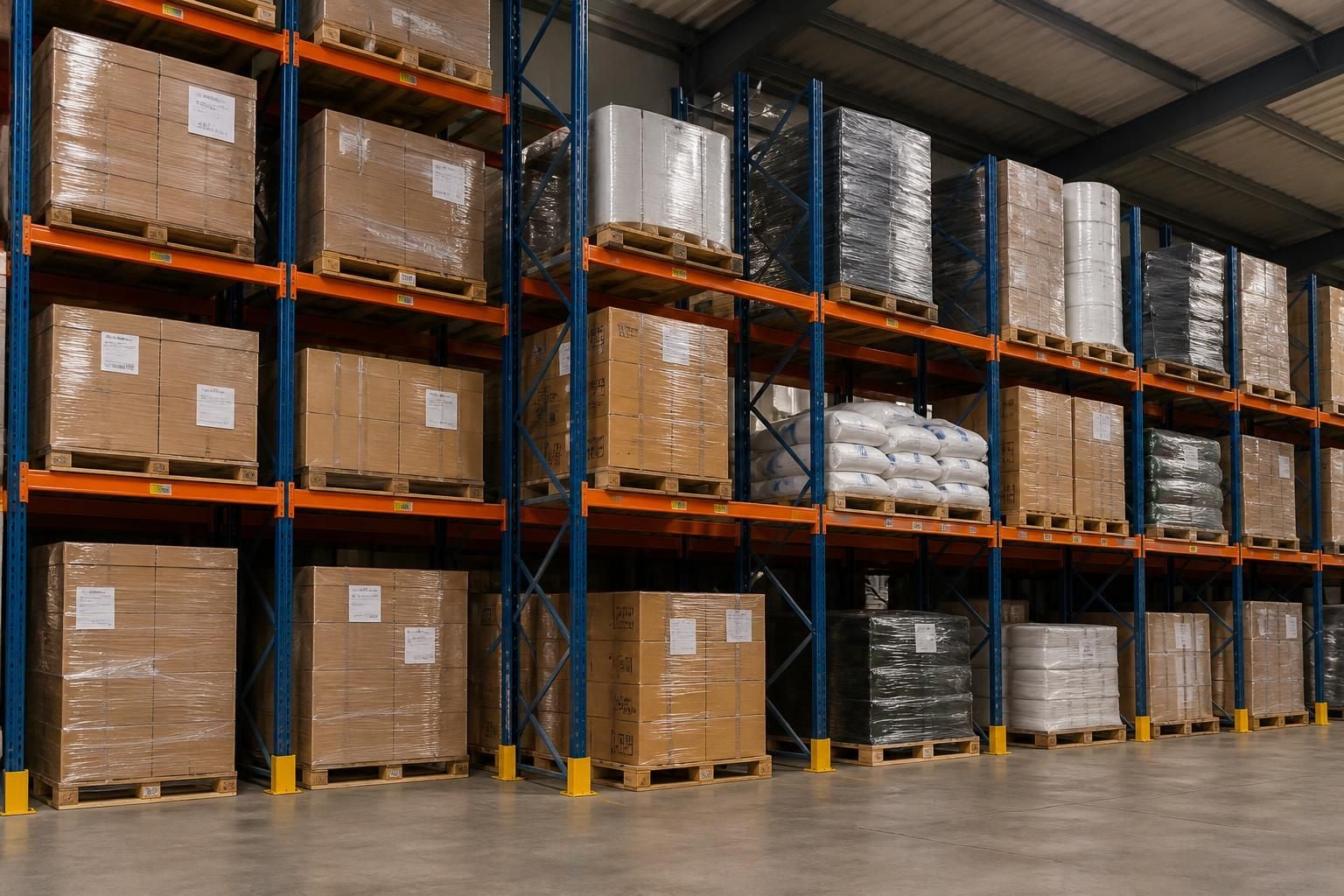
Is Double Deep Pallet Racking Suitable for Mixed Pallet Sizes?
Double deep pallet racking may suit mixed pallet sizes when their dimensions, weights and handling requirements are sufficiently compatible.
We assess the pallet range, forklift access and storage pattern before preparing proposals and working drawings for the planned arrangement.
Double deep pallet racking can suit mixed pallet sizes, but only when the pallets can share a safe, practical storage arrangement. The key considerations are compatibility, load support, access order and stock movement.
Double deep pallet racking stores one pallet behind another. The front pallet normally needs moving before the rear pallet can be reached. This makes the arrangement better suited to grouped stock than to operations requiring immediate access to every pallet.
Consider pallet dimensions carefully. Pallets with similar widths and depths are easier to accommodate within the same bay arrangement. Differences in depth can affect clearances, support and the available space between pallets.
Varying pallet heights may be manageable when each level provides suitable clearance. Taller loads can restrict the usable positions above them. Allowance is also needed for uneven loads, overhang and pallets that are not consistently built.
Weight differences require separate attention. A racking arrangement must account for the loads placed at each level. Heavier pallets may require particular positions, rather than being mixed without considering the specified capacity of the beams, frames and levels.
- Group pallets with compatible dimensions and handling characteristics.
- Keep stock with similar movement patterns in the same storage area.
- Identify pallets that need frequent access before choosing a double deep arrangement.
- Check that load placement remains stable and does not create unsafe protrusion.
- Separate stock that cannot share the same clearances or support conditions.
Stock rotation can influence suitability. If the rear pallet must be removed before the front pallet, the arrangement may not suit stock requiring strict first-in, first-out movement. It may suit grouped products where access order is less restrictive.
Mixed pallet sizes can also reduce the number of genuinely usable positions if larger loads dictate the layout. Designing every location around the largest pallet may leave unused space around smaller loads.
Before recommending double deep pallet racking, we consider the pallet dimensions, load weights, height variation, handling equipment and expected movement pattern. We can review these points during a site meeting or survey, then set them out in written proposals and working drawings.
If the pallet range is too varied, separate storage zones or another racking arrangement may provide clearer access and better use of the available space. The right choice depends on how stock is handled, not simply on the number of pallet sizes.
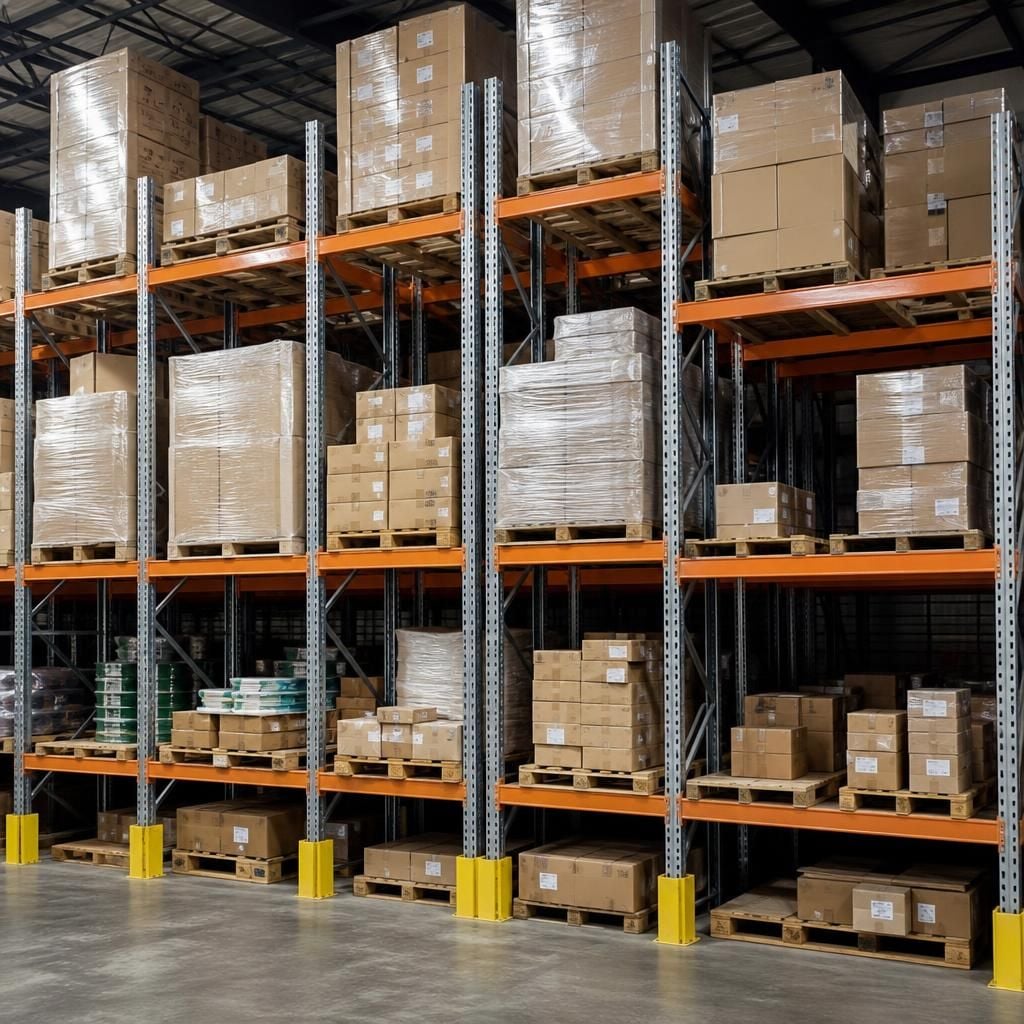
Mixed pallet sizes need ongoing control. A location that suits one load may not suit a different load later, even when unused space appears available. Record the dimensions and weights of the pallets assigned to each position, then review the arrangement when the stock profile changes.
Double deep pallet racking should reflect the loads you expect to store, not only those present during installation. We can assess planned changes during a site review and identify where the arrangement needs adjustment before new stock enters the storage area.



