


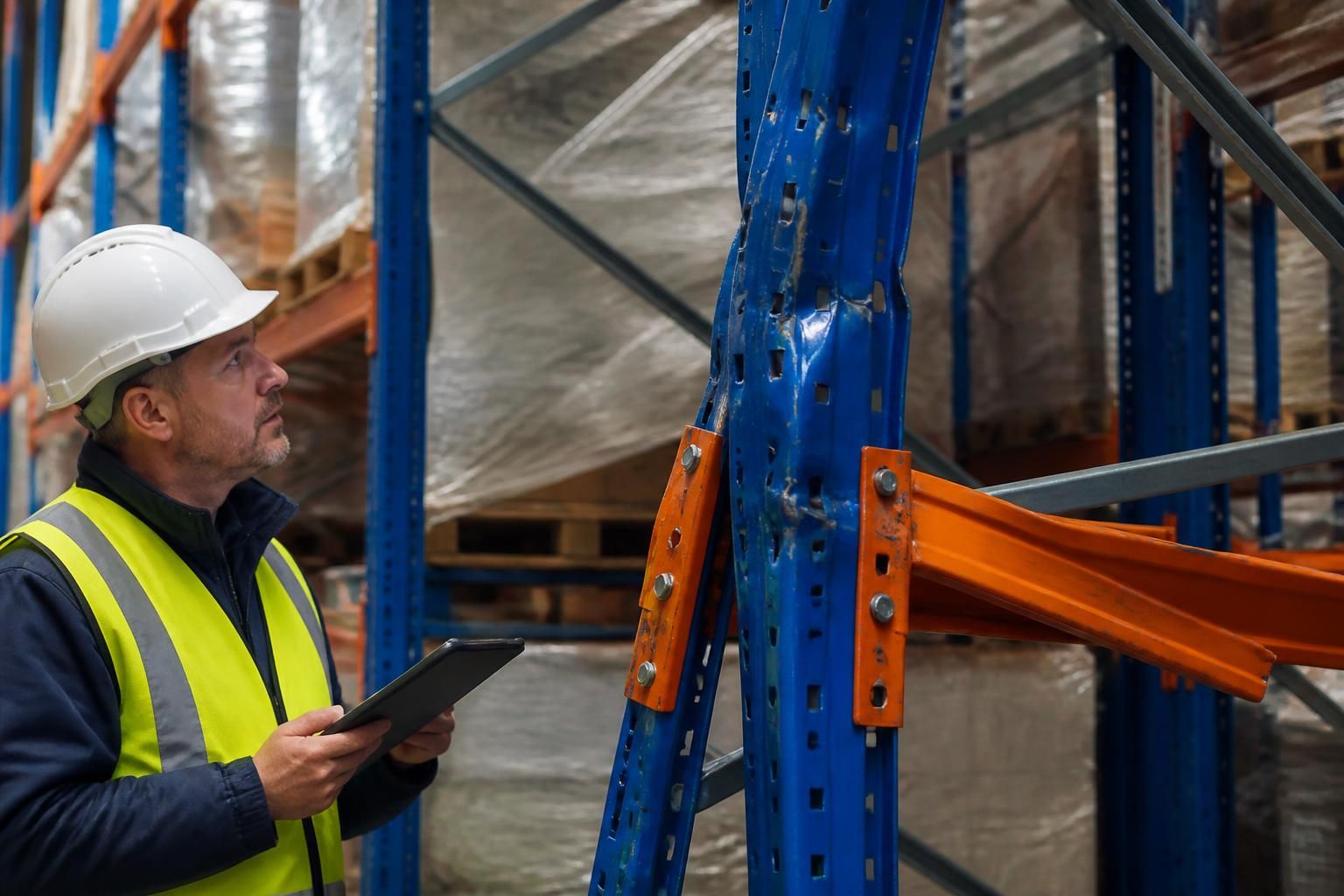
How should damaged double deep pallet racking be handled?
Take damaged double deep pallet racking out of service, isolate the affected bay and protect people from falling loads.
Arrange a competent inspection before repair or replacement, then return the bay to use only after its safety is confirmed.
The correct next step is a documented structural assessment before anyone repairs, reloads or resumes normal access. Damage may affect the frame, beams, connectors, anchors or the building floor.
Double deep pallet racking needs particular care because the rear pallet position can hide damage. A forklift may strike the rear frame, dislodge a connector or affect a load that cannot be seen from the aisle.
Record the incident and the affected location
- Note the aisle, bay, level and position of the damage.
- Record whether a forklift, pallet, load movement or another event caused it.
- Photograph the affected components before anything changes, where this can happen safely.
- Identify both front and rear pallet positions, including any concealed frame or beam damage.
- Record the loads present and any visible movement, leaning or distortion.
Paint scratches are not automatically harmless. Look for bent uprights, buckled bracing, twisted beams, torn metal, displaced connectors and damaged baseplates.
Check the surrounding bays as well. An impact can transfer force beyond the first visibly damaged component. Inspect adjacent frames, beams, guards, anchors and floor areas.
Do not improvise a repair
Do not straighten, weld, drill, cut or repaint damaged racking as a quick fix. These actions can alter the structure and conceal evidence of damage.
Do not replace one component based only on appearance. The replacement must suit the racking arrangement, dimensions, connections and stated load requirements.
Temporary props or barriers do not make damaged racking suitable for normal use. Any temporary measure needs a planned method and clear control of access.
Use the assessment to choose repair or replacement
A competent inspection should establish the damage severity and the safest next action. The assessment should consider the complete bay, its connected structure and the loads it supports.
- Minor damage: The inspector may identify damage that does not affect structural capacity, subject to documented approval.
- Repairable damage: The assessment may specify approved component replacement or another defined corrective action.
- Significant damage: The affected bay, frame or connected section may require removal and replacement.
- Unclear damage: Keep the area unavailable until the inspection establishes its condition.
Never treat a rear pallet position as safe simply because the front position appears unaffected. Assess the loads, access route and structure together.
Confirm capacity before reloading
After repair or replacement, confirm that the completed arrangement matches the intended load specification. Check beam levels, frame positions, connectors, anchors and protection components.
Reassess the arrangement if the incident involved an altered load, new pallet type, different forklift or changed storage pattern. Damage may indicate that the operating method no longer suits the installation.
Keep a record of the inspection, photographs, corrective work and approval to return the bay to service. Update working drawings where the arrangement changes.
Brief forklift operators and warehouse staff on the affected area before normal activity resumes. Explain any changed access, loading or reporting requirements.
Arrange a structured inspection and follow-up
We carry out racking inspections and can assess the affected installation before advising on repair, replacement or further work.
Our consultation may include a site meeting and survey, followed by written proposals and working drawings. Where coordination is required, project management may continue through installation and final commissioning.
This approach gives you a recorded basis for deciding whether the double deep arrangement remains suitable for the loads, access and workflow. It also helps prevent an isolated impact becoming an unmanaged safety issue.

Do not judge damaged double deep pallet racking from its visible face alone. Compare the affected bay with its load information and working drawings before selecting replacement components.
If the corrective work changes beam levels, frame positions or protection, record the revised arrangement. This keeps future loading decisions aligned with the structure that was actually inspected.



