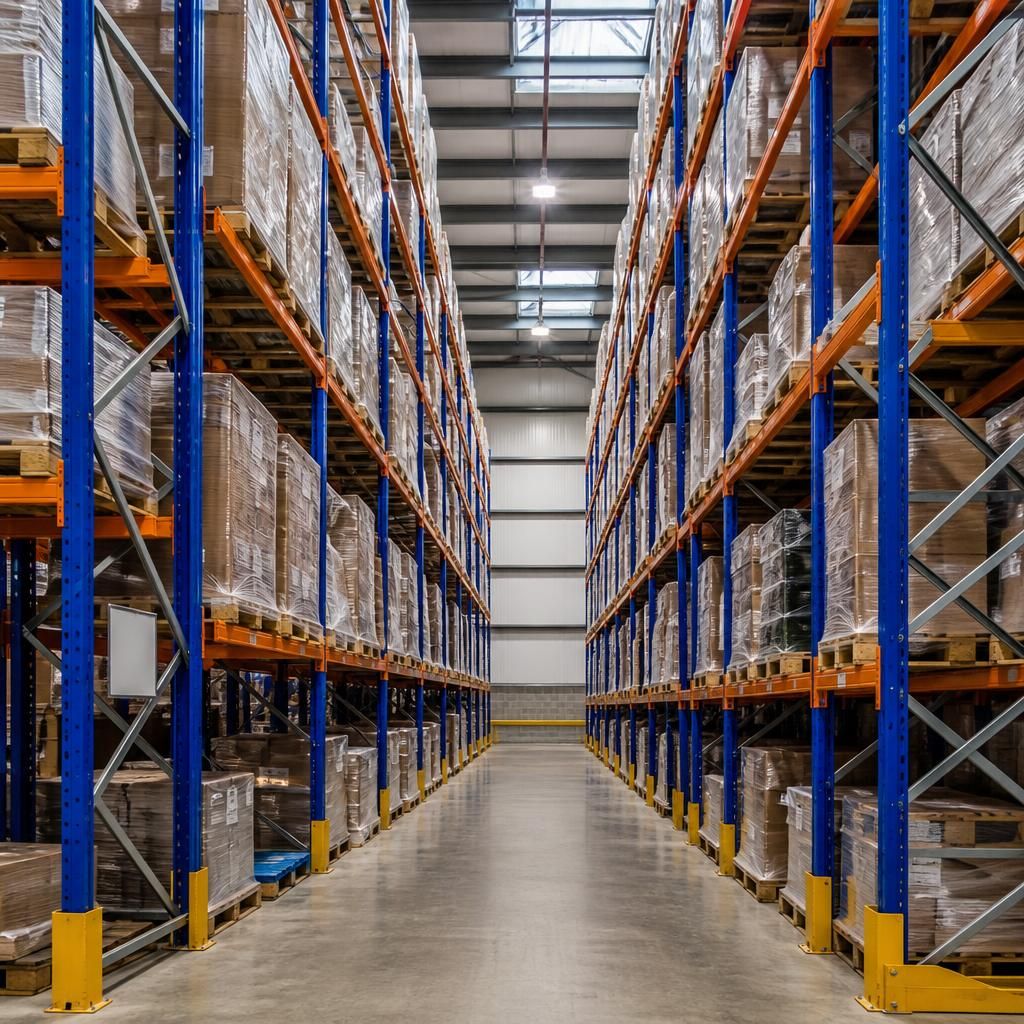
Can double deep pallet racking be reconfigured later?
Yes, double deep pallet racking can often be reconfigured later, subject to the structure, loads, access and site layout.
We can assess proposed changes through a site survey, written proposal and working drawings before installation work proceeds.
Double deep pallet racking is most adaptable when future changes are considered before the initial arrangement is fixed. Reconfiguration can support changes in stock profiles, storage priorities and warehouse workflow.
Possible changes may include repositioning beam levels, altering bay arrangements or extending selected runs. Each change can affect pallet positions, clearances, forklift movements and the loads carried by individual components.
- Stock changes: Different pallet heights, weights or quantities may require revised beam positions and load information.
- Workflow changes: Higher picking activity may require different access arrangements or a revised aisle layout.
- Space changes: New equipment, partitions or workplace areas may reduce the room available for racking runs.
- Structural changes: Moving components can affect the relationship between frames, beams, floor conditions and surrounding protection.
Do not treat spare floor space as proof that a change will fit. The revised arrangement must work with the building, handling equipment, stored loads and required clearances.
Reconfiguration may also require additional components or the removal of existing parts. Reusing components depends on their condition, specification and suitability for the revised arrangement.
We can review the proposed change as part of a no-obligation consultation. Site information, stock details and operational requirements help establish what can be altered without creating unsuitable access or storage conditions.
We then set out the proposed arrangement in written information and working drawings. This gives you a clearer basis for comparing the existing layout with the planned change before installation work proceeds.
For larger alterations, project management may cover the proposal and tender stage, installation and final commissioning where required. This helps coordinate changes involving several areas of the premises.
Plan reconfiguration before purchasing replacement components or moving bays. A properly reviewed change can support future growth within existing premises, while an unplanned change may reduce access or create loading concerns.
Reconfiguration does not always mean replacing the whole system. If only one product area changes, the revised arrangement can focus on that section while the remaining pallet racking continues serving its existing purpose.
Set out which bays need attention, what they will store and how operators will use them. This gives us a clear basis for reviewing the change and showing the proposed arrangement in working drawings.