


What locker size suits bulky workwear?
Bulky workwear usually needs a full-height locker, with internal width, depth and height measured against clothing, footwear and equipment. Choose the size that allows items to hang or store without crushing, while keeping access practical.
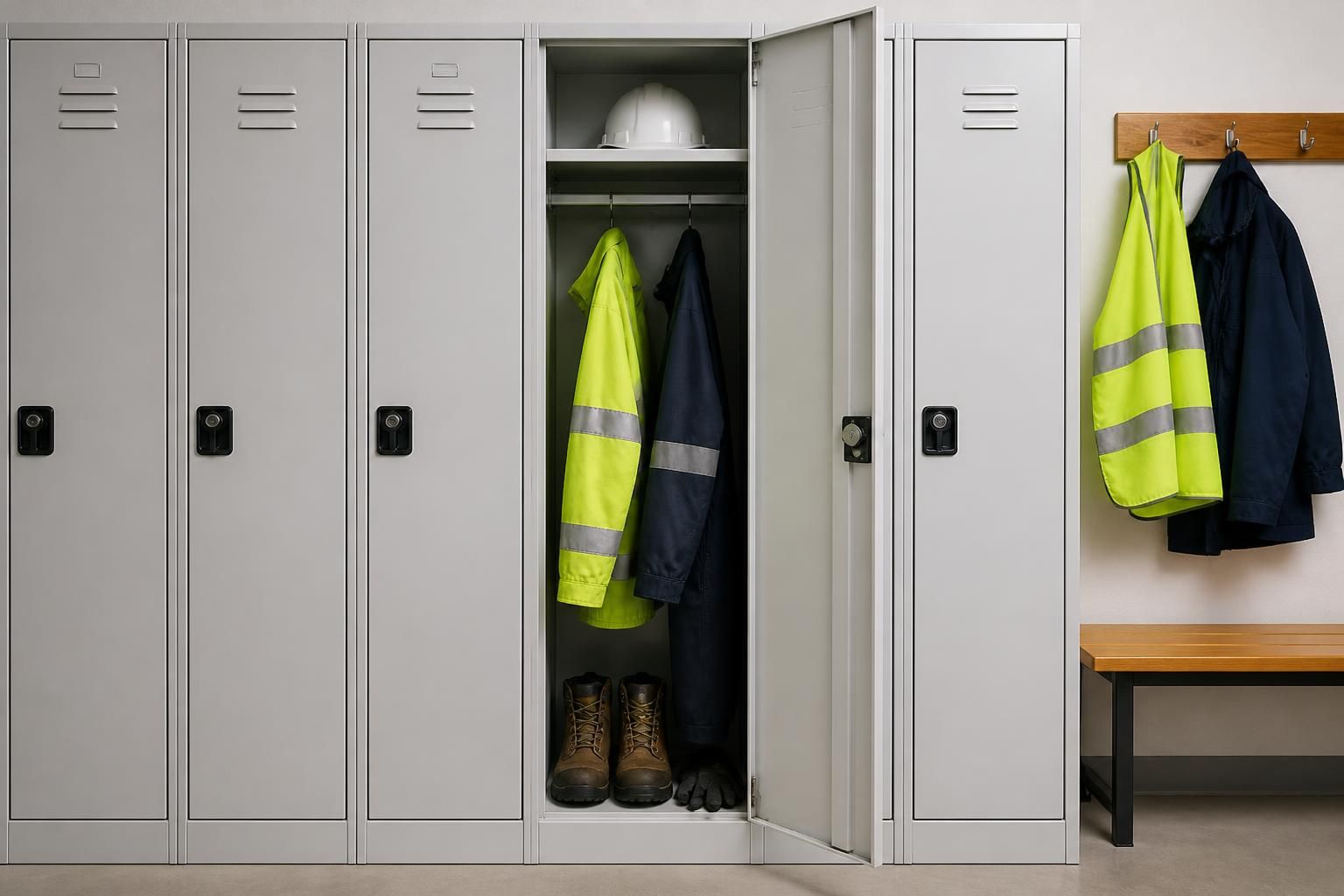
A full-height, single-compartment locker usually suits bulky workwear better than a tiered locker. It gives coats, overalls and other garments room to hang, while leaving space below for boots, helmets or personal protective equipment.
Start with the largest items. Check the length and bulk of winter coats, padded jackets, coveralls and high-visibility clothing. Measure garments on their hangers where they will be stored. Allow clearance around them, so doors close without crushing sleeves or catching on equipment.
Internal dimensions matter more than the locker’s advertised external size. Usable width affects how many garments fit beside each other. Internal depth affects whether bulky clothing hangs naturally. Internal height determines whether longer coats and coveralls remain off the floor.
Include footwear and equipment in the assessment. Safety boots need a stable base and enough room to avoid obstructing hanging clothes. Helmets, gloves, bags and other items may need shelving, hooks or a separate compartment.
- Long garments: choose a full-height compartment with sufficient hanging length.
- Padded or layered clothing: prioritise internal width and depth over a narrow footprint.
- Wet or dirty workwear: consider how items will be placed inside without contact with clean clothing.
- Footwear and PPE: check whether the locker includes suitable storage features or needs internal fittings.
- Shared use: assess each person’s storage requirement rather than dividing one compartment informally.
Two-tier lockers can increase the number of compartments in a fixed area, but they reduce hanging height. They may suit folded garments or shorter clothing, rather than long, bulky workwear.
Also measure the room, aisle and door clearances. A locker must fit its allocated wall space without restricting movement, access routes or nearby work areas. Check the door swing and the position of benches, radiators and other fixed features.
For changing areas, compare storage capacity with the number of users and the way clothing is issued. Individual compartments can separate workwear from personal items. Larger compartments may suit staff carrying several layers or additional equipment.
Industrial storage lockers form part of our wider workplace storage work. We can discuss the items, room layout and working arrangements before preparing a written proposal where required.
Our consultation may include a site meeting and survey. This helps establish available space, access conditions and the storage requirements that dimensions alone cannot show.
When the project needs more than lockers, we can consider related workplace storage arrangements alongside partitioning, safety barriers or other space-planning work. The aim is to keep clothing storage practical without creating avoidable obstruction or disorder.
A useful specification should record the required internal dimensions, compartment format, door arrangement, fittings, user numbers and installation position. Taking these details to a supplier gives you a clearer comparison than selecting by external height alone.
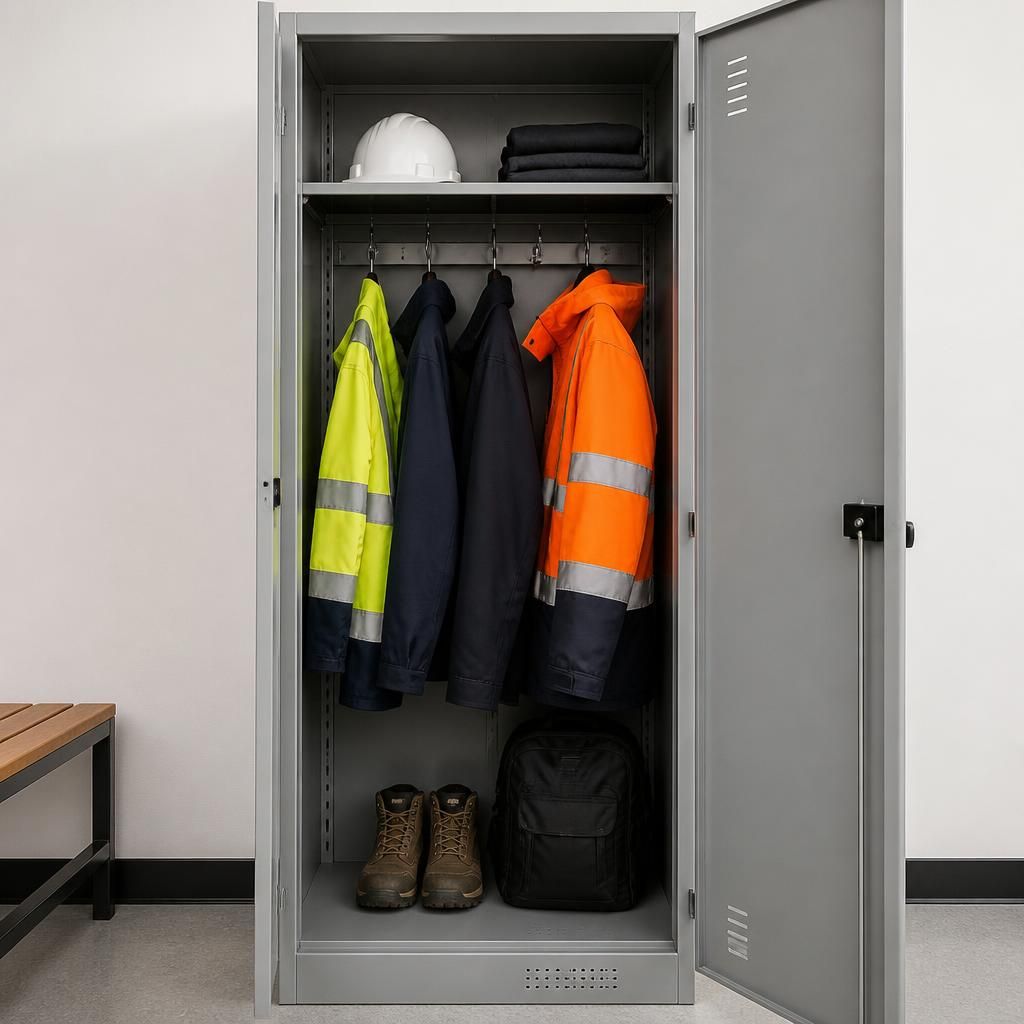
Check the clear space left after rails, shelves and hooks are fitted. Bulky garments need usable hanging room, not simply a large outer shell.
Compare the proposed internal layout with the way staff put on and remove workwear. This helps prevent fittings, footwear or equipment from obstructing access.



