



What maintenance should steel mesh lockers receive after installation?
After installation, steel mesh lockers need regular cleaning and visual checks of the mesh, doors, locks, hinges and fixings. Deal with damage, corrosion or faulty locking promptly, and record inspections so the lockers remain safe, usable and secure.
Steel mesh lockers need a planned maintenance routine based on site use, environmental conditions and the consequences of failure. After the initial checks, focus on stability, movement, access control, corrosion prevention and documented follow-up.
Set a maintenance responsibility. Nominate someone to oversee inspections, report defects and confirm that corrective work has been completed. Tell users how to report forced doors, damaged panels, missing keys or other faults. Maintenance works best when reports do not remain informal or unresolved.
Check stability after changes. Review the lockers after nearby building work, impact from handling equipment, relocation or changes to the layout. Confirm that the bank remains stable and does not obstruct aisles, exits, equipment or other workplace routes. Any movement or instability needs assessment before continued use.
Control the storage load. Steel mesh lockers are intended for the items and loading conditions agreed during planning. Do not allow users to store items that project through the mesh, obstruct doors or create excessive weight. Remove abandoned contents where site rules allow, so faults and deterioration remain visible.
Protect the finish and mesh. Keep the surrounding area free from standing water, leaked substances and accumulated debris. Where the site handles chemicals, moisture or abrasive materials, review the locker finish more frequently. Use cleaning products and methods suitable for the supplied finish, avoiding anything that could damage protective coatings.
Maintain moving and access components. Check that doors open and close without undue force, then confirm that authorised users can operate the lock or access control. Keep spare keys, codes or access devices under controlled management. Replace missing or compromised access devices through the appropriate process rather than relying on makeshift arrangements.
Use a risk-based inspection schedule. There is no single interval that suits every workplace. Busy warehouses, shared storage areas and sites with vehicle movements may need more frequent checks than a lightly used office area. Review the interval after incidents, repeated faults or changes to the working environment.
- Record the inspection date, location and person completing the check.
- Note defects, restrictions placed on use and the required corrective action.
- Assign responsibility for the action and record its completion date.
- Keep relevant installation information, drawings and access arrangements with the maintenance records.
Take damaged lockers out of service when necessary. Mark the unit clearly and prevent use if a defect could affect safety, security or access. Do not improvise repairs that alter the locker’s structure or locking function. Arrange suitable repair or replacement, then record the outcome before returning the unit to service.
Include locker maintenance within wider workplace risk assessments where the storage affects pedestrian routes, manual handling, security or emergency access. A documented routine supports safe management, but it does not replace an assessment of the particular site.
We can discuss maintenance considerations during a site consultation for storage and workplace projects. A site survey, written proposal and working drawings help establish the locker arrangement, access requirements and surrounding conditions before installation.
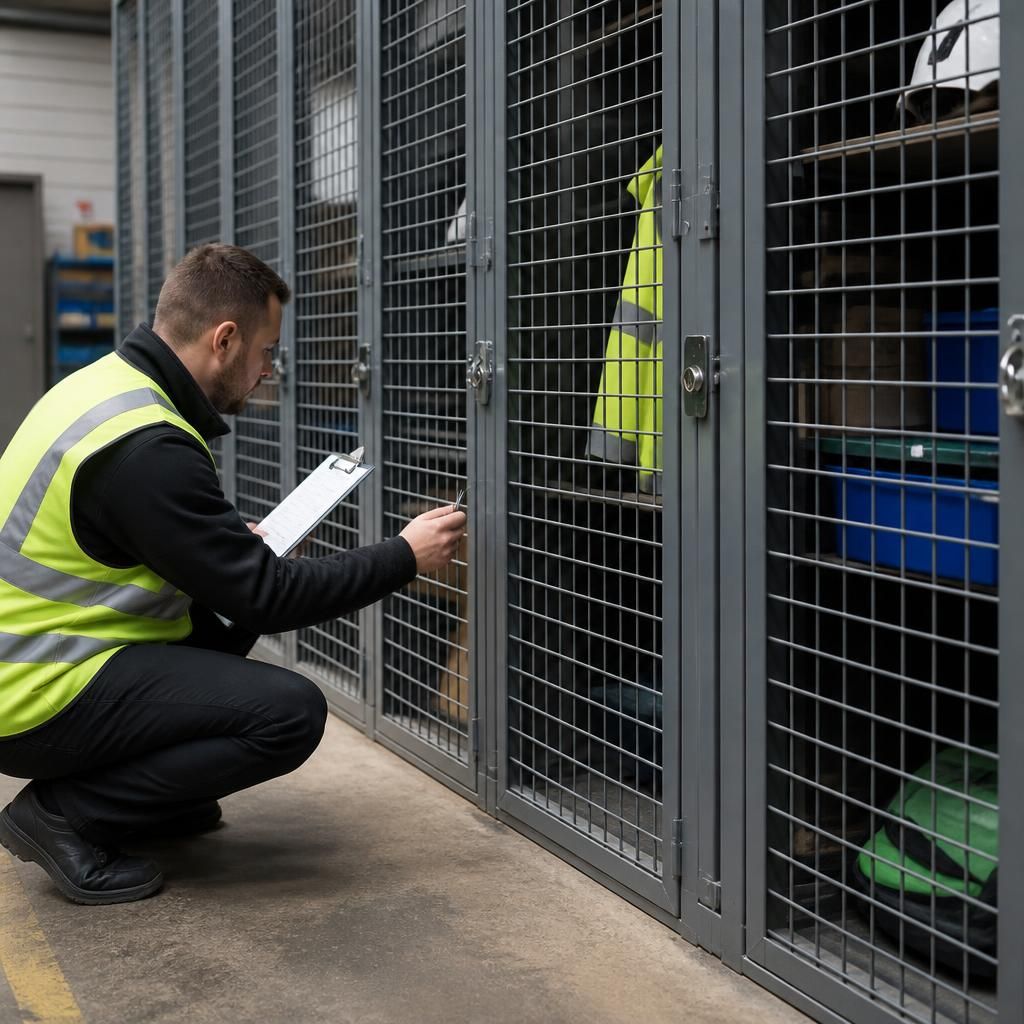
Routine cleaning can miss locker tops, lower edges and internal corners. Include these areas in periodic deeper cleaning, particularly where dust or moisture can collect.
Dry the mesh, frames and locker interiors after cleaning. Persistent staining, flaking finish or rust should prompt a recorded inspection, so you can establish whether the affected area needs repair or replacement.



