



Should steel mesh lockers be included in workplace risk assessments?
Yes. Steel mesh lockers should be considered within workplace risk assessments, covering their location, access, loading, stability and interaction with surrounding work activities.
Treat steel mesh lockers as part of the activity and layout they support, rather than assessing them in isolation. The assessment should consider foreseeable tasks, users, stock and changes around the lockers.
Start by recording where the lockers sit and how people reach them. Check that doors can open without obstructing walkways, workstations, escape routes or access to equipment. Consider whether opening a door could bring someone into the path of pedestrians, vehicles or handling equipment.
Review the condition and construction of the lockers during the assessment. Look for damaged mesh, sharp edges, loose fixings, defective hinges and doors that do not close correctly. Check that the arrangement remains stable when compartments are empty, partly loaded and fully loaded.
Loading practices also need attention. Identify the types, weights and sizes of stock placed inside. Set clear limits where necessary, and prevent heavy items being stored above practical handling height. Consider how employees will lift, remove and carry items, particularly where awkward loads could cause trapping, overreaching or manual-handling injuries.
The assessment should cover foreseeable misuse as well as normal use. Useful points to examine include:
- items projecting through mesh or beyond the locker footprint;
- doors being left open in circulation areas;
- lockers being climbed on, leaned against or used as work surfaces;
- stored materials creating pressure against doors;
- shared keys, access arrangements or unauthorised use;
- water, dust, chemicals or other conditions that could affect the locker or its contents;
- contact with pallet trucks, forklifts, trolleys or other moving equipment; and
- changes to nearby racking, partitions, workstations or production routes.
Visibility through mesh can support supervision and stock checks, but it does not remove the need to control access. Decide who may use each locker and how lost keys, damaged locks or disputed access will be managed. Record any separation needed between personal belongings, tools, components, chemicals or other workplace materials.
Include housekeeping and emergency arrangements. The assessment should state who checks the area, how obstructions are removed and how defects are reported. It should also identify actions for damaged lockers, unstable units or blocked routes. Do not rely on employees working around a known defect.
Review the assessment after installation and whenever the surrounding activity changes. Triggers can include a different locker arrangement, new stock, altered traffic routes, additional users, an incident or a change in handling equipment. Keep the assessment linked to the layout plan so the recorded controls match the installed arrangement.
We can discuss the proposed location during a no-obligation consultation and site survey. Written proposals and working drawings can show the locker position alongside relevant circulation and workplace arrangements. Where required, project management can continue through installation and final commissioning.
This approach gives you a documented basis for deciding whether the arrangement suits the site, the stock and the work carried out nearby. It also helps identify practical controls before installation, rather than relying on a review after problems occur.
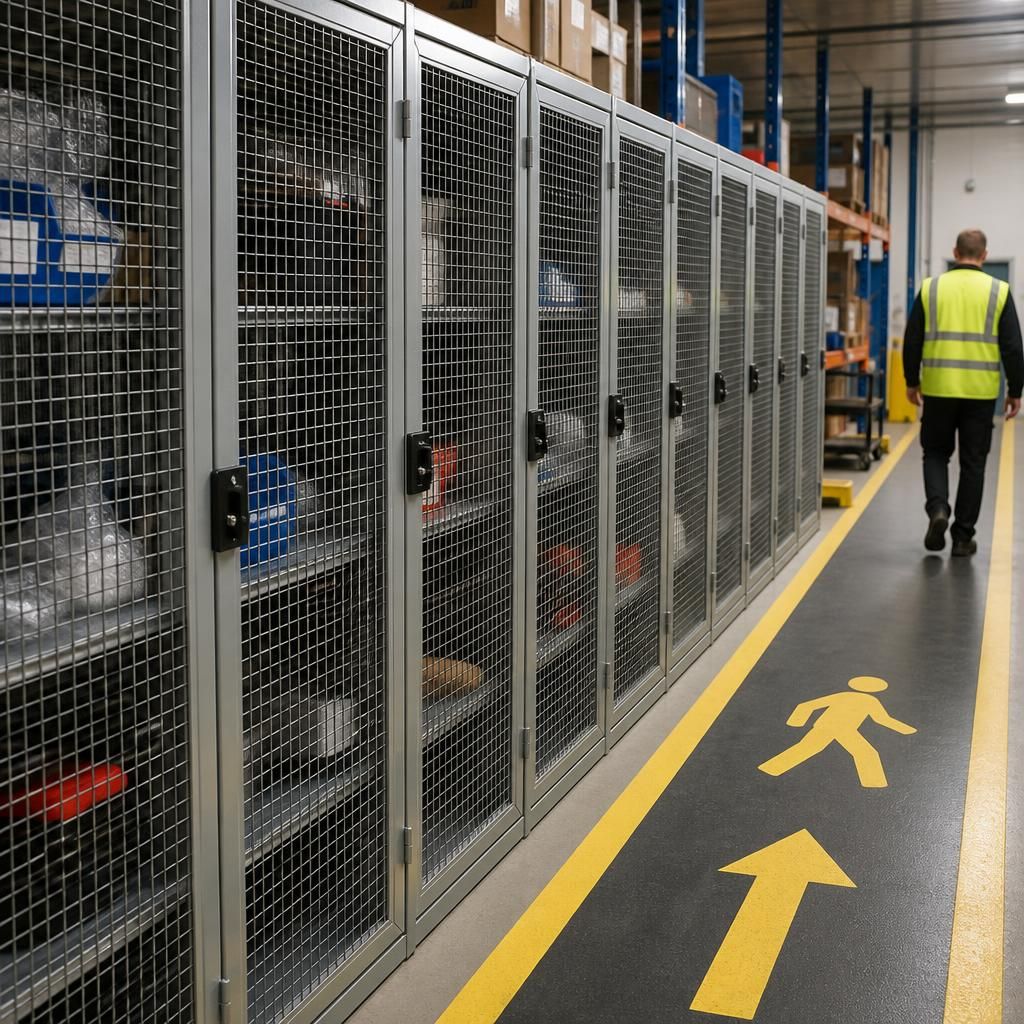
A risk assessment should consider the people using the steel mesh lockers, not only the lockers themselves. Check reach, visibility, grip and access needs for the intended users.
One compartment height or locking method may not suit everyone. Record practical adjustments, alternative storage arrangements or supervision requirements where the assessment identifies a difficulty.



